
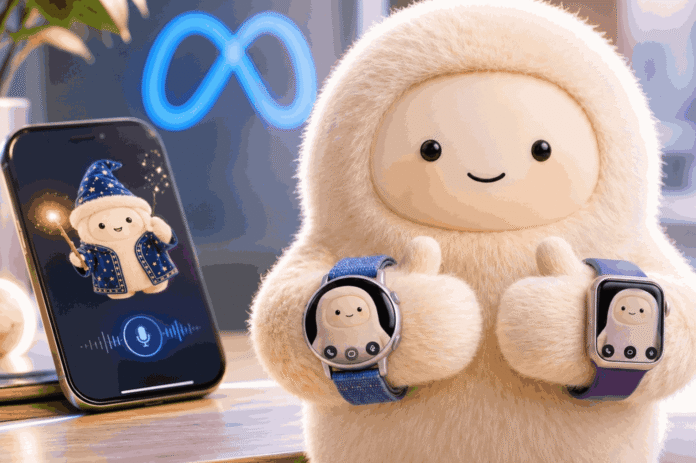
Meta Muse AI is expanding beyond smartphones and computers, giving users a new way to interact with their personal AI assistant. The company has announced compatibility with Apple Watch and Android smartwatches running Wear OS, allowing users to communicate with their customised AI companions directly from their wrists.
The update could make Meta’s AI assistant more accessible throughout the day. Instead of reaching for a smartphone or opening a laptop whenever you need help, you can now speak to Muse, send messages or dictate requests using a compatible smartwatch.
Meta wants Muse to become more than another chatbot that answers occasional questions. The company is positioning it as a personal assistant capable of helping users organise their schedules, manage professional responsibilities, remember important tasks and work towards personal goals.
However, giving an AI assistant access to so much personal information also raises important questions about privacy and data collection. With recent research suggesting that Muse collects a particularly broad range of user data, convenience may come with some compromises.
Meta Muse AI arrives on Apple Watch and Wear OS
Meta has announced that its Muse AI agent can now be accessed through Apple Watch and Android smartwatches running Wear OS.
The update introduces another way to communicate with Muse’s customisable AI personality, Jolly. Users can interact with their assistant through voice conversations, text messages and dictation without needing to take out their phones.
This could be particularly useful when you’re travelling, exercising, attending meetings or simply trying to get something done while your hands are occupied.
For example, you could ask Muse to remind you about an upcoming meeting, help organise your day or provide information about a task while you’re away from your computer.
The smartwatch integration also makes sense for an AI assistant designed to remain available throughout the day. Smartwatches are already built around quick interactions and notifications, so adding an AI companion could make them more useful for managing everyday responsibilities.
Meta has not positioned Muse as a simple voice assistant. Instead, it wants users to treat it as a personalised digital companion that understands their routines, priorities and preferences.
That ambition is what separates Muse from traditional smartwatch assistants, although its usefulness will ultimately depend on how well it handles real world requests.
Muse is becoming a bigger part of Meta’s AI strategy
Muse first entered the AI assistant market in September and reportedly surpassed 10 million US app store downloads within its first 40 days.
Meta is now expanding its capabilities across different devices and communication methods, suggesting that the assistant is becoming an important part of the company’s consumer AI plans.
Muse is designed to help with a wide range of responsibilities, from organising business meetings and tracking deadlines to managing household expenses and keeping up with personal commitments.
The assistant can also help users organise their social lives and work towards longer term goals. Meta even says Muse can make purchases on behalf of users when given the appropriate permissions.
Another interesting feature is the ability to customise the assistant’s appearance. Rather than interacting with a generic chatbot, users can choose an AI personality that appears on their phone or smartwatch.
Meta is also experimenting with dedicated hardware through Muse Charm, a small device designed to provide another way to interact with the assistant. The concept resembles a modern AI version of a digital pet, giving users a more physical way to communicate with their virtual companion.
The company has also introduced Spaces, which allows users to create customised experiences around particular activities, interests or objectives.
For example, someone could configure a dedicated Muse experience for work planning, fitness goals or a particular subject they regularly need help with.
Meta has also expanded voice and video interactions. During video calls, Jolly can display expressions and gestures intended to reflect the tone of a conversation.
However, there is an important limitation. Muse cannot actually see the user during these interactions and relies on the conversation and vocal cues to determine how its animated personality should respond.
Privacy concerns could become a problem for Muse users
While having a personal AI assistant available on your wrist sounds convenient, it also means giving the service access to a considerable amount of personal information.
Muse is designed to help with sensitive areas of everyday life, including financial responsibilities, professional commitments, communications and personal schedules.
That level of access could make the assistant more useful, but it also increases the importance of understanding what information the service collects and how it is handled.
A recent study by Surfshark reportedly found that Meta Muse collects more categories of user data than competing consumer AI agents, gathering approximately twice as many types of information as its rivals.
This finding raises questions about how much personal information users need to share to get the full experience.
The concern becomes particularly relevant as Muse expands to smartwatches. These devices are designed to remain connected throughout the day, potentially encouraging more frequent interactions with the assistant.
Users should therefore pay attention to the permissions they grant, particularly when connecting services containing financial information, personal communications or other sensitive details.
There is also a practical consideration for people using mobile data.
Frequent AI conversations, especially voice interactions, could increase data consumption. Users with limited mobile data allowances may want to use Wi-Fi whenever possible to avoid unnecessary usage.
What Meta Muse’s smartwatch expansion means for the future
Bringing Muse to Apple Watch and Wear OS is another step towards making AI assistants a regular part of everyday technology.
Until recently, most AI interactions required users to open a dedicated application, type a question or start a conversation on a smartphone or computer.
Smartwatch integration removes some of that friction. Users can now access their assistant through a device they are already wearing, making quick requests and reminders easier to manage.
The bigger question is whether people will become comfortable allowing an AI assistant to play such an active role in their personal lives.
Meta clearly wants Muse to move beyond answering questions and become an assistant that can organise activities, make decisions within permitted boundaries and complete tasks on behalf of its users.
If the company can deliver that experience reliably, Muse could become more than another AI chatbot competing with established services.
However, convenience, reliability and privacy will all influence whether users embrace this approach.
For now, the Apple Watch and Wear OS expansion gives Muse another route into people’s daily routines. It also signals that Meta sees wearable devices as an important part of its long term AI ambitions.
The idea of having a personalised AI companion available whenever you look at your wrist is certainly appealing. Whether users are comfortable sharing enough personal information to make that experience genuinely useful is another matter.
Follow TechBSB For More Updates