
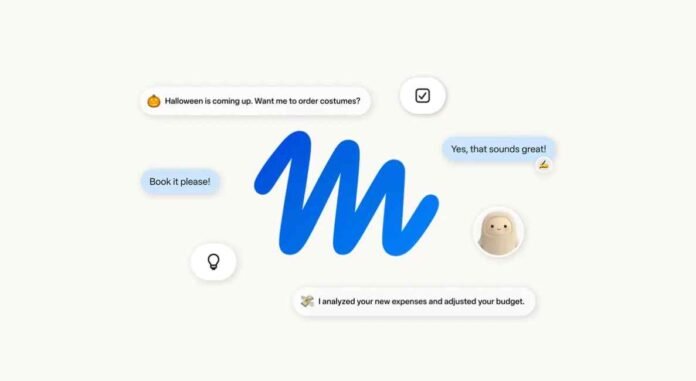
- Meta Muse wants to become an AI assistant for both everyday life and professional work.
- Its promise of handling long term goals may underestimate how unpredictable real work and personal life can be.
- Giving an AI access to calendars, emails, accounts and other services creates serious privacy, security and accountability concerns.
- AI agents could be genuinely useful when they remove repetitive work without taking away the human decisions that make achievement meaningful.
Artificial intelligence is rapidly moving beyond chatbots and search boxes. The latest ambition is much bigger. Instead of waiting for instructions, AI agents are supposed to understand what we want, make plans, connect to our services and quietly get things done in the background.
That sounds impressive. It also raises a fairly simple question.
Who exactly is this technology being designed for?
Meta’s new Muse personal AI agent is being presented as an assistant for everyday life and work. It can help with recipes, shopping lists, calendars, emails, long term goals and larger projects. The idea is that you give Muse an objective and it helps turn that objective into a practical plan, while continuing to make progress without requiring you to sit in front of the app.
On paper, that sounds like the future.
In practice, it risks revealing something that has become increasingly common in the AI industry. Technology companies are getting very good at imagining what people might do in an idealised digital life, while being considerably less convincing when it comes to the messy reality of how people actually live and work.
The fantasy of the always available assistant
There is nothing inherently wrong with having an AI organise your calendar, prepare a shopping list or help plan a holiday. Those are exactly the sorts of repetitive tasks where automation can make sense.
The problem begins when the same philosophy is applied to everything else.
Muse is supposed to help users turn ambitions into action plans. Whether that ambition involves getting fit, organising a holiday, launching a business or completing a major project, Meta wants its agent to become something closer to a permanent digital co worker.
That sounds wonderfully convenient until you consider why people value completing things in the first place.
There is a difference between having something completed for you and learning how to complete it yourself. There is also a difference between reducing pointless administration and outsourcing the thinking that makes a project meaningful.
If an AI researches the options, creates the plan, organises the schedule, contacts the relevant services and keeps everything moving, at what point does the user stop being the person doing the work?
For some tasks, that will be exactly what people want. Nobody is going to miss manually organising a dentist appointment or searching through a dozen websites to compare basic travel options.
But the bigger the task becomes, the more complicated that question gets.
Real work is rarely this clean
The most questionable part of the AI agent pitch is often the assumption that work can be reduced to a sequence of clearly defined tasks.
Anyone who has actually worked on a complicated project knows that it rarely happens that way.
Plans change. People change their minds. Clients disappear for three days and suddenly demand something immediately. A supposedly simple meeting turns into a completely different project. Important information exists only in someone’s memory. A colleague says one thing in an email and something completely different in a meeting.
Sometimes the most important part of a job is recognising that the original plan is wrong.
That is where the polished vision of an autonomous AI assistant starts to look less convincing.
Muse may be able to create an action plan and work through a collection of digital tasks, but real life is full of ambiguity. The ability to deal with that ambiguity is not simply another box to tick on a productivity checklist.
It is the job.
There is also a cultural issue here. Silicon Valley has spent years turning productivity into a kind of personal optimisation project. The ideal worker has a perfectly organised calendar, an efficient morning routine, carefully managed goals and an app for almost everything.
Most people do not live like that.
They have unfinished tasks, unpredictable schedules, competing responsibilities and days when getting through the basics is achievement enough.
An AI assistant that assumes life can be converted into an endlessly optimised workflow may therefore be solving a problem that many people do not actually have.
Then there is the uncomfortable privacy question
The more useful an AI agent becomes, the more information it needs.
That is the bargain.
An assistant that knows nothing about you cannot do very much. An assistant that knows your calendar, emails, documents, accounts, plans, habits and personal preferences can potentially become extremely powerful.
It can also become extremely sensitive.
Meta says users will remain in control of what Muse can access and has highlighted security measures designed specifically for personal AI agents. That is reassuring, but the fundamental issue does not disappear.
The more authority you give an AI system, the greater the consequences when it misunderstands something.
A chatbot giving you a bad suggestion is annoying. An agent that misunderstands an instruction while operating across multiple services is a very different problem.
This is particularly important when agents are allowed to interact with external platforms. Connecting AI to workplace tools and personal accounts could produce enormous productivity gains, but it also creates another layer of complexity around permissions, mistakes and accountability.
Who is responsible when an autonomous agent makes the wrong decision?
The user?
The AI company?
The third party service?
Or everyone involved?
Those questions will become much more important as agents move from suggesting actions to actually taking them.
AI should give people more control, not less
None of this means personal AI agents are a bad idea.
Quite the opposite.
There is a genuinely useful future here if companies focus on removing friction rather than replacing human agency. Let AI handle repetitive administration. Let it find information. Let it organise documents. Let it prepare options. Let it remind people about things they would otherwise forget.
But there should still be a clear distinction between assistance and substitution.
The best technology does not necessarily do everything for us. Sometimes it simply makes the things we want to do easier.
That distinction matters because achievement is not measured only by the final result. The process matters too. Starting a business, getting healthier, planning a major trip or completing an important project involves decisions, mistakes and discoveries that cannot always be reduced to a checklist.
Meta is betting that people will want an AI companion that is always working quietly in the background.
Maybe they will.
But if Muse eventually becomes another system that encourages people to delegate every small decision, organise every minute and outsource every difficult task, it may end up making life more efficient without making it better.
And that would be a rather strange definition of progress.
Follow TechBSB For More Updates