
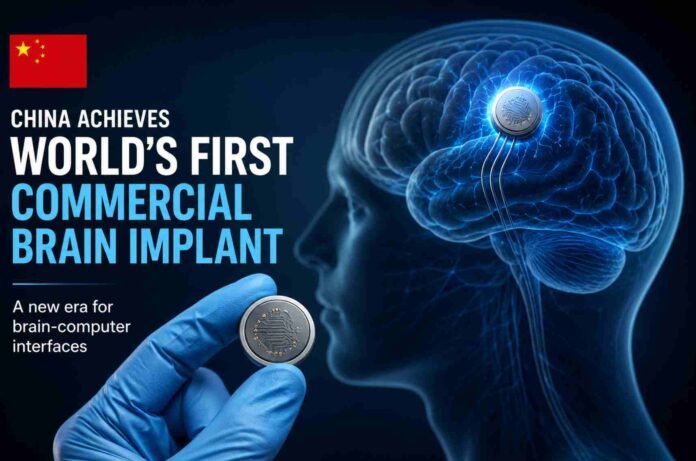
- China has completed the world’s first implantation of a commercially approved brain computer interface using the NEO device.
- The implant helps translate brain signals into hand movements through an external robotic glove for a spinal cord injury patient.
- Unlike Neuralink, China’s NEO has received commercial regulatory approval for medical use rather than remaining limited to clinical trials.
- The achievement highlights China’s growing investment in brain computer interface technology and its plans to expand the sector over the coming years.
China has reached a significant milestone in the fast evolving brain computer interface industry after successfully implanting the world’s first commercially approved brain computer interface into a patient. The procedure marks an important shift for the technology, moving it beyond research laboratories and clinical trials into real world medical use.
The implant, known as Neural Electronic Opportunity or NEO, was developed by Chinese company Neuracle Medical Technology. Roughly the size of a coin, the device contains eight electrodes designed to capture signals from the brain. Unlike experimental systems that remain limited to research settings, the NEO has already received commercial approval from China’s National Medical Products Administration, allowing hospitals to use it in approved medical cases.
The achievement places China at the forefront of commercial brain computer interface deployment at a time when several global companies, including Elon Musk’s Neuralink, are still navigating regulatory approval for wider public use.
A brain implant designed to restore movement
The first recipient of the commercially approved implant is a patient who suffered a severe spinal cord injury in a car accident around ten years ago. The injury significantly reduced mobility in the person’s hands, making everyday activities difficult.
The NEO implant works by detecting neural activity from areas of the brain responsible for movement and sensation. These signals are processed by the system and translated into commands that operate an external metal glove worn by the patient. The glove then performs the intended hand movements based on the brain’s instructions.
Doctors involved in the procedure reported that the surgery was successful and that the patient recovered well after implantation. Early observations also indicated that brain signals remained normal following the operation, suggesting the device functioned as intended without disrupting surrounding neural activity.
Although the technology is still in its early stages, the successful implantation demonstrates how brain computer interfaces are gradually becoming practical tools for restoring lost movement rather than remaining purely experimental concepts.
China moves ahead of Neuralink in commercial rollout
The development naturally invites comparisons with Neuralink, the brain computer interface company founded by Elon Musk. Neuralink has made headlines for successfully implanting its devices into human patients during clinical trials in the United States.
However, there is an important distinction between the two companies.
While Neuralink continues testing its technology under regulatory oversight, its implants have not yet received approval for commercial sale in the United States. China’s NEO system, on the other hand, has already cleared the country’s regulatory process for commercial medical use, making it the first brain computer interface available beyond clinical research.
That commercial approval represents a major milestone because it signals growing confidence from regulators that the technology has reached an acceptable level of safety and effectiveness for carefully selected patients.
China has also outlined broader ambitions for brain computer interface development. Government agencies have established long term plans aimed at accelerating innovation in the sector, with goals extending through 2027. These plans include advancing hardware, software, medical applications, and industry standards to support future adoption.
Brain computer interfaces are entering a new phase
Brain computer interfaces have long been viewed as one of the most promising areas of medical technology. By creating a direct communication pathway between the brain and external devices, these systems can help people regain abilities lost through injury or neurological disease.
Current applications focus primarily on restoring movement, controlling robotic limbs, operating computers, and improving communication for individuals with severe physical disabilities. Future versions may become smaller, faster, and more capable as hardware improves and artificial intelligence enhances signal interpretation.
Developers of the NEO system say the technology could eventually allow users to interact with computers, smartphones, robotic prosthetics, and other connected devices using neural activity alone. As research progresses, these capabilities could expand further, opening new possibilities for rehabilitation and assistive care.
Even so, experts continue to emphasize that brain computer interfaces remain an emerging technology. Wider adoption will depend on long term safety data, continued clinical validation, affordability, and regulatory oversight across different countries.
China’s successful commercial implantation is therefore less about winning a race against competitors and more about demonstrating that brain computer interfaces are beginning to transition from experimental medical research into practical healthcare solutions. Whether other countries follow with similar approvals will likely shape the next chapter of this rapidly developing field.
Follow TechBSB For More Updates

