
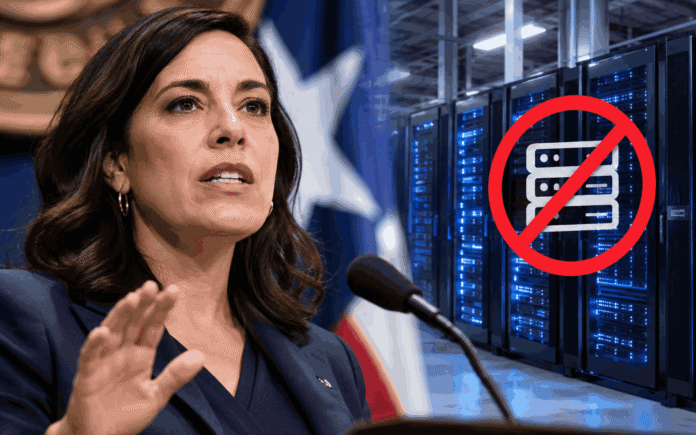
- Texas Governor-elect Gina Hinojosa wants stronger protections for communities affected by rapid data center development.
- She has proposed temporarily pausing new data center projects until adequate regulations and safeguards are established.
- A CNN poll cited in the report found that 75% of Texas respondents opposed data centers being built near their homes.
- Stricter regulations could delay AI infrastructure projects and increase development costs, although the final rules have not yet been announced.
Texas Data Center Regulations could soon become a major challenge for some of the world’s biggest artificial intelligence companies. Incoming Texas Governor Gina Hinojosa has warned that the state’s rapid data center expansion cannot continue without stronger protections for local communities.
Texas has become an attractive destination for technology companies looking to build large data centers and expand their AI infrastructure. However, the growing number of facilities has also raised concerns among residents about their impact on local communities.
Hinojosa believes technology companies have benefited from Texas’s business friendly environment without doing enough to protect the people living near these developments.
Speaking during an interview with CNN’s Jake Tapper, the governor-elect said AI companies must establish partnerships that benefit Texans rather than simply using the state as a convenient location for their infrastructure.
She also made her position clear, saying that she does not oppose data centers themselves but objects to the way companies are taking advantage of Texas.
Her comments suggest that the state’s approach to approving new data center projects could change significantly once she takes office.
Texas plans to reconsider its data center expansion strategy
Texas has experienced substantial growth in data center development over recent years, attracting major technology companies seeking the infrastructure required to support cloud computing and artificial intelligence.
The state’s business environment, available land and growing technology infrastructure have helped make it an important location for these projects.
However, rapid expansion has also brought concerns about how large facilities affect the communities surrounding them.
Many proposed data centers are located in rural areas, where residents may have limited opportunities to influence major development decisions.
Hinojosa argues that this situation needs to change.
During her CNN interview, she said data centers have moved into communities without adequate rules or legal protections for residents.
She wants the state to introduce stronger regulations that ensure local people have a meaningful role in deciding whether these facilities should be built in their neighbourhoods.
One of her key proposals involves temporarily stopping further data center development until appropriate protections are established.
The idea is to make sure communities are included in discussions before companies move forward with large infrastructure projects.
Rather than allowing developers to make decisions with limited local involvement, Hinojosa wants technology companies to work directly with residents and local authorities.
Her proposed approach could introduce additional requirements for AI companies planning to establish or expand operations in Texas.
However, the exact form of these regulations remains unclear.
Public opposition puts pressure on AI infrastructure companies
Hinojosa’s position reflects growing concerns about the rapid expansion of data centers across the United States.
Although these facilities play an important role in supporting cloud services and AI applications, their development can create challenges for nearby communities.
Large data centers require significant infrastructure, including electricity supplies, cooling systems and suitable land.
These requirements have made local approval and community engagement increasingly important parts of the development process.
According to a CNN poll cited in the report, 75% of respondents in Texas opposed having data centers built near where they live.
The figure highlights the level of concern surrounding these projects, although opposition to nearby construction does not necessarily mean residents oppose AI technology or data centers in general.
Hinojosa is also not the only politician raising questions about the industry’s expansion.
Several Democratic candidates who performed well in the US midterm elections campaigned on introducing greater oversight of data center development. Some Republican candidates have also expressed concerns about the impact of these facilities.
This suggests that the debate is extending beyond traditional party divisions.
For AI companies, the changing political environment could create additional uncertainty around future infrastructure investments.
Companies planning large facilities may need to spend more time securing approvals, addressing community concerns and demonstrating how their developments will benefit local residents.
AI companies could face delays in future data center projects
The potential changes in Texas could have consequences beyond the state’s borders.
Some of the world’s largest AI companies have ambitious plans to expand their computing infrastructure, with data centers playing a central role in their long term strategies.
Any restrictions on construction, approval delays or changes to local development policies could affect those plans.
Anthropic, for example, has reportedly acknowledged in its recent IPO filings that its data center infrastructure supply chain is highly complex.
The company warned that delays or failures involving infrastructure suppliers could significantly affect its operations.
This illustrates why uncertainty surrounding data center development matters to the wider AI industry.
Training and operating advanced AI models requires substantial computing resources. Companies need access to powerful servers, reliable electricity and the infrastructure necessary to handle growing workloads.
If Texas introduces a temporary development pause or stricter approval requirements, technology companies may have to reconsider where and when they build new facilities.
They could also face additional costs associated with obtaining permits, improving infrastructure and meeting community requirements.
However, the potential impact will depend on the final rules introduced by the incoming administration.
Hinojosa has outlined her priorities, but she has not yet provided a detailed regulatory framework explaining exactly how new data center projects will be evaluated.
That leaves several important questions unanswered, including how long a proposed pause might last and what protections companies would need to establish before receiving approval.
For now, the announcement signals a possible shift in how Texas approaches large scale AI infrastructure development.
What happens next for Texas data centers?
The biggest question is whether Hinojosa can turn her campaign promises into practical regulations once she becomes governor.
Her proposed temporary moratorium suggests that she wants to address community concerns before allowing further expansion.
That could mean introducing stronger local consultation requirements, additional development safeguards and clearer responsibilities for companies building large facilities.
Technology companies may also be expected to demonstrate how their projects benefit the communities hosting them.
For residents, the proposed changes could provide more opportunities to participate in decisions about major infrastructure developments.
For AI companies, however, the possibility of stricter regulations introduces another factor to consider when planning future investments.
Texas has played an important role in the expansion of the American data center industry. Any significant change to its development policies could therefore attract attention from companies operating across the wider AI ecosystem.
Still, it is important to distinguish between Hinojosa’s campaign commitments and regulations that have actually been introduced. The precise requirements, implementation timeline and potential exemptions have not yet been established.
Her message, however, is clear: AI companies will be expected to work more closely with local communities if they want to continue expanding their infrastructure in Texas.
The debate also raises a broader question for the technology industry. As AI systems become more demanding, how can companies expand their computing infrastructure while addressing the concerns of the people living near these facilities?
That balance could become increasingly important as more states reconsider how they approve large data center projects.
Follow TechBSB For More Updates