
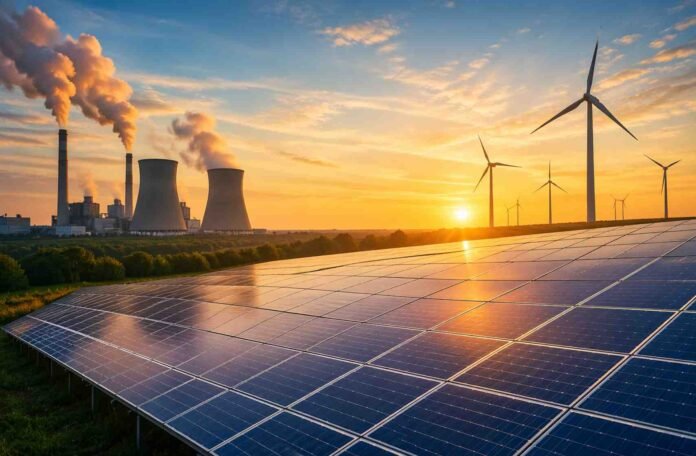
- Renewables generated 33.8% of global electricity in 2025, surpassing coal at 33%
- Solar drove 75% of new electricity demand growth, with record expansion
- Battery storage is enabling solar power beyond daylight hours
- EVs and AI driven demand are reshaping global electricity needs
After years of steady gains and bold forecasts, renewable energy has crossed a symbolic and practical milestone. In 2025, clean energy sources generated more electricity globally than coal, marking a shift that once seemed decades away.
According to new analysis from energy think tank Ember, renewables accounted for 33.8% of global electricity production, narrowly overtaking coal, which slipped to 33%.
That margin may appear slim, but the significance is anything but. This is the first time coal has lost its top position due to deliberate expansion of clean energy, rather than external shocks like economic downturns or global crises. It signals a structural transformation in how the world powers itself.
Solar leads an unprecedented surge
At the heart of this transition is solar power, which is growing at a pace unmatched by any energy source in history. Solar alone contributed roughly 75% of the increase in global electricity demand last year. Overall, wind and solar together were responsible for nearly all of that growth.
The scale of solar expansion in 2025 has been described as the largest ever recorded for any single energy source. Output surged by around 30% year on year, driven by falling costs, improved efficiency, and massive deployment across both developed and emerging markets.
What makes this moment even more important is how solar is evolving. It is no longer limited to daytime generation. Rapid improvements in battery storage are enabling solar energy to be used around the clock. With battery costs dropping sharply in recent years and installations rising significantly, a growing share of solar power can now be shifted to evening and nighttime use. This is beginning to address one of solar’s long standing limitations.
Rising demand reshapes the grid
Electricity demand itself is changing rapidly, and not just because of economic growth. One of the biggest contributors is the accelerating adoption of electric vehicles. EVs accounted for about 8% of the increase in global electricity demand in 2025, a notable jump from the previous year.
This reflects a broader shift in energy consumption patterns. As transport, heating, and industry increasingly electrify, demand for power is expected to rise sharply. Encouragingly, most of that new demand is being met by clean energy rather than fossil fuels.
EV adoption is also reinforcing the case for renewables. As more drivers switch from petrol and diesel to electric, the need for cleaner electricity becomes more urgent. The combination of EV growth and renewable expansion is creating a feedback loop that accelerates both trends.
Challenges remain despite the momentum
Despite the progress, the energy transition is far from complete. Coal may no longer be the top source of electricity, but it still accounts for a significant share of global generation. Other fossil fuels, particularly gas, continue to play a major role as well.
There is also a looming challenge on the horizon. The rapid expansion of data centers, driven largely by artificial intelligence and cloud computing, is expected to push electricity demand even higher. These facilities require enormous amounts of power, raising concerns about whether clean energy can scale quickly enough to meet this new demand.
Some regions are already grappling with these pressures. Policymakers are beginning to consider how to balance technological growth with sustainability goals, including restrictions on energy intensive infrastructure in certain areas.
Still, the broader trajectory is clear. The transition to renewable energy is no longer a distant ambition. It is happening now, driven by economics as much as environmental urgency. Solar in particular has moved from a promising alternative to a dominant force in global energy.
Follow TechBSB For More Updates