
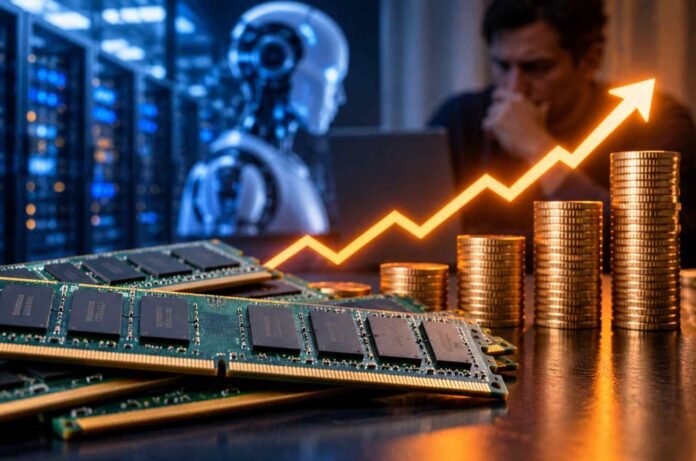
RAM prices are climbing at an uncomfortable pace, and there is little reason to expect an immediate return to normal. Fresh industry estimates suggest that the memory shortage could continue for several more years, with growing demand from artificial intelligence infrastructure putting pressure on supplies for everyday computers.
Intel CEO Lip Bu Tan has warned that AI hardware could remain in short supply for another two to three years. Memory is among the components facing persistent supply constraints, as manufacturers struggle to meet the needs of an industry investing heavily in AI data centers.
The latest pricing figures offer another reason for concern. A Barclays report indicates that contract prices for DDR4 memory rose by 24% over the past quarter, while DDR5 prices increased by 20%. These figures relate to prices negotiated between memory suppliers and their customers, rather than representing a uniform increase across every retail product.
For consumers planning a PC upgrade, however, the direction of travel is difficult to ignore. Memory is becoming more expensive, and the supply pressures behind those increases could take years to ease.
AI Demand Is Putting Memory Supplies Under Pressure
The rapid expansion of AI infrastructure has changed the balance of demand across the semiconductor industry. Data centers require substantial amounts of memory to support AI workloads, alongside powerful processors and accelerators. As companies invest in larger computing systems, the demand for high performance memory continues to grow.
Memory manufacturers must decide how to allocate production capacity across different products and customers. With AI related hardware offering attractive commercial opportunities, suppliers have strong incentives to prioritize products aimed at data centers.
That creates a difficult situation for the consumer market. Desktop PCs, gaming systems and laptops still need conventional memory, but they compete for resources within an industry increasingly focused on AI infrastructure.
Intel CEO Lip Bu Tan reportedly pointed to continuing constraints throughout the underlying technology supply chain when discussing the shortage. His comments concerned AI hardware more broadly, rather than providing a precise forecast for the retail price of every type of RAM.
Even so, the warning suggests that supply problems are unlikely to disappear overnight. If AI investment continues at its current pace, memory manufacturers could face sustained pressure to meet demand from their largest customers.
DDR4 and DDR5 Prices Are Both Moving Higher
The latest figures attributed to Barclays highlight how widespread the pressure has become. DDR4 contract prices reportedly increased by 24% in the latest quarter, outpacing the 20% rise recorded for DDR5.
The difference matters because DDR4 remains relevant to many existing desktop computers and older platforms. Although DDR5 is becoming increasingly common in newer systems, plenty of users still rely on DDR4 hardware and may need additional memory to extend the life of their machines.
Higher contract prices do not automatically translate into identical increases at retail. Shops may hold existing inventory, negotiate different purchasing terms or adjust prices at different times. Nevertheless, sustained increases at the supply level can eventually feed through to the prices consumers pay.
DDR5 has also experienced substantial retail price increases in some markets. TechRadar has reported particularly sharp rises in Germany, where certain memory products have become several times more expensive than before the shortage began.
Such increases make upgrading a PC considerably less attractive, especially for gamers and enthusiasts who are already dealing with expensive graphics cards and other components.
For anyone planning a new build, memory costs are becoming an increasingly important part of the overall budget.
The Shortage Could Continue Through 2028
The outlook is not particularly encouraging for buyers hoping that prices will quickly settle down. Barclays reportedly expects Micron’s memory supply constraints to continue through 2028, suggesting that the market could remain tight for much of the next two years.
This does not mean every memory product will become more expensive throughout that period. Prices can fluctuate depending on production levels, inventories, demand and broader economic conditions. Additional manufacturing capacity or weaker than expected demand could also improve the situation.
However, the combination of persistent supply constraints and continued investment in AI infrastructure makes a rapid return to the low prices seen before the shortage less certain.
The problem could also extend beyond memory. Graphics cards, processors and other components depend on complex semiconductor supply chains, and demand from AI companies can influence investment decisions across the industry.
Consumers hoping to upgrade in 2027 may therefore face similar challenges to those seen in 2026. If current forecasts prove accurate, 2028 could bring further supply pressure before the market begins to find a more comfortable balance.
It is worth remembering that these are industry forecasts, not guarantees. The precise timing of any recovery remains uncertain, and retail prices will depend on how supply and demand develop over the coming quarters.
Robots Could Add Another Layer of Demand
Beyond data centers, the longer term outlook includes another emerging source of demand: physical AI.
Robots and other intelligent machines are expected to use increasingly sophisticated computing systems to interpret their surroundings, process information and make decisions. These applications could require significant amounts of memory, depending on their capabilities and the workloads they perform.
Micron has reportedly warned that the expansion of physical AI could create additional demand for memory in the years ahead. Estimates cited in related industry coverage suggest that some future robots could require around 200GB of memory per unit by 2030, although actual requirements will vary considerably by design and application.
If that demand materializes at scale, memory manufacturers will face another major market to serve alongside PCs, smartphones and AI data centers.
For now, the immediate concern is more straightforward. Memory prices are rising, supply remains constrained, and the companies responsible for producing these components are operating in a market being reshaped by AI investment.
Anyone considering a PC upgrade should keep an eye on prices rather than assume that waiting a few months will automatically lead to a better deal. Equally, there is no need to panic buy. The sensible approach is to compare current prices, assess actual memory requirements and upgrade when the benefits justify the cost.
For consumers, the frustrating reality is that affordable RAM may take longer to return than many had hoped.
Follow TechBSB For More Updates