
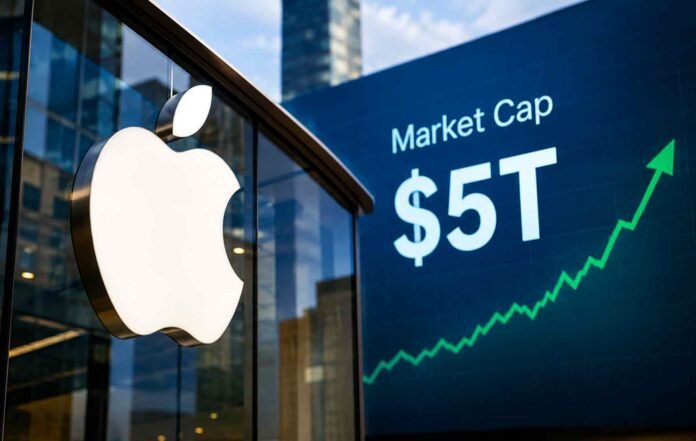
- Apple closed Wednesday at $342.96 per share, reaching a market capitalisation of approximately $5.005 trillion for the first time.
- Nvidia remains the most valuable US company, with a market capitalisation of $5.33 trillion after crossing the $5 trillion mark in October 2025.
- Apple shares have risen since John Ternus became CEO, while higher memory and storage costs have prompted changes to product pricing.
- Apple’s November 2 earnings report and the upcoming iPhone Duo pre-orders could offer important clues about demand, costs and future growth.
Apple has reached a major milestone on Wall Street, becoming the second company to close a trading session with a market valuation above $5 trillion. The achievement puts the iPhone maker alongside Nvidia in an exclusive group, marking another significant moment for the world’s biggest technology companies.
Apple shares ended Wednesday’s session at $342.96, gaining 0.5% on the Nasdaq. That closing price valued the company at approximately $5.005 trillion, allowing it to finish above the $5 trillion threshold for the first time.
The milestone is particularly notable because Apple had crossed the $5 trillion mark during intraday trading on six previous occasions. However, its valuation had slipped below that level before the market closed each time. Wednesday’s session finally delivered the closing milestone the company had been chasing.
The achievement came during a difficult day for much of the technology sector, with several major companies recording losses. Apple’s ability to move higher while its rivals struggled highlighted the company’s recent share price strength and investors’ continued interest in its business.
Apple reaches a historic $5 trillion valuation
Apple’s latest market valuation places it among the most valuable businesses ever traded on the stock market. Nvidia remains ahead, with a reported market capitalisation of $5.33 trillion, maintaining its position as the most valuable US company.
Nvidia first closed above $5 trillion in October 2025, setting a benchmark that Apple has now matched in terms of reaching the same valuation milestone. Apple briefly overtook Nvidia in July, demonstrating how quickly market leadership can change as investors reassess the prospects of major technology companies.
The latest gains also stand out because Apple’s share price has continued to rise despite pressure on the wider technology sector. Several prominent stocks finished Wednesday lower, including Nvidia, Microsoft, Amazon, Meta and Alphabet.
Oracle recorded one of the steepest declines among major technology names, falling 8.83%. Meta shares dropped 3.27%, while Nvidia lost 3.16%. Microsoft declined 1.80%, Amazon fell 1.74%, and Alphabet shares slipped 1.68%.
Apple’s modest 0.5% gain was enough to push its valuation across the crucial threshold. It was a relatively small daily move with an unusually large symbolic impact.
A leadership change marks a new chapter for Apple
Apple’s market milestone comes during a period of transition at the top of the company. In April, Apple announced that Tim Cook would step down as chief executive, bringing an end to his tenure in the role after succeeding Steve Jobs in 2011.
John Ternus took over as CEO on September 1, while Cook moved into the position of executive chairman. Ternus, who previously led Apple’s hardware engineering organisation, now faces the challenge of maintaining the company’s financial performance while guiding its next phase of product development.
Apple shares have performed well since the leadership change. The stock has gained 8.2% from its August 31 closing price of $316.85, according to the figures reported in the original article.
The company’s ability to sustain investor confidence will remain important as the new leadership team navigates rising manufacturing expenses, changing consumer demand and competition across the technology industry.
Apple’s valuation reflects more than the popularity of its iPhones. Its broader ecosystem of hardware, software and services continues to play a central role in its business, while investors are watching how effectively the company can protect profitability as costs increase.
Rising chip costs put Apple’s pricing strategy in focus
Apple’s recent share price gains have come at a time when memory and storage components are becoming more expensive. Demand from data centres has contributed to higher prices and supply pressures, creating additional challenges for companies that rely on these components in their products.
For Apple, the timing presents a difficult balancing act. Higher component costs can squeeze profit margins, particularly when a company sells devices in large volumes and depends on carefully managed production expenses.
The company has responded by raising prices across parts of its product range. According to the original report, the increases have also affected older iPhone models, which have traditionally received discounts when newer versions arrive.
This represents an important shift in pricing strategy. Older devices have often provided a more affordable entry point for customers who do not need the latest hardware. Reducing discounts or increasing prices could help Apple offset higher costs, although the impact on demand will depend on how customers respond.
Apple’s shares have reportedly gained 25% since the first round of price increases. That performance suggests investors have remained confident in the company’s ability to manage its costs, though share price movements alone do not establish whether the strategy will deliver lasting improvements in profitability.
The upcoming earnings report should provide a clearer picture of how much pressure rising component prices are placing on Apple’s business and whether its pricing decisions are helping to protect margins.
Upcoming earnings and new products could shape the next move
Apple is scheduled to report its fiscal fourth quarter results on November 2. Investors will be looking for details on revenue, profitability and the company’s ability to absorb higher memory and storage costs.
The results could also shed light on whether customers are continuing to buy Apple devices despite price increases. Strong demand would support the company’s efforts to protect margins, while signs of weaker sales could raise questions about how much pricing flexibility Apple has.
Product launches will also remain important. Pre-orders for the iPhone Duo are scheduled to begin on Friday, according to the original report. The response to the new device could offer an early indication of consumer interest and provide another point of focus for investors.
For now, Apple’s close above $5 trillion represents a significant achievement, but the next challenge is sustaining that valuation. Nvidia remains ahead, and competition among the world’s largest technology companies continues to intensify.
Apple’s upcoming earnings and the reception of its latest products will help determine whether the company can build on this milestone. Its performance will also offer insight into how effectively an established technology giant can navigate rising costs while maintaining customer demand.
Follow TechBSB For More Updates