
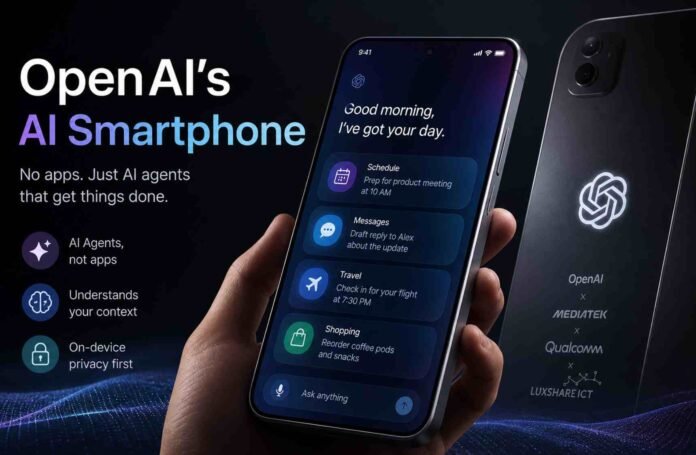
- OpenAI may build a smartphone with MediaTek, Qualcomm, and Luxshare
- The device could replace apps with AI agents for everyday tasks
- It may use both on device and cloud AI for performance and flexibility
- Mass production is expected around 2028, with earbuds possibly arriving earlier
OpenAI may be preparing to step beyond software and into full scale consumer hardware, with early signals pointing toward a smartphone built around AI agents rather than traditional apps. The idea is still speculative, but it is gaining credibility thanks to insights from well known industry analyst Ming Chi Kuo, whose track record with hardware predictions has often proven reliable.
According to Kuo, OpenAI is exploring partnerships with major chipmakers like MediaTek and Qualcomm, while Luxshare could take on a key role in design and manufacturing. If this collaboration materializes, it would mark a significant shift for OpenAI, positioning it not just as an AI platform provider but as a direct competitor in the hardware ecosystem dominated by Apple and Google.
A phone without apps might not be far fetched
What makes this potential device particularly interesting is its core concept. Instead of relying on apps as we know them today, the phone could operate through AI agents that perform tasks on behalf of the user. This would remove the need to manually switch between apps, search for services, or navigate interfaces.
The idea reflects a broader industry trend. Some tech leaders are already suggesting that the app based model may not survive in its current form. The reasoning is simple. Apps act as silos, limiting how much data and functionality can be shared across services. AI agents, on the other hand, could act as a unified layer, handling everything from communication and scheduling to shopping and entertainment through natural language interaction.
If OpenAI builds a device from the ground up, it would not face the same restrictions imposed by existing app ecosystems. This could allow deeper system level integration of AI, giving it more control over how features are accessed and how data is used.
Context aware AI could be the real game changer
Another key idea behind the rumored device is continuous context awareness. Instead of responding only when prompted, the phone would actively understand the user’s habits, preferences, and environment. This could enable more proactive assistance, such as anticipating needs, suggesting actions, or automating everyday tasks without explicit input.
To make this work, OpenAI is expected to combine on device AI models with cloud based processing. Smaller models running locally would handle quick, privacy sensitive tasks, while more complex requests would be processed in the cloud. This hybrid approach is already becoming common in AI systems, but a dedicated device could take it further.
However, this also raises important questions about privacy and data access. A device that continuously learns from user behavior would require significant trust, especially if it gathers more detailed insights than traditional apps.
Timeline and what to expect next
The smartphone itself is not expected anytime soon. Kuo suggests that key specifications and supply chain decisions could be finalized by late 2026 or early 2027, with mass production potentially beginning in 2028. That gives OpenAI time to refine both its hardware strategy and AI capabilities.
In the shorter term, the company is reportedly working on its first hardware product, which could arrive as early as the second half of 2026. Early reports indicate that this device may take the form of uniquely designed earbuds, possibly serving as a stepping stone toward more ambitious products like a smartphone.
If these plans move forward, OpenAI would be entering one of the most competitive markets in tech. But it would also be doing so with a fundamentally different vision, one that could reshape how people interact with their devices.
Follow TechBSB For More Updates