
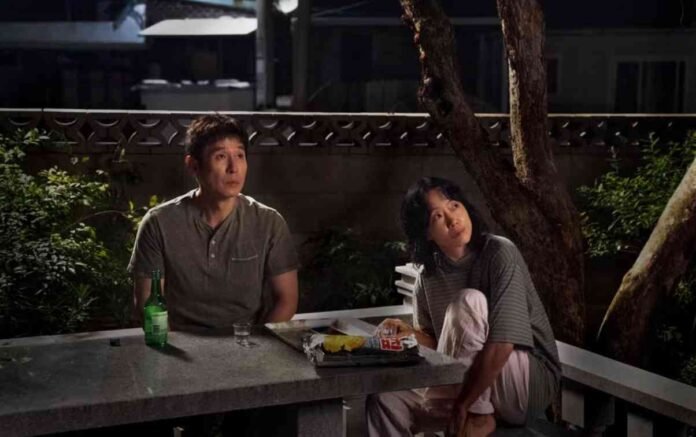
- Possible Love explores the tenth commandment through desire, capitalism, inequality and the temptation to possess other people’s lives.
- Sang-woo represents the destructive nature of unchecked power, while Mi-ok’s confrontation with him becomes an act of resistance.
- Ye-ji’s documentary highlights the ethical conflict between capturing someone’s suffering and genuinely helping them.
- Director Lee Chang-dong considers the ending hopeful because Mi-ok and Ho-seok gain emotional awareness and a greater sense of personal freedom.
Netflix’s Possible Love is the kind of psychological drama that stays with you long after the credits roll. Directed by acclaimed South Korean filmmaker Lee Chang-dong, the film explores desire, class inequality, personal freedom and the complicated relationship between storytelling and exploitation.
Rather than delivering a straightforward narrative with clear answers, Possible Love invites viewers to question the motivations of its characters. Its final moments are particularly intriguing, leaving audiences wondering whether its central figures have finally found a way to escape the circumstances controlling their lives.
The film follows two couples whose lives become increasingly intertwined. One is struggling financially after a factory worker loses his job, while the other appears to enjoy a more privileged existence. A documentary filmmaker becomes fascinated by the struggling family, raising uncomfortable questions about whether telling someone else’s story can ever be entirely selfless.
Lee Chang-dong has now offered some insight into the film’s ending and the themes behind its most important scenes.
Warning: Spoilers for Possible Love follow.
Possible Love explores desire, power and the meaning of the tenth commandment
Possible Love began as part of a project inspired by Krzysztof Kieślowski’s acclaimed television series Dekalog, which explored the Ten Commandments through individual character driven stories.
Lee’s film draws inspiration from the tenth commandment, traditionally understood as a warning against coveting what belongs to others.
However, the director uses this idea to explore something much broader than jealousy or material desire.
For Lee, coveting is closely connected to power, particularly the influence that wealth and capitalism can have over people’s lives.
Sang-woo, played by Zo In-sung, represents this form of power. Although he appears charming, considerate and generous, his privileged position allows him to influence the lives of people around him in ways they cannot easily resist.
Mi-ok and Ho-seok, meanwhile, find themselves longing for lives that appear beyond their reach.
The documentary filmmaker Ye-ji introduces another dimension to the theme. As someone who wants to capture the experiences of others, she is also driven by a desire to possess their stories.
Lee acknowledges that this desire is not limited to his fictional filmmaker. He sees it as something that can exist within filmmaking itself.
The film therefore asks a difficult question: when does genuine interest in another person’s suffering become a form of exploitation?
Sang-woo’s disturbing behaviour reveals the darker side of power
One of Possible Love’s most unsettling developments involves Sang-woo and Mi-ok.
At first, Sang-woo appears to be a relatively harmless figure. His wealth, confidence and apparent kindness make him difficult to dislike.
However, his interactions with Mi-ok gradually reveal a more troubling side.
Lee explains that Sang-woo’s behaviour is not necessarily driven by a clear emotional attachment to her. Instead, he seems interested in testing her boundaries and seeing how far his influence can reach.
This is where the character becomes particularly important to the film’s broader argument.
Sang-woo already possesses considerable wealth and freedom, yet he continues to seek control over others. His behaviour reflects the director’s view of capitalism as a system that constantly seeks more, regardless of how much it already has.
For Mi-ok, however, the situation is far more consequential.
What might seem like a harmless game to Sang-woo has the potential to change her entire life. His actions threaten her family, her dignity and her sense of independence.
The turning point arrives when Mi-ok recognises the imbalance between them.
Rather than accepting the role of someone who can be manipulated, she decides to confront him.
Lee describes this moment as an expression of Mi-ok’s free will. By refusing to remain passive, she attempts to reclaim control over her own life.
The confrontation is not simply about revenge. It is about protecting her dignity against someone who believes his power gives him the right to influence others.
Ye-ji’s documentary camera raises uncomfortable questions
The relationship between Ye-ji and Ho-seok offers another perspective on the film’s central themes.
Ye-ji wants Ho-seok to share his experiences, particularly the struggles surrounding his family and working life. Her documentary project depends on gaining access to his personal story.
However, the process of recording someone else’s suffering can become invasive.
Lee acknowledges that the camera itself can be violent or exploitative. A filmmaker may genuinely care about the people they document while simultaneously benefiting from their pain.
This contradiction is central to Ye-ji’s character.
She wants to understand Ho-seok and help him express emotions he has kept buried. Yet her desire to capture his story can also place pressure on him to reveal things he might otherwise prefer to keep private.
Interestingly, Lee suggests that the camera may also offer a form of healing.
By speaking openly about his experiences, Ho-seok is finally able to confront emotions that have remained repressed.
The documentary therefore becomes both a source of discomfort and a potential means of connection.
This duality makes Possible Love particularly interesting. It refuses to suggest that filmmaking is either entirely noble or inherently exploitative.
Instead, the film acknowledges that the same act can create understanding while also crossing personal boundaries.
Possible Love ending explained: Is there hope for Mi-ok and Ho-seok?
The final scenes of Possible Love leave viewers with a sense of uncertainty, but Lee Chang-dong believes the conclusion offers genuine hope.
Mi-ok and Ho-seok have experienced considerable emotional turmoil throughout the film. Their relationship has been shaped by financial insecurity, social inequality and the influence of people who possess greater power than they do.
By the end, however, both characters have gained something important.
Ho-seok appears to have released some of the emotional burden he has carried for years.
His experience with Ye-ji’s documentary has forced him to confront his feelings, potentially allowing him to begin healing.
Mi-ok’s journey is different.
She has become aware of the forces that have controlled her life and understands that she does not have to accept their influence without resistance.
Her confrontation with Sang-woo represents a moment of self recognition. She understands that although she cannot immediately change the circumstances surrounding her, she still possesses the ability to make choices.
Lee suggests that this realisation is what makes the ending hopeful.
The film does not promise that Mi-ok and Ho-seok will return to their previous lives or that their problems will suddenly disappear.
Instead, it leaves open the possibility that they can move forward with a stronger understanding of themselves.
That is perhaps the most important distinction between a conventional happy ending and the conclusion of Possible Love.
The characters may not have escaped every difficulty, but they have discovered something that could help them face what comes next.
Ultimately, Possible Love is less concerned with offering definitive answers than with examining the forces that shape human behaviour.
Its ending suggests that freedom begins with recognising those forces and deciding whether to accept or resist them.
For Mi-ok and Ho-seok, that awareness could be the first step towards a different future.
Follow TechBSB For More Updates