
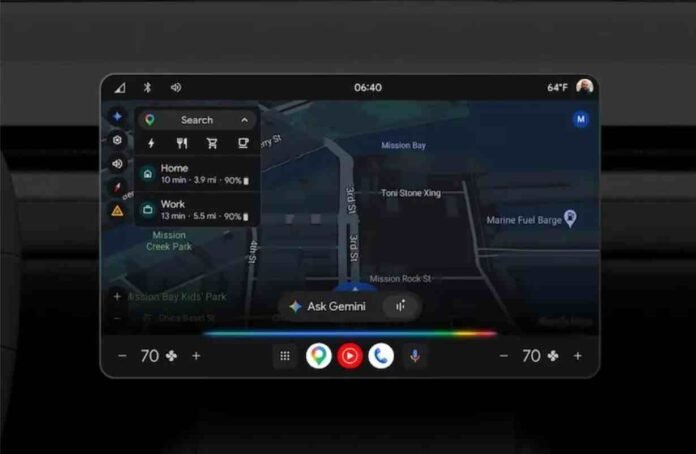
- Google is replacing Google Assistant in cars with the more advanced Gemini AI system
- The rollout begins in the US and will expand globally with more languages
- Millions of existing vehicles will receive Gemini via software updates
- Gemini enables natural conversations, smarter navigation, and hands free communication
Google is taking a decisive step toward redefining in car technology by introducing its Gemini AI assistant to vehicles equipped with Google built in. This move replaces the familiar Google Assistant with a far more capable and conversational system, signaling a shift in how drivers interact with their cars. Instead of issuing rigid voice commands, users will soon be able to speak naturally, ask follow up questions, and receive context aware responses while staying focused on the road.
The rollout begins in the United States with support for English, but Google has made it clear that this is only the starting point. Over time, the company plans to extend availability to more regions and languages. Importantly, this upgrade is not limited to newly manufactured vehicles. Many existing cars with compatible systems will receive Gemini through over the air software updates, making the transition more inclusive and widespread.
A broader push beyond a single automaker
The timing of the announcement closely follows news from General Motors, which confirmed that Gemini will be introduced to around four million vehicles across brands such as Cadillac, Chevrolet, Buick, and GMC. These models span from the 2022 model year onward, indicating a large immediate footprint.
However, Google’s own announcement avoided naming specific partners, hinting at a broader ecosystem strategy. Rather than tying Gemini to a single manufacturer, the company appears to be positioning it as a standard feature across multiple automakers that support Google built in. This approach mirrors how Android spread across smartphone brands, aiming for scale rather than exclusivity.
A more natural and capable in car assistant
What sets Gemini apart is its ability to handle complex, conversational requests. Drivers can ask for recommendations in a more human way, such as requesting a highly rated restaurant with outdoor seating along their route. The system can then refine results, answer follow up questions about parking or menu options, and even consider dietary preferences.
Beyond navigation and recommendations, Gemini integrates deeply with everyday driving tasks. It can adjust climate controls, provide real time directions, suggest music, and retrieve vehicle specific information. It also enhances communication by summarizing incoming messages and helping drivers respond without taking their hands off the wheel.
One of the more ambitious features is Gemini Live, currently in beta. This mode enables open ended conversations that go beyond simple commands. Drivers can brainstorm ideas, ask questions, or explore topics while driving, effectively turning the car into a space for both productivity and learning.
What this means for the future of connected vehicles
Google’s move reflects a larger trend in the automotive industry where software is becoming just as important as hardware. By embedding a more advanced AI assistant directly into vehicles, the company is aiming to make driving safer, more convenient, and more personalized.
Future updates are expected to deepen Gemini’s integration with services like Gmail, Google Calendar, and Google Home. This could allow drivers to manage schedules, control smart home devices, or handle emails seamlessly from their car. As these capabilities expand, the line between personal digital assistants and vehicle systems will continue to blur.
For now, drivers with compatible vehicles will start seeing prompts to upgrade once the rollout begins. Activation can be done through voice commands, on screen controls, or steering wheel buttons, ensuring easy access regardless of driving conditions.
Follow TechBSB For More Updates