
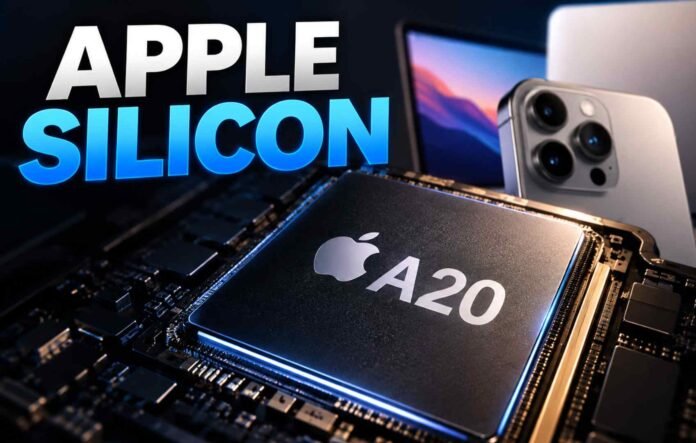
- Apple began developing its own smartphone chip in 2008, leading to the A4 in the iPhone 4 in 2010.
- Custom silicon gives Apple greater control over how hardware, software and services work together.
- The A20 Pro features a larger AI focused system than its predecessor, reflecting the growing importance of AI.
- Apple’s long term chip investment supports product differentiation, but manufacturing, engineering and efficiency remain important challenges.
Apple’s approach to chip design has become a defining part of its business, giving the company greater control over how its devices perform and how its software interacts with hardware. What began as an effort to develop more of its own technology has evolved into a long term strategy that influences the iPhone, iPad, Mac and other products.
The latest example is the A20 Pro, which powers Apple’s newest iPhones and features a larger system focused on artificial intelligence than its predecessor. The development highlights how Apple continues to adapt its silicon to meet changing demands, particularly as AI becomes a bigger part of everyday computing.
Rather than relying entirely on components designed by other companies, Apple has spent years building its own chips around the specific needs of its products. That decision has helped it shape the user experience, improve integration between devices and establish a greater degree of control over its technology.
From the First iPhone to Apple’s Custom Silicon
Apple’s interest in controlling its hardware dates back to the early days of the iPhone. When the original iPhone launched in 2007 and quickly attracted attention, Steve Jobs recognised that the company could gain an advantage by designing more of the components inside its devices.
The idea was straightforward. If Apple could develop the technology powering its products, it would have more freedom to determine how those products worked, rather than having to adapt its software and hardware around decisions made by external suppliers.
By 2008, Apple was working on its own smartphone chip. That effort led to the A4, which arrived in the iPhone 4 in 2010.
The A4 marked an important step in Apple’s development as a technology company. It gave Apple a more direct role in shaping the core hardware inside its smartphones and laid the groundwork for the custom silicon strategy that followed.
Since then, designing the main processors for its products has remained a central priority. Apple has continued developing chips tailored to the requirements of its devices, with each generation offering opportunities to refine performance, efficiency and integration.
This long term investment has also allowed Apple to build experience across several generations of hardware, rather than treating chip development as a one off project.
Why Designing Its Own Chips Matters
Apple’s custom silicon strategy is about more than producing a faster processor. One of its central advantages is the ability to develop hardware and software together.
When a company designs its own chips, it can make decisions about the processor architecture, specialised computing functions and the way different components work together. Apple can then build its operating systems and applications around those capabilities.
That approach gives the company greater flexibility in determining how its devices behave.
For example, a processor can be designed with specific workloads in mind, including photography, graphics, power management and artificial intelligence. Apple can tailor its hardware to the features it wants to deliver, rather than depending entirely on the capabilities and priorities of a third party chipmaker.
This integration can influence several aspects of the user experience, from how quickly applications respond to how efficiently a device handles demanding tasks.
It also helps Apple maintain a consistent approach across its product range. While an iPhone and a Mac have different requirements, Apple’s experience designing chips for multiple devices gives it opportunities to develop technologies that support its broader ecosystem.
The result is a strategy in which hardware development is closely connected to the company’s software and services.
The A20 Pro and Apple’s Growing AI Ambitions
Apple’s latest A20 Pro chip illustrates how the company is adapting its silicon development to emerging technology demands.
The processor includes a larger AI focused system than the previous generation, according to the supplied Barron’s report. That change reflects the growing importance of artificial intelligence in smartphones and other personal devices.
AI workloads can place different demands on a processor than traditional applications. Features involving image processing, voice recognition and other intelligent functions may benefit from specialised hardware designed to handle those tasks efficiently.
By incorporating more AI focused capabilities into its chips, Apple can build a hardware foundation for features that rely on machine learning and other computational techniques.
However, a larger AI system does not automatically mean every AI feature will run faster or deliver a better experience. The outcome also depends on software optimisation, memory, power consumption and how effectively applications make use of the hardware.
Apple’s chip development therefore needs to address more than raw processing power. It must balance performance with efficiency and ensure that new capabilities fit the practical requirements of a smartphone.
The A20 Pro is a continuation of that broader effort. It demonstrates how Apple is adjusting its custom silicon to support the changing expectations placed on modern devices.
A Long Term Advantage, With More Work Ahead
Apple’s investment in custom chips has helped distinguish its approach from companies that depend more heavily on externally designed processors.
The ability to coordinate hardware, software and services gives Apple greater control over product development. It can make decisions about its chips with its own devices and operating systems in mind, potentially creating advantages that extend beyond any individual processor generation.
That does not mean Apple operates independently of the wider semiconductor industry. Chip manufacturing, production capacity, advanced fabrication technology and supply chain relationships remain important parts of bringing its designs to market.
Developing custom silicon also requires substantial engineering resources and sustained investment. Each new generation must address evolving technical requirements while delivering improvements that matter to users.
Artificial intelligence adds another layer of complexity. As AI features become more prominent, Apple will need to ensure that its processors can support increasingly demanding workloads without compromising the battery life, reliability and responsiveness expected from its products.
The company’s history shows that custom chip development is not a short term experiment. It has been a consistent part of Apple’s product strategy since the A4 arrived in 2010.
The A20 Pro represents another stage in that journey. Its expanded AI focused capabilities underline how Apple continues to shape its hardware around the features it wants to deliver.
Ultimately, the value of Apple’s chip strategy lies in the combination of its components, software and services. Owning more of that technology gives the company greater freedom to build products around its own priorities, while creating a foundation for future generations of devices.
Follow TechBSB For More Updates

