
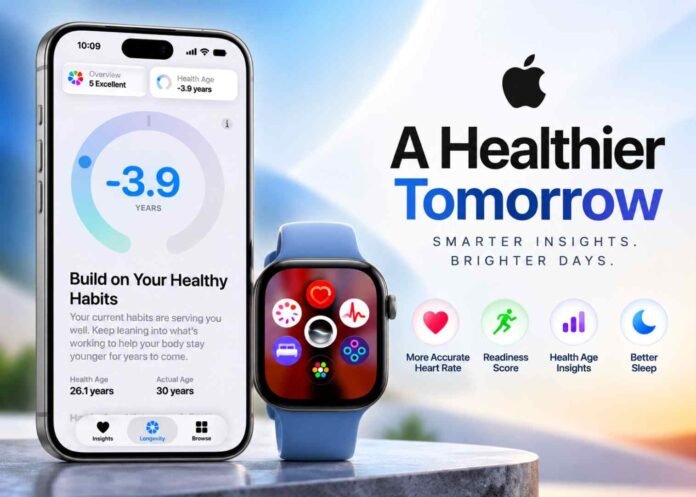
Apple is taking another big step into health and fitness with the Apple Watch Series 12 and Apple Watch Ultra 4, introducing a new health sensing system, more frequent heart rate and heart rate variability measurements, and a new daily readiness score.
The company is also giving its Health app a major redesign. With iOS 27 and iPadOS 27, Apple Intelligence will be used to turn a growing amount of health and fitness data into easier to understand insights and recommendations.
This is arguably the more interesting part of Apple’s latest health push. The Apple Watch has been collecting increasingly detailed information about activity, sleep, heart rate and other metrics for years. The challenge has always been turning all that information into something people can actually use.
Apple’s new approach is designed to do exactly that.
The redesigned Health app will bring daily insights into areas such as sleep, heart health, fitness and readiness, while a new Longevity section will look at longer term trends. There is also a new Health Age feature, at home movement assessments using the iPhone camera and Apple Watch, and expanded support for perimenopause and menopause tracking.
Here is everything you need to know about the new Apple Watch health and fitness features.
Apple Watch Series 12 Gets a New Health Sensing System
The Apple Watch Series 12 and Apple Watch Ultra 4 introduce Apple’s new Health Sensing System, which combines upgraded optical and electrical heart sensors with new software designed to analyze health data more frequently.
Apple says the new system provides the most accurate heart rate sensing in a wearable based on a study involving more than 1,000 participants.
The company has also redesigned the optical heart sensor with larger, more power efficient green LEDs. This allows the watch to measure heart rate every five seconds throughout the day.
That is a meaningful change from simply checking heart rate during workouts or occasional measurements.
More frequent readings give Apple more data points to work with when analyzing a user’s physiological state. The company says this can also help make features such as Exercise and Move Activity rings more accurate.
Users can view their current heart rate through the updated Heart Rate app and new watch face complications.
For someone who exercises regularly, the benefit is fairly straightforward. The watch can build a more detailed picture of how the heart responds to movement and recovery.
For everyday users, however, the more interesting benefit may come from what Apple does with all those measurements in the background.
Heart Rate Variability Gets More Frequent Measurements
Apple is also increasing the frequency of heart rate variability, or HRV, measurements.
HRV measures variations in the time between individual heartbeats. It is commonly used as one of several indicators related to recovery and physiological stress, although it should not be treated as a standalone diagnosis of health.
With the new Apple Watch health sensing system, HRV can be measured as frequently as every five minutes.
Apple says this is 24 times more frequent than before.
The watch provides two HRV measurements for different purposes. Recovery HRV is intended to provide insight into daily stress and recovery, while overall HRV is designed to provide a broader view that can include cardiovascular health.
Overnight vitals will also include Recovery HRV compared with the user’s personal baseline.
This is an important detail because health data can be difficult to interpret without context. A heart rate or HRV value that looks unusual in isolation may not necessarily mean anything significant for one person.
Comparing measurements against an individual’s own historical patterns can provide a more useful picture.
Apple is also adding a daytime vitals view. That means users can compare what is happening during the day with their overnight measurements and potentially notice changes earlier.
New Apple Watch Readiness Score Helps Plan Your Day
One of the most noticeable additions is a new Readiness feature.
Rather than presenting users with a collection of separate numbers, Readiness combines recent activity, vital signs and sleep data to produce a score between 0 and 10.
The score is then translated into one of four recommendations:
- Recover
- Pace Yourself
- Ready
- Go For It
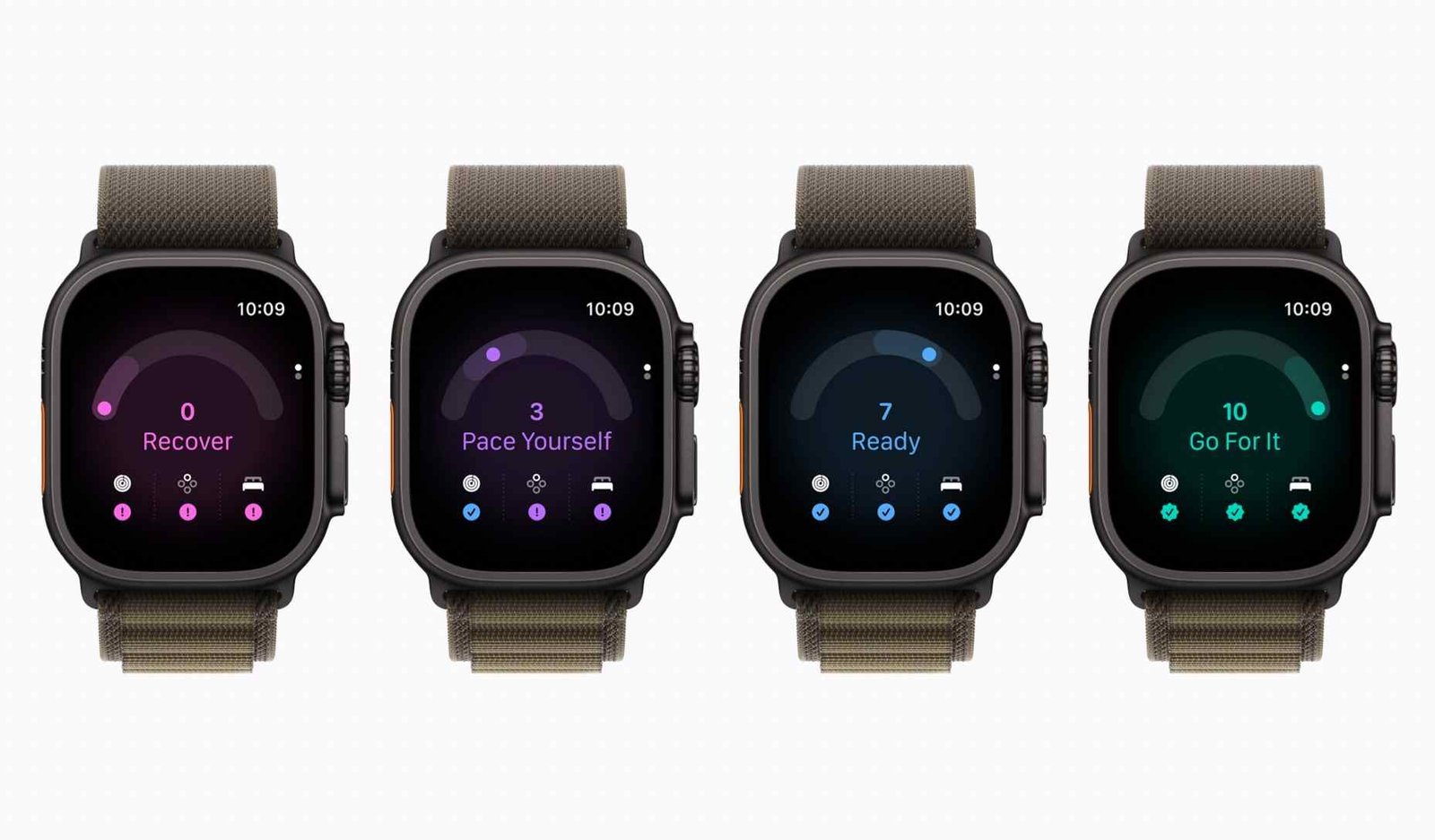
The goal is to make health and fitness information easier to act on.
Instead of looking at sleep, heart rate, HRV and workout history separately, users get a single snapshot of how prepared their body may be for the day.
The score is not fixed for the entire day either.
Apple says Readiness can update as new information becomes available. For example, an intense workout or a change in daytime vital signs could influence the score later in the day.
The feature was developed using data from Apple’s Heart and Movement Study, with input from exercise scientists and physicians at Apple.
For athletes and people who follow structured training plans, this could be particularly useful.
Imagine waking up after a poor night’s sleep and seeing a lower readiness score. Rather than automatically pushing through a planned high intensity workout, the user might decide to reduce the intensity or focus on recovery.
That does not mean the Apple Watch is replacing a doctor or professional trainer. The Readiness score is better understood as a personal wellness and training guide based on the data the watch has collected.
The real value will likely come from watching how the score changes over time rather than obsessing over a single number.
Apple’s Redesigned Health App Puts AI at the Center
The Apple Watch is only one part of Apple’s health strategy.
The company is also redesigning the Health app for iPhone and iPad, with Apple Intelligence playing a much larger role.
The redesigned app is intended to bring together long term health information while providing shorter, more actionable updates throughout the day.
Instead of simply displaying charts and numbers, Apple wants the Health app to explain what those numbers could mean in the context of a user’s own history.
That is where the new Insights tab comes in.
Insights Tab Provides More Personalized Information
The new Insights tab provides a changing summary of information across areas including heart health, sleep, readiness, fitness, vitals and cycle tracking.
The summary can update throughout the day as new information arrives.
There is also a new For You section that provides personalized recommendations and relevant health content based on the user’s data.
For example, Apple says the Health app could recommend improving a wind down routine after a period of consistently late nights.
This is a subtle but important shift.
Traditional health apps often make users do the work of interpreting their own information. Apple’s redesigned Health app is attempting to make the software more proactive.
The aim is not simply to say that a user’s sleep was shorter than usual. Instead, the app can put that information into a broader context and provide suggestions that may help the user understand their routine.
Apple says the redesigned experience is built with privacy in mind, with personal health information remaining under the user’s control.
New Longevity Tab Looks at Long Term Health
The biggest addition to the Health app may be the new Longevity tab.
Rather than focusing only on today’s activity or last night’s sleep, the Longevity section is designed to analyze longer term trends.
It covers areas including heart health, sleep, mental wellbeing, movement health, metabolic health, hearing and nutrition.
The app will pull together information from compatible Apple devices, clinical health records, supported third party apps and other sources to provide a broader picture.
This could be particularly useful for users who have years of health and fitness information stored in Apple’s ecosystem.
Instead of looking at isolated measurements, users can potentially see how different areas have changed over time.
Health Age Shows How Your Metrics Compare With Your Age
Apple is also introducing Health Age, a new feature that uses Apple Watch data to estimate how a user’s health metrics are tracking relative to their chronological age.
The feature can consider information such as VO2 max, resting heart rate, sleep and HRV.
Users can also add certain laboratory results, including A1c and LDL measurements, to provide additional context.
There is an important distinction here.
Health Age should not be interpreted as a medical diagnosis or a prediction of how long someone will live. It is a way of presenting multiple health and fitness measurements in a format that is easier for users to understand.
Apple says the feature is informed by available scientific evidence, but individual health is considerably more complicated than a single number.
That makes the surrounding information especially important.
The Longevity section is designed to show which areas are influencing the overall picture, giving users more context rather than simply displaying a score.
Apple Brings At Home Health and Fitness Assessments
Apple is also making its health platform more interactive with new Movement Evaluations.
The feature allows users to perform physical assessments at home using an iPhone camera and Apple Watch.
The assessments are designed to measure areas including flexibility, strength, balance, movement mechanics and VO2 max.
Apple says the system uses vision based AI models to provide real time audio and visual feedback.
The company also says the experience runs entirely on the device, with no video recorded, stored or shared.
That privacy detail could be important for users who may otherwise feel uncomfortable using a camera for physical assessments.
Apple developed the feature with input from clinicians.
The broader idea is to make certain aspects of fitness assessment more accessible without requiring users to immediately visit a specialist for basic measurements.
Again, these assessments should not be confused with a medical examination. They are intended to provide useful wellness and fitness information rather than replace professional medical care.
Lab Testing Comes Directly to the Health App
Apple is also expanding the role of the Health app beyond data collected by its own devices.
Users in the US will be able to schedule and purchase certain laboratory tests through the Health app.
The service will provide access to tests covering more than 50 biomarkers through approximately 2,000 Quest Diagnostics locations.
Apple says the service will cost $119.
The idea is to make it easier for users to connect laboratory results with the other health information already stored in the Health app.
For example, a user could view lab results alongside trends in fitness, sleep and other measurements.
That could make the Health app more useful as a central health information hub, although users should still discuss concerning or abnormal medical results with qualified healthcare professionals.
Health Content Becomes More Personalized
Apple is also adding more health related educational material.
The redesigned Health app will provide videos and articles based on different areas of a user’s health information.
If a user receives a lab result, for example, the app may provide an explanation from an Apple health expert about what that particular measurement means.
Similarly, someone who identifies balance as an area for improvement during a movement assessment could receive educational content and an exercise plan focused on balance.
This approach could make health information less intimidating.
Instead of searching the internet for explanations of individual metrics, users can receive educational material within the same application where their data is stored.
The challenge will be making sure recommendations remain useful without becoming overwhelming.
Apple Expands Menopause and Fitness Features
Apple is also expanding its Cycle Tracking tools with support for perimenopause and menopause.
With iOS 27, users can indicate whether they are in perimenopause or menopause and track symptoms and cycle patterns over time.
The system will also provide educational information and notifications related to cycle changes.
One particularly notable feature is aimed at users aged 40 and older.
Apple says the Health app can notify users when changes in their logged cycle patterns are suggestive of perimenopause, encouraging them to discuss the changes with their doctor.
If someone logs bleeding after menopause, the app can also provide a notification recommending that they speak with a doctor.
These features are designed to provide awareness rather than diagnose a medical condition.
That distinction matters because menstrual cycles can vary for many reasons, and health tracking data should always be considered alongside a person’s broader medical circumstances.
Still, bringing perimenopause and menopause into Apple’s existing health ecosystem could make Cycle Tracking more useful across a wider range of life stages.
Apple Adds More Fitness Features Across Its Devices
Apple’s health push is not limited to heart monitoring and the Health app.
The company is also expanding several fitness features across its ecosystem.
Workout Buddy can now operate on Apple Watch without requiring the iPhone to be nearby. Apple is also expanding the amount of fitness information used by Workout Buddy when delivering motivational feedback.
The feature supports English and Spanish.
Apple is also expanding GymKit functionality.
Users with compatible AirPods Pro models can sync heart rate information through an iPhone with supported gym equipment, including treadmills and indoor bikes.
This could make indoor workouts more seamless for people who already use Apple devices across their fitness routine.
Treadmill accuracy is also being improved through new machine learning models designed to calculate distance more accurately from the beginning of a walk or run.
That may sound like a small change, but treadmill tracking has historically been an area where wearable devices can struggle because they do not have GPS data available indoors.
Apple Watch Series 12 Health Features: What Matters Most?
Apple’s latest health updates are less about adding one flashy medical feature and more about building a connected health platform.
- The new heart sensing system gives Apple Watch more frequent data.
- The Readiness score turns several measurements into a simple daily guide.
- The redesigned Health app uses Apple Intelligence to make the information easier to understand.
- The Longevity tab looks at long term trends.
- Health Age gives users another way to interpret their metrics.
- Movement Evaluations extend health and fitness tracking into at home assessments.
- And the expanded Cycle Tracking experience makes Apple’s platform more relevant across additional stages of life.
The important thing is that many of these features work together.
A user’s sleep information can influence Readiness. Heart rate and HRV can provide additional context. Fitness data can contribute to longer-term insights. Laboratory results can add another layer of information.
That creates a health ecosystem rather than a collection of disconnected features.
Apple Watch Series 12 and Ultra 4 Availability
Apple Watch Series 12 and Apple Watch Ultra 4 introduce the new health sensing system, while the redesigned Health app will arrive later this year.
Apple says the redesigned Health app will initially be available in US English, with additional languages coming later.
watchOS 27 will be available from September 14 for Apple Watch Series 9 or later, Apple Watch SE 3 and Apple Watch Ultra 2 or later. Compatible features also require a supported iPhone running iOS 27.
Not every health feature will be available on every Apple Watch model, iPhone or in every country.
Some features also have age requirements or depend on specific hardware. For example, Health Age requires an Apple Watch, while certain VO2 max related evaluations require Apple Watch, AirPods Pro 3 or a compatible third party heart rate sensor.
Availability can also vary because of regional regulations and language support.
Final Verdict
The Apple Watch Series 12 and Apple Watch Ultra 4 mark another significant expansion of Apple’s health ambitions.
The new Health Sensing System is the foundation. More frequent heart rate and HRV measurements give the Apple Watch a richer stream of information to work with, while the new Readiness score attempts to turn that data into something people can actually use during their daily routine.
But Apple’s redesigned Health app could ultimately have the bigger impact.
With Apple Intelligence, the app is moving away from simply being a digital storage cabinet for health data. Apple wants it to explain trends, surface relevant information and provide personalized suggestions based on what it knows about the user’s activity and history.
The new Longevity tab takes that idea further by looking beyond individual workouts and sleep sessions.
Health Age, Movement Evaluations, laboratory testing and expanded Cycle Tracking show how broad Apple’s health ambitions have become.
There are obvious limits. A smartwatch cannot replace a doctor, and an AI generated health insight should not be treated as a diagnosis. Metrics such as HRV, VO2 max and resting heart rate are most useful when viewed as part of a wider picture rather than isolated numbers.
Even with those limitations, Apple’s approach is becoming increasingly clear.
The Apple Watch is no longer just an activity tracker. Apple is trying to turn it into a long term health companion, with the iPhone and Health app acting as the place where all that information comes together.
If Apple can make these insights genuinely useful without overwhelming users or compromising privacy, the new health features could become some of the most important additions to the Apple Watch experience.
Frequently Asked Questions
What is new in Apple Watch Series 12?
Apple Watch Series 12 introduces a new Health Sensing System, more frequent heart rate and HRV measurements, a new Readiness score and an updated Heart Rate experience.
What is the Apple Watch Readiness score?
Readiness is a daily 0 to 10 score based on recent activity, vital signs and sleep information. It provides recommendations such as Recover, Pace Yourself, Ready or Go For It.
How often does Apple Watch Series 12 measure heart rate?
Apple says the new health sensing system can measure heart rate every five seconds throughout the day.
How often does Apple Watch Series 12 measure HRV?
The new system can measure heart rate variability as often as every five minutes, according to Apple.
What is Health Age on Apple Watch?
Health Age is a feature in Apple’s redesigned Health app that uses available health and fitness metrics to show how those measurements are tracking relative to a user’s chronological age.
Does Health Age predict life expectancy?
No. Health Age is not a prediction of lifespan or a medical diagnosis. It is a way of presenting selected health and fitness measurements in relation to chronological age.
Can the Apple Watch perform a health assessment at home?
Apple is introducing Movement Evaluations that use an iPhone camera and Apple Watch to assess areas such as flexibility, strength, balance, movement mechanics and VO2 max.
Does Apple Watch diagnose medical conditions?
Apple Watch health features provide wellness and health information, but they should not be treated as a replacement for professional medical diagnosis or medical care.
What is new in Apple’s Health app?
The redesigned Health app adds an Insights tab, a Longevity tab, Health Age, personalized recommendations, movement evaluations, expanded health content and new options for adding laboratory data.
Does the Health app support menopause tracking?
Yes. With iOS 27, Cycle Tracking adds support for perimenopause and menopause, including symptom tracking, cycle information, educational content and certain notifications.
When is the redesigned Apple Health app available?
Apple says the redesigned Health app will become available later this year, initially starting with US English and expanding to additional languages.
Follow TechBSB For More Updates

