
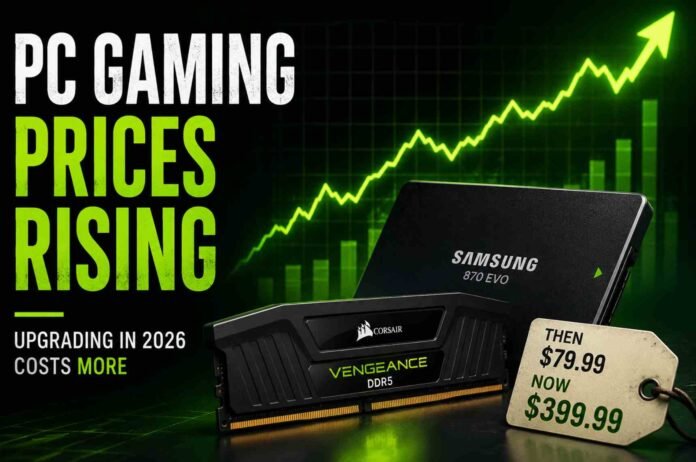
- SSD prices have surged in 2026, making former budget storage options several times more expensive.
- Rising DDR5 RAM costs are significantly increasing the overall price of gaming PC builds.
- Higher manufacturing expenses could push CPU prices up in the near future.
- Prebuilt gaming PCs now offer better value than many custom built systems due to bulk component pricing.
If you have been thinking about building a new gaming PC or upgrading an existing one, 2026 has become one of the toughest years in recent memory. The days of waiting for a major sale to grab affordable SSDs, RAM, or other essential components seem to be slipping away.
Even seasoned deal hunters are finding it difficult to recommend upgrades because the discounts simply are not what they used to be.
A perfect example is the pricing of Samsung’s popular 2TB SATA SSD. A product that once sold for as little as $79.99 is now listed at nearly $400 despite being advertised as heavily discounted. While retailers promote large percentage savings based on inflated list prices, the actual selling price remains dramatically higher than what buyers paid just a year or two ago.
This growing gap between advertised discounts and real value reflects a much larger problem affecting the entire PC hardware market.
SSD and RAM Prices Have Changed the Buying Equation
Storage and memory have become the biggest pain points for PC buyers this year. SSD prices have climbed steadily, while DDR5 memory has become significantly more expensive across many regions. Instead of finding meaningful discounts during regular sales events, shoppers are now seeing prices that would have seemed unreasonable only months ago.
Industry experts have also warned that the retail SSD market has weakened considerably. Manufacturers are reportedly focusing more on enterprise demand, where higher margins make better business sense. That shift has reduced the pressure to compete aggressively on consumer pricing.
Memory is facing similar challenges. Rising production costs, supply constraints, and growing demand from artificial intelligence infrastructure have all contributed to sustained price increases. Rather than expecting prices to normalize soon, many analysts believe elevated costs could remain for an extended period.
Unfortunately, the situation may not stop with storage and memory. Some chip manufacturers have already indicated that production costs are expected to rise again next year, increasing concerns that processors could become even more expensive in the coming months.
Building a Mid Range Gaming PC Now Costs Much More
For gamers who upgraded in late 2025, the timing now looks fortunate. Many managed to secure modern processors, graphics cards, RAM, and SSDs before the latest wave of price increases hit the market.
A mid range gaming system featuring a Ryzen 9600X processor, Radeon RX 9060 XT graphics, 32GB of RAM, and a 2TB NVMe SSD could previously be assembled for well under $1,300. Today, building a comparable machine requires a substantially larger investment.
The rising cost of memory and storage has had the biggest impact on total build budgets. Components that once represented a relatively small percentage of overall spending are now consuming a much larger share of the final price. For many buyers, that changes the economics of building a PC from scratch.
Instead of gradually upgrading over time, some gamers are delaying purchases altogether in the hope that prices eventually improve. Others are compromising by choosing lower capacities or postponing storage upgrades until the market becomes more favorable.
Prebuilt Gaming PCs Are Becoming a Smarter Choice
For years, building a gaming PC yourself was generally the most cost effective option. That advice is becoming harder to justify in the current market.
Large system builders purchase components in bulk and often negotiate pricing that individual consumers cannot access. As a result, complete gaming desktops can sometimes deliver better overall value than buying every component separately.
Promotional sales have also made certain prebuilt systems surprisingly competitive. While these systems are not immune to higher hardware costs, discounts on complete configurations occasionally offset the inflated prices of individual components.
This does not mean every prebuilt PC represents a bargain. Buyers still need to compare specifications, upgrade options, cooling solutions, and warranty coverage before making a decision. However, for anyone entering the market today, prebuilt systems deserve far more consideration than they did in previous years.
Looking ahead, there is little evidence that component pricing will return to previous lows anytime soon. Seasonal shopping events such as Black Friday may still offer worthwhile savings, but expectations should remain realistic. Discounts are likely to reduce prices from today’s elevated levels rather than recreate the exceptional bargains buyers enjoyed in earlier years.
For gamers planning an upgrade, patience may help, but waiting is no longer a guarantee of dramatically lower prices. The PC hardware market has shifted, and affordability is no longer something buyers can take for granted. Until manufacturing costs ease and supply conditions improve, assembling a budget friendly gaming PC will remain a much greater challenge than it once was.
Follow TechBSB For More Updates