
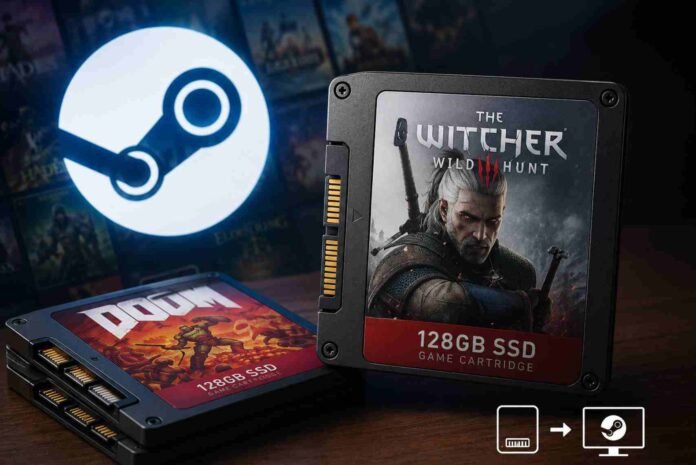
- A Steam user converted SATA SSDs into physical style game cartridges complete with artwork and auto launch functionality.
- The project recreates the feel of physical media while still relying on digital platforms like Steam.
- Rising SSD prices make the concept impractical for widespread adoption despite its creative appeal.
- GOG’s DRM free ecosystem would be an even better fit for this style of physical game preservation.
The idea of bringing physical game cartridges back to PC gaming sounds like something from another era. Yet one Steam enthusiast has managed to give the concept a modern twist by using SATA SSDs as dedicated game storage devices. The project has quickly attracted attention because it combines nostalgia with a practical approach to organizing digital games.
While it is unlikely to become a mainstream format anytime soon, the experiment has reignited conversations about digital ownership, DRM, and the future of physical media in gaming. Ironically, it also arrives at a time when SSD prices remain unusually high, making the concept far more expensive than it would have been just a few years ago.
A Creative Take on Modern Physical Game Collections
A Steam user recently showcased a unique system that transforms 2.5 inch SATA SSDs into physical game cartridges. Each SSD stores an individual game and features custom artwork on the outside, giving every drive the appearance of a classic boxed game cartridge.
The project goes beyond aesthetics. The creator also developed a script that automatically detects the inserted SSD, opens the correct Steam page, and can even launch the installed game. The result is an experience that closely resembles inserting a cartridge into a console, despite the game still being managed through Steam.
The setup offers a satisfying physical element that many PC gamers have not experienced for years. Instead of browsing through a digital library filled with hundreds of titles, players can simply pick up a labeled SSD and plug it into their system to begin playing.
Although the concept is primarily aimed at hobbyists, it demonstrates how older ideas can be adapted to modern hardware with a little creativity.
Why the Timing Could Not Be Worse
As interesting as the project is, the current storage market makes it difficult to recommend as an affordable solution.
SSD prices have risen considerably in recent months, driven by supply constraints and broader memory market issues. What might once have been an inexpensive way to build a physical collection has now become a costly hobby. The Reddit creator reportedly managed to purchase used SSDs at low prices, something that may not be easy for most users to replicate today.
Buying a separate SSD for every game quickly becomes expensive, especially for larger AAA releases that often exceed 100GB. Even budget SATA drives represent a significant investment when multiplied across an entire game collection.
Because of this, the project feels more like a passion project than a realistic alternative to digital downloads.
More Than Just Nostalgia
The renewed interest in physical style media also comes during a broader industry discussion about game ownership.
Recent reports surrounding Sony’s long term plans for physical PlayStation game discs have raised concerns among players who prefer owning games in a tangible format. Many gamers worry that a fully digital future gives consumers less control over the products they purchase.
PC gaming has already traveled that road. Physical PC releases have become increasingly rare as digital storefronts like Steam, Epic Games Store, and others dominate software distribution. Most modern desktop systems no longer include optical drives, making traditional discs largely obsolete.
Digital storefronts certainly offer convenience through instant downloads, cloud saves, and automatic updates. However, they also rely on user accounts, online authentication, and platform policies. Access to purchased games is generally tied to the continued operation of those services.
That reality explains why projects like this SSD cartridge system resonate with enthusiasts. Even if the games themselves remain digital, having a physical object associated with each title restores a sense of ownership that many players feel has gradually disappeared.
GOG May Be the Perfect Match
While the SSD cartridge concept works with Steam, it arguably fits even better with GOG.
Unlike many digital storefronts, GOG offers DRM free games that can be downloaded, backed up, and played without requiring its launcher. This gives buyers far greater flexibility when preserving their game libraries for the future.
Storing DRM free installers or complete game installations on dedicated SSD cartridges would provide a closer approximation to traditional physical ownership. Each drive could effectively become a permanent archive that remains usable regardless of launcher changes or online account requirements.
Even so, widespread adoption remains highly unlikely. Game publishers would need to manufacture storage devices instead of inexpensive optical media or simply distributing digital downloads. Given current SSD costs, that business model makes little financial sense.
Still, the project highlights an interesting possibility for collectors and preservation enthusiasts. It proves that physical experiences do not necessarily have to disappear completely in the digital era. Sometimes, a little ingenuity is enough to bring back the feeling of opening a favorite game from a shelf and loading it into a system.
Follow TechBSB For More Updates

