
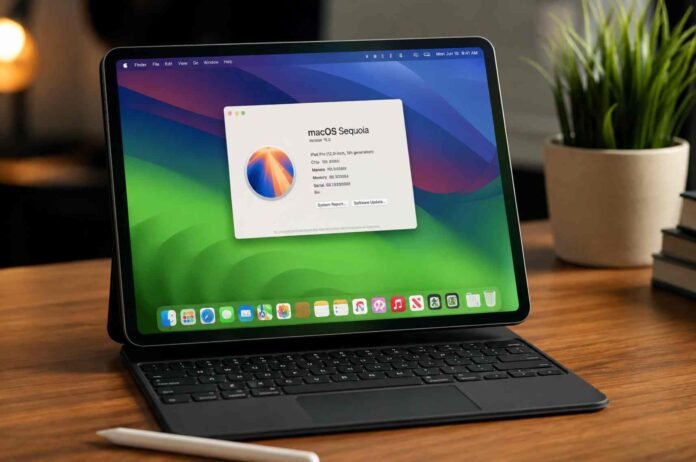
For years, one of the biggest questions in Apple’s ecosystem has been whether the iPad should eventually run macOS. Many users have argued that Apple’s powerful M series chips make the tablet capable of handling a desktop operating system, while Apple has consistently kept iPadOS and macOS on separate paths.
Now, an experimental jailbreak project has shown that running macOS directly on an iPad is technically possible. However, the process is limited to a very small group of devices and comes with several compromises that make it unsuitable for everyday use.
Rather than signalling a new direction from Apple, this project serves as another example of what developers can accomplish when they gain deeper access to Apple’s hardware.
Only a Small Number of iPads Can Run It
The jailbreak solution targets a very specific range of devices. Users need an M1 or M2 powered iPad that is still running iPadOS 16 through iPadOS 16.3.1 because the project relies on an exploit found in those versions.
That immediately rules out most iPads that have already been updated to newer software. Once an eligible device is updated beyond the supported versions, installing this solution becomes significantly more difficult or impossible.
Developers also recommend using models with at least 1TB of storage. While other compatible M1 and M2 iPads may work, higher storage models generally offer more memory, which helps improve performance when running macOS.
Users can install several versions of macOS, beginning with Monterey and extending to newer releases. However, developers suggest sticking with Ventura through Sequoia for a smoother experience, as those versions currently offer better stability during testing.
Developers interested in using Xcode must also match the software version with the installed macOS release to avoid compatibility issues.
An Interesting Demonstration With Plenty of Limitations
Although the project succeeds in launching macOS on supported iPad hardware, it is far from replacing a Mac.
One of the biggest limitations is the inability to sign in using an Apple ID. That restriction alone prevents access to many Apple services that users depend on every day.
Touch controls also remain a challenge because macOS was never designed for tablet first interaction. Basic navigation often requires workarounds, making an external keyboard and trackpad far more practical than relying on the touchscreen alone. Apple’s Magic Keyboard is recommended because it delivers a more familiar desktop experience.
Users should also expect crashes, incomplete features, and software bugs throughout the experience. Since the project is still under active development, stability varies depending on the hardware configuration and macOS version installed.
The development team continues to expand the project, with plans to explore compatibility with iPadOS 15 and investigate whether newer iPadOS releases can eventually support similar functionality.
Should You Try It?
For experienced developers and jailbreak enthusiasts, the project offers an exciting opportunity to explore what Apple’s hardware can achieve beyond official software restrictions.
For everyone else, caution is the better approach.
Jailbreaking always carries risks, including software instability, security concerns, and the possibility of rendering a device unusable if something goes wrong during installation. Because the software remains experimental, users should avoid attempting the installation on an iPad they rely on daily.
Those who are simply curious about macOS running on an iPad may find demonstration videos sufficient to understand how the project works without taking unnecessary risks.
Apple already offers alternatives for users who occasionally need a desktop environment alongside an iPad. Features such as Sidecar allow an iPad to function as a secondary display for a Mac, providing many productivity benefits without modifying the device or sacrificing reliability.
Apple Still Appears Committed to Separate Platforms
Despite years of speculation, there is little indication that Apple intends to merge macOS and iPadOS into a single operating system.
The company has repeatedly positioned each platform for different use cases, even as both increasingly share hardware technologies and software features. While the arrival of M series processors has fueled calls for macOS on iPad, Apple continues to refine iPadOS instead of replacing it.
This jailbreak project reinforces what many already suspected. Modern iPad hardware is technically capable of running macOS, but making it practical is a completely different challenge.
Until Apple changes its strategy, users looking for a polished desktop experience will still be better served by a Mac. For now, this remains an impressive technical achievement that highlights the flexibility of Apple’s silicon rather than a realistic alternative for everyday computing.
Follow TechBSB For More Updates