
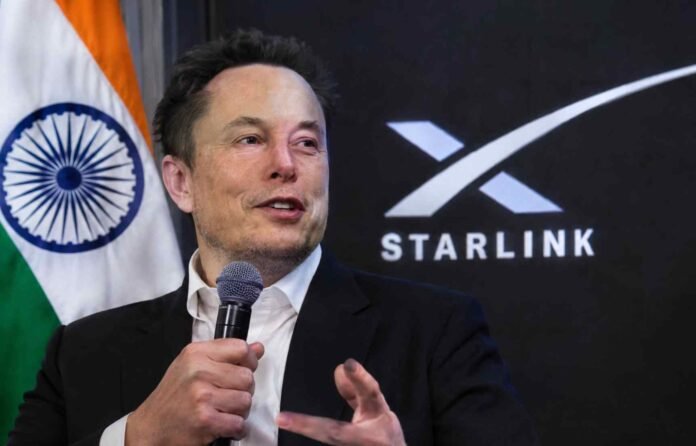
Elon Musk has promised to make Starlink’s satellite internet service affordable in India, setting the stage for a potential clash with Reliance Jio just days before the telecom company’s parent business prepares for a record breaking stock market debut.
The announcement comes at a crucial moment for India’s telecommunications industry. Jio Platforms, the digital services business owned by Reliance Industries, is targeting a valuation of $106 billion in its planned initial public offering (IPO). Meanwhile, SpaceX’s Starlink is waiting for final security clearance to begin operations in the country.
Musk’s latest comments suggest that Starlink intends to compete on price rather than position itself solely as a premium satellite internet provider. However, the company has yet to reveal specific pricing for Indian customers, leaving questions about how competitive its service will be in a market where mobile data is already among the cheapest in the world.
Musk Says Starlink Must Be Affordable for Indian Customers
Musk addressed the pricing question in a post on X on Saturday, saying that Starlink would need to offer affordable plans if it wanted to attract customers in India.
His comments reflect a straightforward challenge for the satellite internet company. Indian consumers have access to inexpensive mobile data, and any new internet service will need to demonstrate clear value to persuade people to switch or pay for an additional connection.
According to the Reuters report, mobile data in India costs around eight cents per gigabyte, making it one of the least expensive markets globally. That creates a difficult environment for a satellite provider, particularly if its service is priced significantly above conventional broadband or mobile connections.
Starlink uses satellites in low Earth orbit to provide internet access. The technology can be particularly useful in remote areas, where traditional broadband infrastructure may be limited or expensive to deploy. However, its appeal to mainstream Indian consumers will depend on several factors, including subscription costs, equipment expenses, coverage and service reliability.
Musk has not disclosed how Starlink plans to structure its Indian tariffs. It remains unclear whether the company will introduce lower subscription prices, offer different packages for households and businesses, or adopt another pricing strategy.
For now, the promise of affordability signals an intention to compete, rather than a confirmed price reduction.
Reliance Jio Faces a New Potential Challenger
Reliance Jio transformed India’s mobile market by making data services widely accessible and driving prices down through aggressive competition. Its low cost approach helped change how millions of people use mobile internet, putting pressure on rival telecom operators to respond.
Musk appears to be drawing on a similar strategy as Starlink prepares to enter India.
In his latest remarks, he argued that greater competition would give Indian consumers more choices, while acknowledging that Reliance Industries chairman Mukesh Ambani’s profits could come under pressure. Musk also made it clear that he did not expect competition to put Reliance out of business.
The potential rivalry is significant because both companies have ambitions in satellite connectivity, although their existing businesses and market positions differ.
Jio already operates a major telecommunications network and has a large customer base. Starlink, by contrast, is seeking approval to introduce its satellite internet service into the Indian market.
Satellite connectivity could provide an alternative for customers who live beyond the reach of reliable fixed broadband. It could also support businesses and organisations that need internet access in locations where conventional networks are difficult to maintain.
However, satellite internet and mobile data do not serve exactly the same purpose. For customers who already have affordable, reliable mobile or fibre broadband, switching to Starlink may offer limited advantages unless they need specific capabilities that terrestrial networks cannot provide.
That means Starlink’s opportunity could depend as much on identifying underserved customers as on competing directly with Jio’s existing offerings.
Jio’s $106 Billion IPO Adds to the Timing
The timing of Musk’s comments has attracted attention because they come shortly before Jio Platforms’ planned IPO.
The company is targeting a valuation of $106 billion, which would make the offering India’s largest ever, according to the report. The proposed listing is expected to bring additional attention to Jio’s business, growth prospects and position in the country’s digital economy.
Starlink’s planned entry introduces another factor for investors to consider when assessing the future of telecommunications and internet access in India.
Nevertheless, it would be premature to assume that Starlink will immediately threaten Jio’s core business. The satellite service has not yet received final security clearance, and its eventual pricing and commercial reach remain unknown.
Jio also has established infrastructure, brand recognition and an existing customer base. These advantages could help it retain customers even if satellite internet becomes a more prominent alternative.
For Starlink, the immediate challenge is to secure the necessary approvals and establish a commercial offering that meets the needs of Indian consumers. Its ability to compete will become clearer once the company announces its launch plans and pricing.
Regulatory Approval Remains a Key Hurdle
Musk has also criticised India’s approval process, accusing the government and Ambani of delaying Starlink’s entry to protect Jio’s market position. In a series of posts on X, he suggested that the process was unfairly favouring the established telecom operator.
The Indian government has rejected claims of bias, stating that three satellite internet ventures seeking to launch in the country, including Starlink and Jio’s own satellite business, are awaiting final security clearance.
That distinction is important. Starlink’s commercial plans remain dependent on regulatory approval, and the government has denied that its review process is designed to favour one company over another.
Musk escalated his public criticism late on Friday by addressing Ambani as “Prime Minister Ambani” and asking whether he would consider allowing Starlink to compete. Reliance had not responded to requests for comment on Musk’s remarks at the time of the report.
The exchange marks a notable shift in the public relationship between Musk and the Indian government. Musk has previously maintained a warm public rapport with Prime Minister Narendra Modi, but his recent statements have become increasingly critical of the country’s approach to satellite internet approvals.
Whether the disagreement will affect the regulatory process remains uncertain. For now, the outstanding security clearances are a practical barrier that Starlink must overcome before it can begin serving Indian customers.
What Starlink’s India Plans Mean for Consumers
If Starlink receives approval and introduces competitive pricing, Indian consumers could eventually gain another option for accessing the internet. The greatest benefits may emerge in areas where conventional broadband services are unavailable, inconsistent or difficult to expand.
The service could also appeal to businesses operating in remote locations, including those that need dependable connectivity without relying entirely on local terrestrial infrastructure.
Price will remain central to Starlink’s prospects. India’s established reputation for low cost mobile data means that a satellite connection must offer a compelling reason for customers to pay more. Equipment costs, installation requirements and ongoing subscription fees will all influence demand.
At the same time, the arrival of another provider could encourage wider discussion about internet access, infrastructure investment and competition in underserved regions.
For Jio, the immediate implications are less clear. Its existing mobile and digital services operate on a different scale from Starlink’s proposed Indian business, and the two companies may initially target different customer groups. However, competition could intensify if satellite services become more affordable and expand beyond niche use cases.
Musk’s promise therefore represents an early signal of Starlink’s ambitions rather than proof that a price war is about to begin.
The next major developments will be regulatory approval, the announcement of actual Indian subscription prices and the availability of service to customers. Until those details emerge, the competition between Starlink and Jio remains a developing story.
For India’s internet users, the key question is not simply whether Starlink can enter the market, but whether it can offer a meaningful alternative at a price that makes sense.
Follow TechBSB For More Updates