
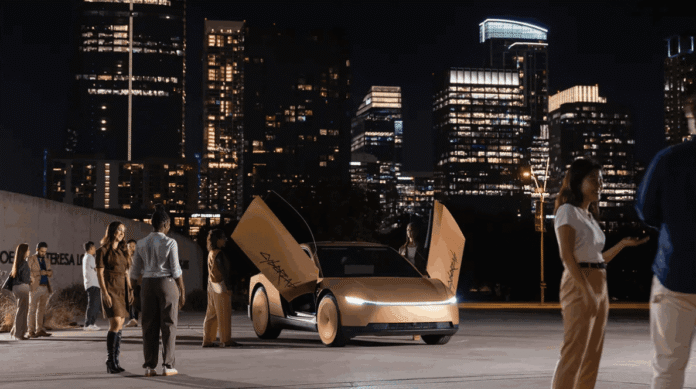
Tesla Cybercab Germany investment is set to become a major development in the company’s autonomous driving ambitions. The electric vehicle manufacturer has announced plans to invest €3 billion ($3.3 billion) in its Gigafactory in Grünheide, Germany, with the goal of expanding production capacity for its fully autonomous Cybercab robotaxi.
The announcement comes at an interesting time for the German automotive industry. While several established manufacturers are reducing costs, reconsidering investments and reviewing their production facilities, Tesla is preparing to make a substantial commitment to its German operations.
However, the company’s ambitious plans face a potential challenge beyond manufacturing. A recent YouGov survey suggests that public confidence in driverless vehicles remains relatively low, with 63% of respondents in the US saying they would feel uncomfortable travelling in a fully autonomous car.
This raises an important question about Tesla’s strategy. Can the company successfully expand its robotaxi business across international markets when a significant proportion of potential passengers remain hesitant about trusting autonomous technology?
Tesla commits $3.3 billion to Cybercab production in Germany
Tesla’s proposed €3 billion investment is intended to transform its Grünheide Gigafactory into a major production centre for the Cybercab.
The company reportedly wants to establish the capacity to manufacture up to one million Cybercab robotaxis annually at the German facility. This would represent a substantial expansion of Tesla’s ambitions beyond its existing electric vehicle business.
According to the announcement, Tesla plans to submit a building permit application before the end of 2026. If everything proceeds according to schedule, construction could begin during the first half of 2027, with production expected to start in 2029.
The investment is particularly notable because Germany’s automotive industry is facing a challenging period.
Mercedes-Benz has reportedly decided to freeze future investment at some of its German manufacturing facilities while examining the possibility of plant closures. The company has also highlighted the high cost of employing workers in Germany compared with certain Eastern European manufacturing locations.
BMW and Volkswagen are also reviewing their operations, with job reductions and potential production adjustments forming part of the wider industry picture.
Tesla’s decision to invest billions in Germany therefore stands out against the broader trend of manufacturing uncertainty.
The company has also recently undertaken a recruitment drive involving approximately 2,000 positions at its German site to support Model Y production.
However, it remains unclear whether the latest expansion will create additional employment opportunities or affect the factory’s existing electric vehicle production plans. There is also no confirmation that Tesla intends to reduce Model Y or Model 3 manufacturing in Europe to make room for the Cybercab.
Automotive analyst Matthias Schmidt has raised questions about the long term employment benefits of the project, particularly given the increasing role of automation in modern vehicle manufacturing.
The investment could bring substantial industrial activity to the region, but the number of permanent jobs it creates will be an important factor in determining its wider economic impact.
Tesla’s robotaxi ambitions face a public confidence problem
While Tesla is preparing to expand Cybercab production, public attitudes towards autonomous vehicles suggest that the technology still has considerable ground to cover.
A recent YouGov survey examined how adults in eight countries feel about travelling in fully driverless cars. The results indicate that many people remain uncomfortable with the idea, even as autonomous driving technology continues to develop.
The UK recorded particularly strong opposition. Around 47% of British respondents said they would feel very uncomfortable riding in a driverless vehicle, while only 5% said they would feel very comfortable.
Germany, France, Italy and Spain also showed considerable hesitation, with most respondents expressing some level of discomfort about autonomous transportation.
The findings were similarly revealing in the United States, where robotaxi services are already operating in several cities.
According to the survey, 42% of American respondents said they would feel very uncomfortable travelling in a driverless car. Another 21% described themselves as fairly uncomfortable.
Combined, that means 63% of US respondents expressed discomfort about using fully autonomous vehicles.
This is an important challenge for companies such as Tesla, Waymo and other businesses investing heavily in robotaxi technology.
Building autonomous vehicles is only one part of the process. Companies must also convince passengers that these vehicles can operate safely and reliably without a human driver behind the wheel.
Interestingly, Singapore appeared more accepting of autonomous transportation than the other countries included in the survey. It recorded the highest proportion of fairly comfortable responses at 34%, alongside the lowest proportion of very uncomfortable responses at 14%.
Even so, the results suggest that public acceptance remains an important consideration for the future of driverless transportation.
Safety concerns and potential job losses could slow adoption
One interesting aspect of the YouGov findings is the difference between how people view autonomous technology in theory and how comfortable they feel using it in everyday life.
A majority of respondents reportedly believe that self driving cars will eventually become capable of driving as safely as human motorists.
However, that confidence does not necessarily translate into a willingness to travel in a driverless vehicle today.
This distinction could prove important for Tesla’s Cybercab plans. People may recognise the potential benefits of autonomous driving while still having reservations about giving up control of a vehicle.
Safety is not the only concern.
The survey also highlighted negative public attitudes towards the potential employment consequences of autonomous transportation.
As robotaxis become more widespread, traditional driving jobs could face increasing pressure. Taxi drivers, ride hailing drivers and other transport workers may eventually experience changes as companies introduce more automated services.
These concerns appear to extend beyond countries that are particularly sceptical about driverless vehicles.
For Tesla, this means the challenge involves more than improving autonomous driving software or increasing manufacturing capacity. The company will also need to demonstrate the practical benefits of its technology and address public concerns about safety, reliability and employment.
Tesla CEO Elon Musk has already indicated that the company intends to shift manufacturing priorities towards the Cybercab. The decision to wind down Cybertruck production at its Austin, Texas, facility was also presented as part of the effort to free up production capacity for the robotaxi programme.
The planned German investment suggests that Tesla wants to build a much larger international manufacturing network for its autonomous vehicles.
However, the success of that strategy will depend on more than the number of vehicles the company can produce.
Can Tesla convince passengers to embrace the Cybercab?
Tesla’s €3 billion investment represents a major commitment to the future of autonomous transportation. The planned German expansion could give the company the manufacturing capacity needed to support its ambitions in Europe and beyond.
But there is a clear difference between manufacturing one million robotaxis and finding enough passengers willing to use them.
The YouGov results highlight a significant perception challenge. Even in the United States, where several autonomous ride services are already available, almost two thirds of respondents expressed discomfort about travelling in driverless vehicles.
Tesla will therefore need to focus on building public confidence alongside expanding its production capabilities.
Demonstrating consistent safety performance, providing reliable services and explaining how autonomous systems respond to unexpected road situations could all play an important role in improving acceptance.
The German expansion also raises questions about the future of traditional automotive employment. As factories become increasingly automated, the relationship between large manufacturing investments and long term job creation may become more complicated.
For now, Tesla appears determined to push ahead with its Cybercab plans despite the uncertainty surrounding consumer demand.
The coming years should reveal whether autonomous robotaxis become a mainstream transportation option or remain a technology that many people are still reluctant to trust.
Follow TechBSB For More Updates