
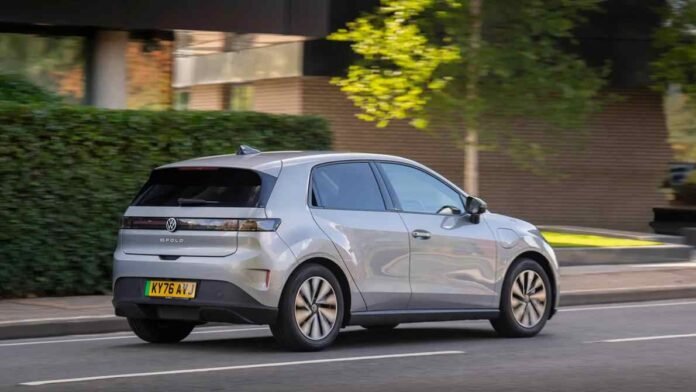
Volkswagen appears to have finally understood what buyers want from an electric car. Instead of chasing futuristic interiors, complicated touch controls and styling that tries too hard to stand out, the German automaker is returning to something it has always done well: building practical, comfortable and well-engineered cars.
The new Volkswagen ID Polo is a good example of that change in direction. This compact electric hatchback brings together familiar Volkswagen design, a more thoughtfully arranged cabin, improved technology and a competitive driving range. More importantly, it addresses one of the biggest complaints about the company’s earlier electric vehicles by bringing back physical buttons.
After spending time behind the wheel, the ID Polo makes a convincing case for itself in an increasingly competitive small electric car market. It is not trying to reinvent the supermini. Instead, Volkswagen wants to make an electric car that feels familiar from the moment you get inside.
With an expected starting price of around £24,000 in the UK, the ID Polo is positioned to take on established alternatives such as the Renault 5 E Tech. It also promises the kind of everyday usability that could make the transition to electric driving easier for traditional petrol car owners.
A Familiar Volkswagen Design With a More Practical Approach
Volkswagen has played it relatively safe with the ID Polo’s exterior styling, and that might be a sensible decision. The original petrol powered Polo has never depended on dramatic styling to attract buyers. Its success has come from reliability, sensible packaging and an approachable design.
The electric version follows a similar philosophy, but it looks considerably more confident than some of the earlier ID models.
Although the ID Polo is slightly shorter than its combustion engine counterpart, its dedicated electric platform allows Volkswagen to push the wheels towards the corners. This creates a more purposeful stance while helping engineers make better use of the available cabin space.
The front design features Volkswagen’s familiar styling cues, while the rear gets a horizontal LED light arrangement beneath a glass covered finish. The overall appearance is modern without becoming unnecessarily complicated.
However, the biggest advantage becomes apparent when you look beyond the exterior.
Volkswagen claims the ID Polo offers 441 litres of boot space, making it particularly impressive for a car in this segment. That is around 25 per cent more than the petrol powered Polo, giving owners considerably more room for shopping, luggage and everyday essentials.
For buyers who want a relatively small electric car without sacrificing practicality, this could be one of its strongest selling points.
Physical Buttons Make a Welcome Comeback
The interior is arguably where Volkswagen has made its most important improvements.
Earlier ID models attracted criticism for relying too heavily on touchscreens and touch sensitive controls. Even straightforward functions could become frustrating when drivers had to navigate menus instead of using familiar physical switches.
The ID Polo takes a different approach.
Volkswagen has brought back conventional window switches, allowing drivers to operate all four electric windows without having to switch between front and rear controls. There is also a dedicated row of physical buttons beneath the central touchscreen for essential functions such as climate control, hazard lights and windscreen defrosting.
These might seem like small changes, but they make a meaningful difference during everyday driving.
The cabin also feels more welcoming, with durable materials and a layout that makes important controls easy to reach. Volkswagen has clearly focused on making the interior feel like a properly finished small car rather than a technology experiment.
Technology has not been overlooked, either.
A 13 inch infotainment touchscreen takes care of entertainment and connected features, while a separate 10 inch digital instrument display provides driving information. The infotainment system is designed around a more straightforward menu structure, making it easier to navigate.
ChatGPT integration is also available, allowing drivers to ask questions and access conversational assistance through the system.
One particularly appealing feature is the ability to customise the digital instrument display with graphics inspired by the original Volkswagen Golf. The retro inspired dials even recreate the slightly old fashioned LCD appearance of earlier displays.
It is a thoughtful addition that gives the cabin some personality without making it feel gimmicky.
Up to 278 Miles of Range and More Charging Flexibility
Volkswagen will offer the ID Polo with two battery options, giving customers the choice between affordability and longer driving range.
The entry level version uses a 37kWh lithium iron phosphate battery, with a claimed driving range of up to 208 miles. Buyers looking for additional range can choose a larger 52kWh nickel manganese cobalt battery, which increases the claimed figure to 278 miles.
There are also three power outputs available across the range, starting at 116hp and reaching 211hp in the most powerful version.
The range topping model is particularly interesting because it gives the compact electric hatchback enough performance to feel genuinely entertaining. Volkswagen quotes a 0 to 62mph acceleration time of 7.1 seconds for the most powerful version.
That is not particularly outrageous by modern electric car standards, but outright acceleration is not the ID Polo’s main selling point.
On the road, the car feels responsive and comfortable, with steering that offers a reassuring level of feedback. The brakes are also well judged, helping the vehicle feel predictable in different driving conditions.
The ID Polo appears more interested in delivering a balanced driving experience than simply producing impressive acceleration figures.
It handles everyday urban journeys comfortably while remaining composed on faster roads. The suspension and overall refinement also help it feel like a larger car when travelling on motorways.
Charging performance is respectable for a vehicle of this size.
The larger battery supports DC rapid charging at up to 105kW, while the smaller battery has a maximum charging rate of 90kW. Volkswagen estimates that a 10 to 80 per cent charge takes approximately 25 minutes under suitable conditions.
That should make occasional longer journeys considerably more convenient, particularly for drivers who regularly use public rapid charging networks.
Volkswagen Wants the ID Polo to Be More Than Just an Affordable EV
The ID Polo arrives at an important moment for Volkswagen. The company has faced considerable criticism over its electric vehicle strategy, particularly around pricing, software and the overall appeal of its earlier ID models.
Rather than continuing down the same path, Volkswagen appears to be taking a more practical approach with its next generation of electric cars.
The ID Polo is central to that strategy because it combines an established name with a more accessible price point.
With UK pricing expected to start at around £24,000, it could become an attractive option for buyers who want to move away from petrol without spending a fortune. Volkswagen is also hoping the model will qualify for the UK’s £3,750 Electric Car Grant, although eligibility will depend on the applicable requirements.
There are a few interesting extras, too. Buyers will be able to specify massaging seats, a feature that is still unusual in the small electric car category.
The company is also preparing additional electric models, including the ID Cross and larger ID vehicles, alongside performance focused GTI versions of the Polo and ID 3.
The ID Polo therefore represents more than another addition to the showroom. It is an indication that Volkswagen wants to rebuild its reputation by focusing on the details that matter to ordinary drivers.
There are still questions around real world range, long term software performance and how competitive the final pricing will be once different trims and optional equipment are taken into account.
Nevertheless, the first impression is encouraging.
The ID Polo does not need futuristic gimmicks or excessive performance figures to make an impression. It needs to be comfortable, practical, easy to use and reasonably priced. Those are precisely the areas where Volkswagen appears to have concentrated its efforts.
If the production version delivers on these promises, the ID Polo could become one of the more convincing affordable electric hatchbacks in its class.
For Volkswagen, that might be a more important achievement than launching another headline grabbing electric vehicle.
Follow TechBSB For More Updates