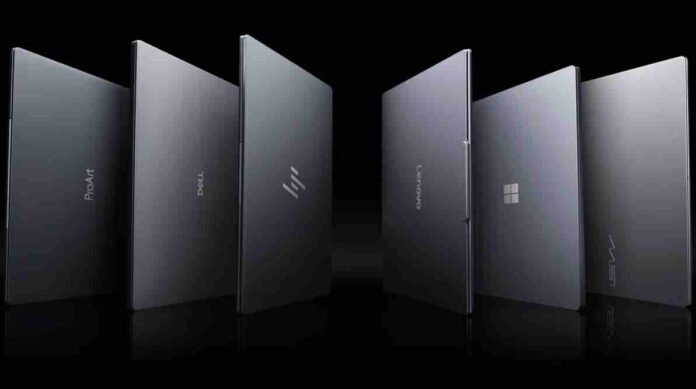
Computex 2026 delivered more than product launches and flashy demonstrations. The event also offered a rare glimpse into how some of the industry’s most influential leaders see the future of computing. From AI powered personal assistants and next generation Windows PCs to ongoing concerns around rising hardware costs, several comments stood out as indicators of where the industry is heading.
A common theme emerged throughout the week. AI is no longer being discussed as an optional feature or experimental technology. For many of the companies shaping the PC industry, it is becoming the foundation upon which future devices, software, and services will be built.
At the same time, executives from AMD and Intel acknowledged a challenge that consumers know all too well. Building or upgrading a PC is becoming increasingly expensive, and there is no immediate sign of relief.
AI Agents Are Expected to Follow Users Everywhere
One of the most talked about remarks came from Qualcomm CEO Cristiano Amon, who declared that “resistance is futile” when discussing the rise of AI agents.
Amon believes the next generation of AI will not be tied to a single device. Instead, intelligent assistants will move seamlessly between smartphones, laptops, earbuds, smart glasses, and future connected devices. The idea is that users will have a persistent AI companion that understands context across every device they own.
According to Qualcomm’s vision, future hardware will continuously gather information that helps AI systems deliver more personalized experiences. Faster connectivity standards such as 6G are expected to play a major role in enabling this always connected environment.
The concept points toward a future where computing becomes less about individual devices and more about a continuous AI experience that follows users throughout their day.
Microsoft and Nvidia Want to Reinvent the Windows PC
AI was also front and center during discussions between Microsoft and Nvidia.
Microsoft CEO Satya Nadella described the company’s goal as bringing “unmetered intelligence” to every home and workplace through Windows. The statement reflects Microsoft’s growing focus on integrating AI deeply into the operating system rather than treating it as a standalone feature.
The company’s broader strategy revolves around creating a unified AI platform that stretches from local devices to cloud infrastructure. While Microsoft has recently adjusted some AI implementations within Windows, its long term direction remains clear. AI is becoming a core part of the Windows experience.
Nvidia is equally ambitious. CEO Jensen Huang described the company’s RTX Spark initiative as an opportunity to reinvent the PC after four decades of traditional computing.
That is a bold claim, but Nvidia sees AI capable PCs as a once in a generation shift. The company is working closely with Microsoft to optimize Windows for AI focused Arm based hardware while improving software compatibility and overall performance.
Together, the two companies are positioning AI as the defining force behind the next era of personal computing.
The PC Industry Faces a Growing Cost Problem
Not every major discussion at Computex revolved around artificial intelligence.
AMD used the event to address ongoing concerns around rising component prices. David McAfee, AMD’s Vice President and General Manager for Ryzen CPUs and Radeon Graphics, acknowledged that system building costs remain a serious challenge.
His comments suggested AMD is actively exploring ways to provide more affordable options for gamers and PC enthusiasts. That could include additional budget friendly processors based on existing architectures that still deliver strong performance.
The company’s continued commitment to supporting the AM5 platform through 2029 is also significant. It gives users a longer upgrade path and reduces the need for costly full system replacements.
For consumers struggling with rising hardware prices, that kind of platform longevity could prove increasingly valuable.
Intel Sees No Quick End to Hardware Inflation
Intel echoed many of AMD’s concerns regarding the state of the PC market.
Nish Neelalojanan, Senior Director of Product Management for Client Computing, noted that current levels of hardware inflation are unlikely to be sustainable indefinitely. However, he also acknowledged that the industry must continue adapting to ongoing pricing pressures.
Intel’s approach includes maintaining support for older technologies such as DDR4 memory and existing processor platforms. This strategy allows consumers to build or upgrade systems using more affordable components rather than being forced into the latest and most expensive hardware.
The company also highlighted upcoming mobile processors designed for lower memory configurations, opening the door to more affordable laptop options.
While neither Intel nor AMD offered a clear solution to the industry’s pricing challenges, both companies appear focused on extending the life of existing platforms and creating lower cost alternatives where possible.
Final Thoughts
Computex 2026 reinforced a message that has been building for several years. AI is moving from a supporting role to the center of the computing experience. Qualcomm, Microsoft, and Nvidia all envision a future where intelligent assistants are deeply integrated into every device users interact with.
At the same time, AMD and Intel reminded everyone that innovation alone is not enough. Affordability remains a critical concern, especially as component prices continue to rise.
The future of computing may be increasingly powered by AI, but the industry’s ability to balance innovation with accessibility could ultimately determine how quickly that future arrives.
Follow TechBSB For More Updates