
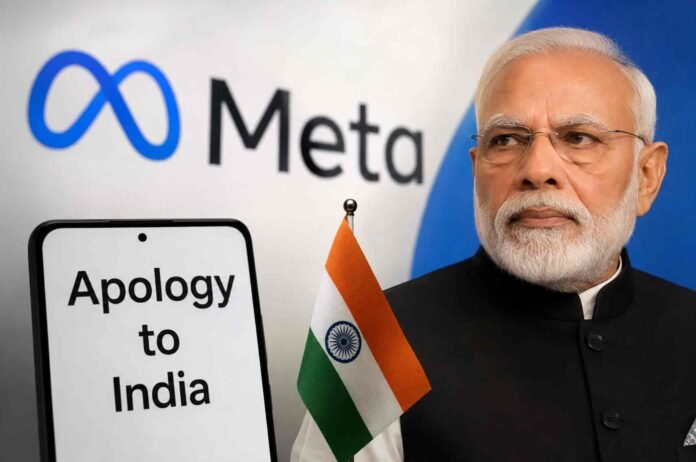
- Meta apologised to the Indian government after Facebook briefly restricted a post by Prime Minister Narendra Modi.
- Meta said the restriction happened because of an operational error and was not intentional.
- Indian authorities are also investigating other Meta related content issues, including videos allegedly targeting Modi.
- Meta is facing wider pressure in India over child sexual abuse material, deepfakes and other harmful content.
Meta has apologised to the Indian government after a Facebook post by Prime Minister Narendra Modi was briefly restricted because of what the company described as an operational error.
Joel Kaplan, Meta’s Chief Global Affairs Officer, confirmed on Wednesday that he had apologised to India’s information technology minister on behalf of the company.
“I apologised to the minister on behalf of Meta for the error restricting PM Modi’s post,”
Kaplan said in a statement.
The incident adds to a growing list of disagreements between Meta and the Indian government over how content involving the prime minister is handled on the company’s platforms.
The Facebook post was temporarily restricted in July, prompting India’s Ministry of Electronics and Information Technology to summon Meta executives. The company later said that the restriction was accidental and resulted from an operational problem rather than a deliberate decision to limit Modi’s content.
For Meta, the apology comes at a sensitive time. India is one of the company’s largest and most important markets, while the government has become increasingly vocal about how social media companies manage harmful, misleading and politically sensitive material.
Tensions between Meta and India are growing
The latest dispute is not an isolated incident.
Police in Hyderabad have also registered a case against Meta India head Arun Srinivas over videos published on Facebook that allegedly portrayed Modi in an abusive manner. The case was reported by Reuters, citing a senior police officer.
The videos appeared online during a period of political tension in India, as Modi faced widespread criticism and a major wave of youth led protests.
The demonstrations were linked to leaked examination papers and eventually resulted in the resignation of India’s education minister. Online platforms became an important space for criticism, political discussion and satire surrounding the protests.
That has placed Meta in a difficult position.
Social media companies operating in India have to balance several competing demands. They need to protect users from abusive or illegal content while also allowing legitimate political criticism and public debate to continue. Mistakes involving prominent political figures can attract particularly strong attention because even a temporary restriction can raise questions about censorship and platform neutrality.
For Meta, the challenge is made harder by the sheer scale of its operations in India. Facebook and Instagram are widely used across the country, making the company an important part of India’s digital and political environment.
Child safety issues add further pressure
The dispute over Modi’s post comes alongside separate concerns about harmful content on Meta’s platforms.
Meta CEO Mark Zuckerberg reportedly apologised to Indian government officials over several operational problems, including child sexual abuse material and deepfake content.
The discussions reportedly covered wider concerns about how Meta detects and removes harmful material from its services.
In July, the Indian government ordered Meta to remove advertisements and content promoting child sexual abuse material on Instagram, according to reports citing a senior official from the Ministry of Electronics and Information Technology.
Meta has maintained that it has a zero tolerance policy toward child sexual abuse material. The company has also said that it continues to improve its systems for detecting and removing such content.
The issue is particularly serious because advances in artificial intelligence have made it easier to create convincing manipulated images and videos. Deepfakes can be used to impersonate public figures, spread misinformation or produce abusive material, increasing the pressure on technology companies to improve moderation systems.
Governments around the world are paying closer attention to these issues, but India has taken an especially active approach to regulating large technology platforms.
What this means for Meta
The latest developments highlight the increasingly complicated relationship between Meta and the Indian government.
On one side, Meta needs to reassure officials that it can respond quickly when harmful or illegal material appears on its platforms. On the other, the company must demonstrate that its moderation systems do not unfairly restrict legitimate political speech.
The accidental restriction of Modi’s post shows how a relatively short platform error can become a much larger political issue.
For Indian users, the bigger question is how consistently Meta applies its rules. Content involving political leaders, protesters and controversial public issues can be difficult to moderate because context matters. A system designed to automatically detect potentially problematic material can sometimes make the wrong decision, while manual moderation can also lead to inconsistent outcomes.
Meta’s apology is therefore more than a response to one restricted post. It is also an attempt to rebuild confidence with Indian authorities at a time when the company is facing scrutiny over political content, harmful material and the growing use of AI generated media.
The company will now face pressure to show that these incidents were genuine operational failures rather than signs of broader problems with its moderation systems.
For India, meanwhile, the incidents underline the government’s growing role in demanding greater accountability from global technology companies. As social media becomes even more central to political debate and public communication, disagreements over moderation are likely to remain an important issue.
Follow TechBSB For More Updates