
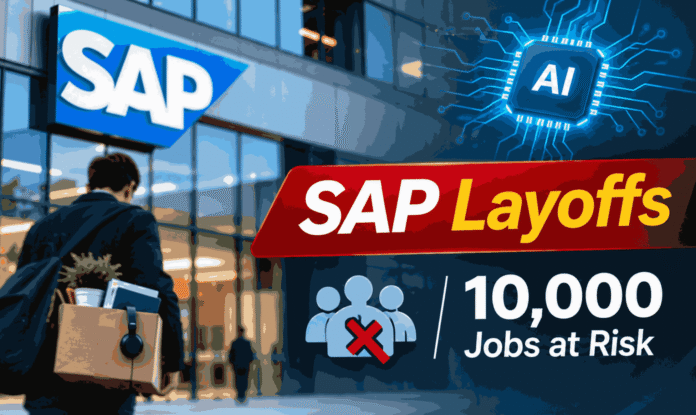
SAP layoffs could affect around 10,000 employees as the German software giant reportedly considers a major workforce restructuring to support its growing focus on artificial intelligence. The proposed cuts could account for at least 9% of the company’s global workforce, signalling a significant shift in how SAP plans to operate in an increasingly AI-driven software industry.
The reported restructuring comes as SAP continues to reposition its business around AI-powered products, automation and cloud services. Like several major technology companies, SAP is increasingly looking to integrate AI into its operations, development processes and enterprise software offerings. That shift could also change the roles and skills the company prioritises in the coming years.
SAP reportedly evaluates workforce reduction across major teams
SAP is reportedly considering cutting approximately 10,000 jobs as part of a broader restructuring plan. The proposed reduction could affect multiple departments, including product development, engineering and sales, although the final scope of the cuts has not been publicly confirmed.
The reported plan reflects the growing pressure on technology companies to adapt their workforce and business operations to emerging AI technologies. Companies are increasingly investing in AI infrastructure, automation and software capabilities while reassessing the number of employees required across certain traditional functions.
For SAP, the restructuring appears to be part of a larger effort to align its workforce with its long term business priorities. The company has been expanding its AI capabilities across its enterprise software portfolio, with AI increasingly becoming a central part of its product strategy.
AI is increasingly influencing workforce decisions
Artificial intelligence is becoming a major factor in workforce restructuring across the global technology sector. Companies are investing heavily in AI systems that can automate repetitive tasks, improve productivity and assist employees with complex workflows.
SAP’s reported restructuring could reflect this broader industry trend. AI tools are increasingly being integrated into software development, customer support, business analytics and enterprise operations. These technologies may allow companies to streamline certain processes while changing the demand for specific job roles.
However, workforce restructuring linked to AI does not necessarily mean that every affected position is being directly replaced by artificial intelligence. Companies often reorganise teams, eliminate overlapping roles, shift resources towards new business areas and change hiring priorities as their technology strategies evolve.
SAP’s reported job cuts could therefore be part of a wider organisational transformation rather than a straightforward replacement of employees with AI systems.
SAP’s AI first strategy is reshaping its priorities
SAP has been strengthening its AI strategy as enterprise customers increasingly demand software capable of automating business processes and delivering more intelligent insights. AI integration has become a key competitive priority for major enterprise software providers, particularly as businesses look for ways to improve efficiency and reduce operational complexity.
The company is increasingly positioning AI as a central feature of its software ecosystem. This strategy could require new investments in AI research, product development, cloud infrastructure and specialised talent.
As SAP shifts towards an AI first business model, the organisation may also need to reconsider how its teams are structured and where resources are allocated. Traditional roles could evolve, while demand for employees with expertise in AI, cloud computing, data engineering and emerging technologies may increase.
The reported workforce reduction highlights how the AI transition is not only changing software products but could also reshape the organisational structures of some of the world’s largest technology companies.
A wider shift across the technology industry
SAP’s reported plan comes amid a broader wave of restructuring across the technology sector. Companies are increasingly reviewing their workforce requirements as AI tools become more capable and businesses adjust their investment priorities.
While AI is creating opportunities for new jobs and specialised roles, it is also encouraging companies to rethink existing positions, operational structures and productivity expectations. The balance between AI investment and workforce management is becoming an increasingly important issue for technology businesses.
If SAP proceeds with the reported reduction, it would represent another significant workforce adjustment in an industry undergoing rapid technological change. The company’s approach could also offer an indication of how large enterprise software firms are adapting their employee strategies as AI becomes more deeply integrated into their businesses.
For now, the reported plan remains under consideration, and the precise details of the restructuring, including the departments affected and the timeline for implementation, remain unclear.
Follow TechBSB For More Updates