
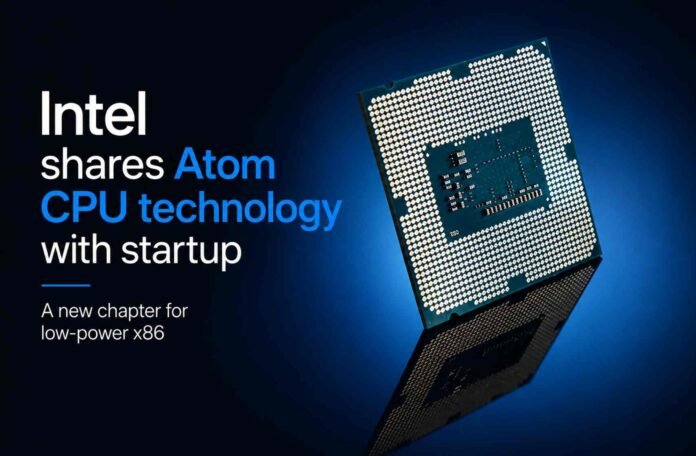
- Intel has reportedly granted RosaicLabs access to parts of its Atom processor RTL code, a rare move involving x86 technology.
- Atom remains valuable for embedded systems, networking hardware, and other low-power computing applications.
- Intel’s shift to newer Efficiency Core architectures may have made older Atom designs suitable for external licensing.
- RosaicLabs has experienced semiconductor leadership, but its processor roadmap and future products remain undisclosed.
Intel has taken an unexpected step by giving startup RosaicLabs access to part of its Atom processor technology, marking one of the rare occasions the chipmaker has agreed to share elements of its x86 intellectual property with an outside company.
According to reports, the agreement covers register transfer level, or RTL, code, which defines how a processor functions before it is turned into a physical chip. While Intel has not publicly explained the full scope of the arrangement, the move has sparked interest across the semiconductor industry because the company has historically guarded its processor designs very closely.
The decision also comes at a time when Intel’s focus has shifted away from Atom processors and toward newer Efficiency Core architectures that now power many of its latest products. That change could explain why Intel is now willing to license selected Atom technology while continuing to keep its latest CPU designs under its own control.
Why Atom technology still matters
Although Atom processors no longer sit at the center of Intel’s product lineup, they continue to hold value in markets where power efficiency is more important than raw computing performance.
Originally developed to bring x86 computing to compact and energy efficient devices, Atom chips found their way into entry level PCs, embedded systems, networking hardware, industrial equipment, Chromebooks, and a wide range of Internet of Things applications.
The reported licensing agreement is expected to provide RosaicLabs with access to Atom RTL code, allowing the startup to develop custom processors based on Intel’s existing architecture rather than building an entirely new CPU from scratch.
Industry experts note that access to RTL code offers far more than a simple processor license. It gives developers detailed visibility into how the processor operates at the hardware level, making it possible to customize designs for specialized workloads while remaining compatible with the x86 ecosystem.
That level of access is rarely offered by Intel, making the reported deal particularly noteworthy.
Intel’s changing low power roadmap
Intel’s willingness to share Atom technology appears to reflect the company’s broader shift in processor strategy.
Over the past several years, Intel has gradually replaced Atom based designs with modern Efficiency Cores, commonly known as E Cores. Architectures such as Gracemont have become the foundation for Intel’s latest hybrid processors, delivering better performance and efficiency than previous Atom generations.
Because Intel’s current roadmap now revolves around these newer designs, the company may view older Atom technology as a valuable licensing opportunity rather than a competitive advantage that must remain exclusive.
Reports suggest RosaicLabs could receive access to Tremont, one of the final and most advanced Atom microarchitectures before Intel transitioned fully toward E Core designs.
Tremont powered products including Elkhart Lake and Jasper Lake, platforms designed for embedded computing, low power laptops, education devices, and industrial systems. Even though the architecture is no longer cutting edge, it remains capable enough for many specialized computing applications where efficiency, reliability, and lower development costs are priorities.
RosaicLabs enters the spotlight
Very little is publicly known about RosaicLabs, which was incorporated in Delaware in May 2026.
Corporate filings indicate the startup is preparing for a seed funding round worth up to 10 million dollars while also allowing management to approve certain capital expenditures without requiring investor approval. Beyond those filings, the company’s future product plans remain undisclosed.
What has attracted attention, however, is the experience of its leadership team.
Reports indicate RosaicLabs includes former employees from Rivos, the semiconductor startup that Meta acquired in a multibillion dollar deal. The company’s chief executive Amarjit Gill also shares professional ties with Intel CEO Lip Bu Tan. The two reportedly worked together during the formation of Rivos and previously invested in Nuvia before Qualcomm acquired the startup.
Those connections have naturally raised questions about whether long standing industry relationships played a role in Intel’s decision. However, neither Intel nor RosaicLabs has commented on that possibility, leaving the reasons behind the agreement open to speculation.
Following reports of the licensing arrangement, Intel’s share price climbed by around 12 percent. While the timing attracted attention, there is no evidence linking the stock’s rise directly to the Atom agreement, as broader market conditions and investor sentiment may also have contributed.
For now, Intel’s move appears to signal a practical approach to older processor technology. Rather than allowing mature designs to sit unused, licensing proven low power architectures could create new business opportunities while enabling startups like RosaicLabs to accelerate custom chip development without starting from the ground up.
Follow TechBSB For More Updates