
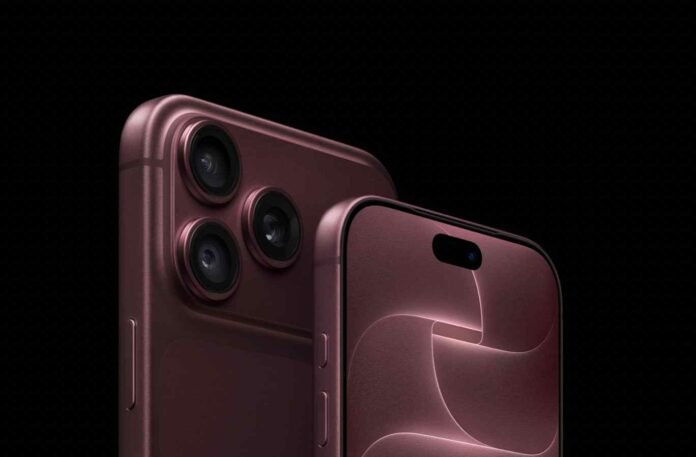
Apple has officially unveiled the iPhone 18 Pro and iPhone 18 Pro Max, and this year’s Pro models come with several changes that go well beyond a routine processor upgrade.
The biggest story is the camera. Apple has introduced its first iPhone camera with variable aperture, giving users more control over light, depth of field and the overall look of their photos. The company has also added new professional camera controls, improved video features and a new system designed to help verify the authenticity of photographs.
Under the hood, the iPhone 18 Pro models are powered by Apple’s new A20 Pro chip, which brings a faster CPU, a more powerful GPU, increased memory bandwidth and a major boost in on device AI processing.
Battery life is another major focus. Apple says the iPhone 18 Pro Max offers up to 45 hours of video playback, while the iPhone 18 Pro can reach up to 36 hours under the company’s testing conditions.
There is also a redesigned Dynamic Island, improved cooling, new wireless and cellular technologies, iOS 27 and the next generation of Apple Intelligence, including the much anticipated Siri AI.
Here is everything you need to know about the iPhone 18 Pro and iPhone 18 Pro Max.
iPhone 18 Pro release date and availability
Apple has confirmed that pre orders for the iPhone 18 Pro and iPhone 18 Pro Max will begin on September 12, with the phones becoming available from September 18.
Both models will launch in four finishes: Black, Silver, Glacier and Burgundy.
The new Burgundy option is arguably the most visually distinctive addition to the range, giving buyers another choice beyond Apple’s more traditional Pro finishes.
Apple is offering two sizes again, with the standard iPhone 18 Pro aimed at people who want the Pro feature set in a more manageable phone, while the iPhone 18 Pro Max targets users who want the largest display and longest battery life available in the lineup.
iPhone 18 Pro camera: The biggest upgrade
If there is one feature likely to attract the most attention, it is the new camera system.
The iPhone 18 Pro and iPhone 18 Pro Max feature a new 48MP Fusion Main camera with variable aperture. This is the first time Apple has brought variable aperture control to an iPhone.
That matters because aperture affects both the amount of light reaching the camera sensor and the depth of field in an image.
The new camera uses six laser cut blades controlled by a new mechanism that allows the aperture to move between different settings. The system can automatically select an appropriate aperture depending on the scene, but users can also take manual control through the new Pro Controls.
Apple says the Main camera can open as wide as f/1.48, which can help when shooting in darker environments.
In practical terms, that means the iPhone 18 Pro should have more flexibility when photographing subjects in challenging lighting. A wider aperture can allow more light into the camera, while a narrower setting can help keep more elements of a scene sharp.
For everyday users, the phone can handle much of this automatically. For photographers and creators, however, having manual aperture control opens up considerably more creative possibilities.
New Pro Controls give photographers more freedom
Apple is also introducing a new Pro Controls experience inside the Camera app.
Instead of hiding advanced settings behind menus or requiring another camera application, users can access controls for aperture, shutter speed and white balance directly within the Camera app.
There is also a histogram for checking exposure across the frame.
This could make the iPhone 18 Pro considerably more appealing to photographers who want manual control but still prefer Apple’s straightforward camera interface.
The feature is not just about adding more buttons. It gives users the ability to make deliberate creative decisions rather than allowing computational photography to determine every aspect of the final image.
Developers will also have access to an API that provides additional control over the aperture range, potentially opening the door to more advanced third party photography applications.
Better low light photography and computational photography
Apple says the new Main camera combines the variable aperture system with a new sensor and an upgraded computational photography pipeline.
The result should be better image quality in difficult lighting conditions, sharper details and improved results when there are multiple subjects in a frame.
Apple is also expanding its Photographic Styles system.
Users can now adjust elements such as texture and grain, providing more control over the appearance of photographs without having to rely entirely on traditional editing applications.
This is an important distinction because Apple’s camera strategy increasingly combines hardware and software. The camera captures the raw information, while Apple’s processing system determines how that information is turned into the final photograph.
iPhone 18 Pro video features
Apple continues to position the Pro iPhone as a serious video creation device.
The iPhone 18 Pro can apply Cinematic effects after recording to videos captured at up to 60 frames per second. That gives creators more flexibility because some creative decisions can be made after the footage has already been captured.
Time lapse recording also gets an upgrade, with support for 4K resolution and Dolby Vision HDR.
Audio Mix has received attention too. Apple says new algorithms improve voice quality and provide better music isolation.
For people using an iPhone as their primary camera for social media, travel videos, interviews or professional content, these changes could be just as important as the headline camera hardware.
Apple Reference Image could change how photo authenticity works
Another unusual addition is Apple Reference Image.
The feature is designed to provide a trusted reference version of a photograph by using information from the camera sensor at the moment the picture is taken.
Apple says the Main camera can sign the sensor data, which is then processed through Private Cloud Compute to create an unalterable reference image.
The reference can be viewed alongside the main photograph in the Photos app.
The idea is relatively straightforward. If a photograph is edited later, the original reference can be used as a visual comparison to help determine what changed.
That could prove useful for photojournalists, professional photographers and other situations where establishing whether an image has been altered matters.
Apple is also pointing toward support for the SynthID standard and image metadata that can help identify AI generated or AI edited content.
As generative AI makes convincing synthetic images easier to produce, tools that establish the origin and history of visual content are likely to become increasingly important.
A20 Pro chip powers the iPhone 18 Pro
The iPhone 18 Pro and iPhone 18 Pro Max are powered by the A20 Pro.
Apple says the chip is built using a 2 nanometer process and provides 50 percent more memory bandwidth than the A19 Pro.
The processor has a six core CPU and a seven core GPU. Apple claims the GPU can be up to 40 percent faster than the previous generation.
But the more interesting part of the A20 Pro is its AI architecture.
Apple has added a Dual 16 core Neural Engine, giving the chip 32 Neural Engine cores in total. The company says this provides twice the AI processing capability of the A19 Pro.
That extra processing power is important because Apple is increasingly moving AI tasks directly onto the device.
Instead of sending every request to a remote server, supported tasks can be handled locally when possible. This can improve responsiveness while also reducing the amount of personal information that needs to leave the device.
iPhone 18 Pro gets a new cooling system
More performance is only useful if a phone can sustain it.
To address that, Apple has redesigned the thermal system in the iPhone 18 Pro models.
The phones feature a new vapor chamber with three times the surface area of the previous generation’s system. Apple says the redesigned architecture can deliver up to a 40 percent gain in sustained performance compared with the previous generation.
This should matter most during demanding workloads.
Gaming, video editing, long camera sessions and intensive AI processing can push smartphone processors for extended periods. Without adequate cooling, performance can eventually be reduced as the device tries to control temperatures.
The new vapor chamber is therefore less about making a benchmark score look impressive and more about keeping the phone fast for longer.
iPhone 18 Pro battery life
Battery life is another area where Apple is promising a substantial improvement.
The iPhone 18 Pro offers up to 36 hours of video playback, while the iPhone 18 Pro Max can reach up to 45 hours on eSIM only models.
The Pro Max gets the biggest battery improvement in the lineup, helped by a larger battery and efficiency improvements from Apple’s silicon.
Charging is also faster.
Apple says the iPhone 18 Pro can reach 50 percent charge in around 15 minutes using wired charging. Wireless charging can reach 50 percent in approximately 30 minutes.
Apple also says that five minutes of wired charging on the iPhone 18 Pro Max can provide around seven hours of video playback.
Of course, real world battery life will depend on how the phone is used. Gaming, mobile data, high brightness, camera use and AI workloads can all affect endurance.
Still, the headline numbers suggest battery life is becoming a major selling point for Apple’s Pro Max model.
iPhone 18 Pro and Siri AI
The iPhone 18 Pro launches with iOS 27, bringing Apple’s next generation of Apple Intelligence features.
The biggest software story is Siri AI.
Apple describes the new Siri as a more personal and conversational assistant that can understand personal context, interact with onscreen information and perform tasks across applications.
For example, Siri can search through information contained in messages, emails and photos to help users find something they need.
It can also understand what is currently displayed on the screen and respond accordingly.
The Camera app gets its own Siri mode, allowing users to ask questions about objects or information in front of the camera.
This is a significant change from the older Siri experience, which often struggled when requests required context from multiple applications.
Apple’s approach also puts considerable emphasis on privacy. The company says Apple Intelligence uses a combination of on device processing and Private Cloud Compute for more demanding tasks.
Dynamic Island gets smaller and more useful
The Dynamic Island has also been redesigned.
Apple says the new version is smaller while providing more usable space for information.
It can display up to three Live Activities simultaneously, which could make it more useful for people tracking multiple things at once.
Face ID remains integrated into the system and continues to handle device unlocking, authentication, purchases and app sign ins.
This is not necessarily the kind of change that will sell a phone by itself, but it is another example of Apple refining an existing feature rather than completely replacing it.
iPhone 18 Pro connectivity upgrades
The new Pro models also receive updated wireless and cellular hardware.
Apple’s N1 networking chip supports Wi Fi 7, Bluetooth 6 and Thread.
The iPhone 18 Pro also introduces the company’s C2 cellular modem system.
Apple says C2 improves cellular quality and reliability while using 15 percent less energy than the previous C1X system. Upload performance has also been improved, while mmWave support is now included in the US models.
These changes are less visible than a new camera or processor, but they could have a meaningful effect on everyday use.
Is the iPhone 18 Pro a major upgrade?
The iPhone 18 Pro looks like a more substantial upgrade than a simple annual refresh.
The variable aperture camera is arguably the most important hardware change because it introduces a capability that iPhones have not previously offered. The new Pro Controls make that hardware more useful for serious photographers.
The A20 Pro provides another major jump, particularly for AI workloads and sustained performance. The redesigned cooling system should help the phone maintain that performance during demanding tasks.
Battery life is another strong point, especially on the iPhone 18 Pro Max.
Then there is Siri AI, which could eventually become one of the biggest reasons to upgrade if Apple’s new assistant delivers on its promise of understanding personal context and completing tasks across applications.
The interesting question will be how much of this technology people actually use.
For casual smartphone users, the improvements may not feel revolutionary every day. For photographers, gamers, creators and people who rely heavily on AI features, however, the iPhone 18 Pro could represent a much more meaningful upgrade.
iPhone 18 Pro: What stands out
The iPhone 18 Pro is not built around one headline feature alone. Apple has upgraded several areas that matter to premium smartphone buyers.
The variable aperture camera gives photographers more control. The A20 Pro makes the phone faster and more capable with AI. The new thermal system is designed to maintain performance under sustained workloads, while the larger battery improvements should reduce the need to reach for a charger.
At the same time, Apple is using iOS 27 and Siri AI to push the iPhone toward becoming a more intelligent personal assistant rather than simply another smartphone.
Whether those changes justify an upgrade will depend heavily on what you currently own. Someone coming from an older iPhone could see a much larger difference than an owner of a recent Pro model.
For Apple, though, the direction is clear. The iPhone 18 Pro is being positioned as a camera, gaming device, AI assistant and creative workstation in one pocket sized package.
And with the combination of variable aperture, A20 Pro, improved battery endurance and Siri AI, Apple has given its latest Pro lineup plenty of new technology to talk about.
Follow TechBSB For More Updates