
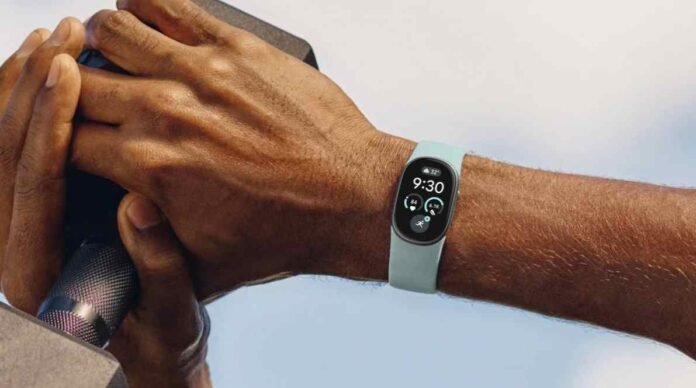
Google Fitbit Edge is the latest fitness tracker from Google, bringing a bright display, built in GPS and a physical side button to a slim design. With a weeklong battery life and a replaceable battery, the new wearable aims to appeal to people who want detailed fitness tracking without wearing a full smartwatch.
The launch comes as screenless fitness bands gain attention among users who prefer a simpler approach to health monitoring. Rather than abandoning the traditional Fitbit design, Google is taking a different route with the Edge. It combines the convenience of a compact fitness band with several features typically associated with smartwatches.
Priced at $179.99 in the US and £159.99 in the UK, the Fitbit Edge sits between the screenless Google Fitbit Air and the more feature packed Pixel Watch. Australian pricing has not yet been confirmed, although the estimated price is around AU$300.
Google Fitbit Edge Features a Brighter Hybrid OLED Display
The headline feature is the Hybrid OLED display, which Google describes as the largest and brightest screen it has fitted to a Fitbit tracker. The display offers 46% more viewing area than previous Fitbit models, giving users more room to check their health statistics, read notifications and navigate menus.
Visibility in direct sunlight is another key selling point. For people who regularly run outdoors, cycle or exercise in bright conditions, a screen that remains easy to read can make a noticeable difference. It also means users should be able to check essential information without repeatedly adjusting their wrist or stopping their workout.
Google has introduced a Tile based interface to make navigating the tracker more straightforward. Although the Edge does not run the full Wear OS platform, its interface appears to borrow elements from the company’s newer smartwatch software and design language.
The tracker also supports calls and notifications, along with Google Maps. Maps support is particularly interesting because it brings a more smartwatch like experience to a device designed primarily for fitness and everyday health monitoring.
At 11.5mm thick, the Edge maintains a relatively slim profile. Its metal touchpoints and physical side button add to the more substantial feel Google is aiming for, while keeping the device compact enough for all day wear.
Built in GPS and Automatic Workout Detection
Fitness tracking remains central to the Google Fitbit Edge, and its onboard GPS is one of the biggest practical advantages over the screenless Fitbit Air.
With GPS built into the device, users can record outdoor routes and monitor their pace and distance without relying on a connected smartphone for location tracking. This makes the Edge more convenient for runners, cyclists and hikers who prefer to leave their phones behind during exercise.
Google has also expanded automatic activity recognition. The tracker can reportedly detect up to 100 types of workouts without requiring users to start each session manually. The same automatic tracking improvement is expected to reach the Fitbit Air, extending the feature beyond the new model.
This approach should appeal to people who want useful fitness data without spending time navigating menus before every workout. Automatic detection can make everyday activity tracking feel more natural, particularly for users who switch between walking, running, cycling and other forms of exercise.
Health monitoring features include sleep tracking and menstrual cycle tracking, alongside Google’s broader collection of health tools. The Edge also includes access to the AI fitness coach and newer Health Guardian features, including Insulin Resistance Trends and ECG functionality, as described in the launch report.
These features give the tracker a wider role than simply counting steps and recording exercise. However, the usefulness of its health insights will depend on how clearly Google presents the information and how effectively its software helps users understand changes in their activity and health measurements.
Weeklong Battery Life and a Replaceable Battery
Battery life is another major selling point. Google says the Fitbit Edge can last around a week on a charge, which would reduce the need for frequent charging compared with many full featured smartwatches.
The company also says a 90 minute charge can bring the device back to 100%. That could make charging easier to fit into a regular routine, whether users top up the tracker while getting ready in the morning or leave it charging during another part of the day.
More unusually, the battery is replaceable. This is an important design decision because battery performance can deteriorate over time, potentially making an otherwise functional wearable less useful.
A replaceable battery could extend the life of the tracker and reduce the need to replace the entire device when its original battery eventually wears down. The actual benefit will depend on the availability, cost and ease of obtaining replacement batteries, details that will become clearer as more information emerges.
Google has also retained interchangeable bands. Buyers can choose an Active Sport band for exercise, a flexible Performance Loop with micro adjustment or Metal Links for a more traditional watch appearance.
Together, the battery design and interchangeable straps suggest that Google wants the Edge to be a longer lasting everyday companion rather than a disposable fitness accessory.
A Physical Button Gives Fitbit Edge a More Practical Design
The physical side button is a small feature that could make a meaningful difference in everyday use. Touchscreens work well for browsing, but they can be less convenient during exercise, particularly when hands are sweaty or the weather is wet.
A tactile button offers a straightforward way to interact with the tracker without relying entirely on the display. It also echoes a familiar feature of Garmin’s fitness watches, which often use physical controls to make workout navigation easier.
For users who have missed the buttons found on older Fitbit devices, the Edge could represent a welcome return to a more practical design philosophy.
Google is positioning the tracker as a middle ground between the minimalist Fitbit Air and the Pixel Watch. It offers a proper screen and a broader selection of smart features without moving all the way into the full smartwatch category.
There is still an important software consideration. Google has retired the old Fitbit app in favour of its Google Health experience, and the company’s growing emphasis on an AI fitness coach may not appeal to everyone. Some users prefer simple statistics, clear progress charts and straightforward controls rather than AI driven recommendations.
The Edge’s success will therefore depend on more than its hardware. Battery performance, display quality, GPS accuracy, comfort and the everyday usability of Google’s health software will all need to hold up in independent testing.
For now, the combination of a bright display, onboard GPS, weeklong battery life and a replaceable battery gives the Google Fitbit Edge a distinctive position in the fitness tracker market. It brings back several features that traditional Fitbit users value while introducing a more modern interface and expanded health tracking.
The next step is to see how the device performs in real world use. Until a full review is available, its advertised specifications look promising, but long term battery performance and the practical value of its health features remain to be tested.
Follow TechBSB For More Updates