
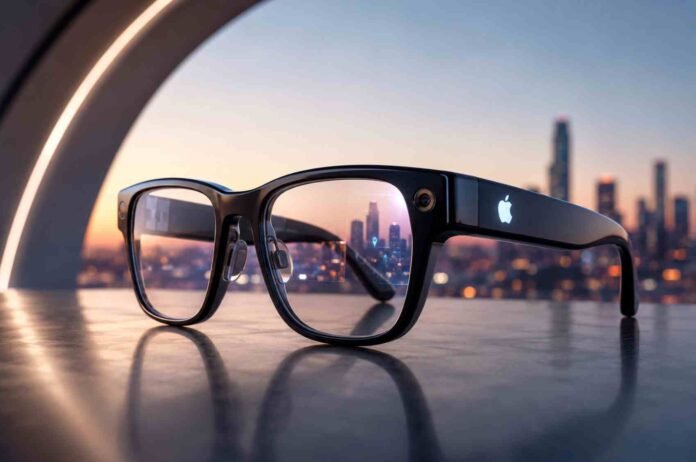
- Apple is developing smart glasses while carefully evaluating whether video recording should be included.
- Privacy concerns created by earlier smart glasses have made consumer trust a major challenge.
- Apple is also preparing new Apple Watch models, refreshed Macs, and a device leasing program.
- The company’s long standing focus on privacy could become its biggest advantage in the AI wearable market.
Apple is preparing to enter one of the most competitive and closely watched product categories in consumer technology with its upcoming smart glasses.
The company has spent years developing wearable devices that blend digital experiences with everyday life, but its biggest challenge may have little to do with hardware or software. Instead, Apple must convince people that smart glasses can exist without compromising personal privacy.
The wearable technology market has changed dramatically over the past few years. What once seemed like a futuristic concept has gradually become more practical, thanks to improvements in artificial intelligence, miniaturized components, and battery efficiency. Yet despite these advances, smart glasses continue to face skepticism because of concerns surrounding cameras and constant data collection.
Apple now has an opportunity to reshape that perception, though doing so will require careful decisions before the product reaches consumers.
Apple Is Carefully Weighing Video Recording Capabilities
One of the biggest internal discussions reportedly revolves around whether the smart glasses should include the ability to record video. While cameras can unlock useful features such as visual search, navigation assistance, and AI powered experiences, they also introduce significant privacy concerns for both users and the people around them.
Apple has built much of its reputation around protecting customer privacy. Unlike many technology companies that rely heavily on advertising data, Apple has consistently promoted privacy as one of its strongest selling points. That reputation means every design decision for the smart glasses will receive intense scrutiny.
If Apple includes video recording, it will need to reassure users that recordings cannot happen secretly or without clear visual indicators. At the same time, removing advanced camera functions could limit the device’s usefulness compared with competing products already on the market. Finding the right balance between functionality and trust may ultimately determine how successful the glasses become.
Meta’s Legacy Has Created a Difficult Starting Point
Apple is not entering a completely new market. Meta has already introduced smart glasses that familiarized consumers with the concept of wearable cameras. However, those products also sparked ongoing debates about surveillance, consent, and public privacy.
Public concerns have become so visible that activists have even displayed fake advertisements criticizing Meta’s smart glasses in public spaces. These campaigns reflect a broader concern that wearable cameras blur the line between convenience and constant observation.
Although Apple had no role in creating those controversies, it now inherits much of the public skepticism surrounding the category. Consumers may evaluate Apple’s product through the lens of previous experiences with smart glasses rather than judging it on its own merits.
That means Apple must do more than simply introduce innovative hardware. The company must clearly communicate how its approach differs and why people should trust its implementation.
A Bigger Product Strategy Is Taking Shape
The smart glasses are only one part of Apple’s broader product roadmap. The company is also preparing several hardware updates across its ecosystem, highlighting an aggressive strategy for the coming months.
Among the expected additions are three new Apple Watch models designed to strengthen the company’s position in the wearable market. Apple is also reportedly working on refreshed versions of every Mac lineup, ensuring that both consumer and professional users receive updated hardware powered by its latest technologies.
Beyond devices, Apple is exploring new ways to make its products more accessible through a leasing program. Such an initiative could allow customers to upgrade hardware more frequently while reducing the high upfront cost of premium devices.
The company has also expanded its software partnerships by integrating Apple Maps more closely with Ford vehicles. This collaboration reflects Apple’s ongoing effort to strengthen its presence in connected transportation without manufacturing its own car.
Taken together, these initiatives demonstrate that Apple is pursuing growth across hardware, software, and services simultaneously rather than relying on a single flagship product.
Trust Could Become Apple’s Biggest Competitive Advantage
Artificial intelligence will likely play a central role in Apple’s smart glasses, helping users interact with information more naturally throughout the day. However, AI alone will not determine whether the product succeeds.
Consumer confidence may prove to be the defining factor. People are increasingly aware of how technology collects and processes personal information. Any device equipped with cameras, microphones, and AI powered capabilities naturally raises questions about privacy.
Apple has spent years positioning itself as a company that prioritizes user control and responsible data practices. If it can extend those principles to smart glasses through transparent features, visible recording indicators, secure on device processing, and clear privacy protections, it could differentiate itself from existing competitors.
Success will depend not only on delivering an impressive wearable but also on convincing everyday users that the technology enhances their lives without making them feel constantly watched. That challenge could ultimately be more important than any hardware specification or software feature.
Follow TechBSB For More Updates