
Another WWDC keynote has come and gone, bringing with it the usual flood of software announcements, AI demonstrations, and promises about the future of Apple devices. This year, however, one feature stood out more than most. Siri finally received the major AI makeover many Apple users have been waiting for.
The upgraded assistant now feels far closer to the competition than ever before. With deeper intelligence, enhanced contextual understanding, and improvements to tools like Visual Intelligence, Apple is clearly trying to close the gap between Siri and rivals such as Alexa+ and Google Gemini.
Yet among all the AI headlines, one small feature caught my attention for a completely different reason.
It was not about smarter responses. It was not about visual search. It was not even about Apple’s AI partnerships.
It was about voice.
The Most Interesting Siri Upgrade Isn’t Intelligence
Voice assistants live or die by how they sound. You can have the most capable AI in the world, but if every interaction feels robotic, awkward, or unnecessarily dramatic, users eventually notice.
Apple seems to understand that.
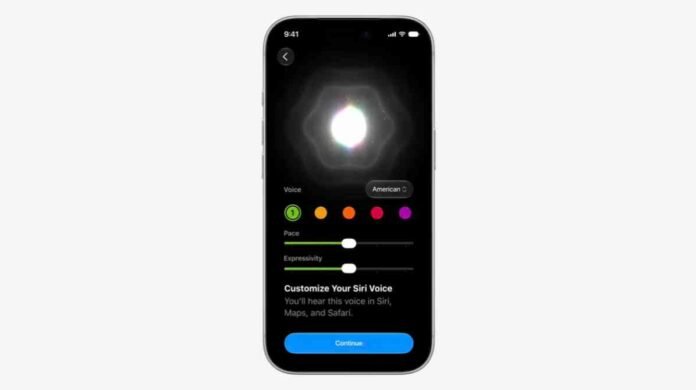
The new Siri introduces expanded voice customization options, allowing users to choose from five different voices while also adjusting pacing and expressiveness. It might sound like a minor addition compared to the broader AI upgrades, but it has the potential to change how people interact with Siri every day.
As someone who currently relies on Alexa+ around the house, I find this particularly interesting.
Alexa+ has made significant progress thanks to natural language processing improvements. Conversations feel more fluid, requests require less precise wording, and the overall experience is undeniably smarter than previous generations.
The problem is that Alexa+ can still feel strangely theatrical.
Responses often swing between overly enthusiastic and unexpectedly robotic. A simple command can be met with an exaggerated acknowledgment, while longer answers sometimes sound as though they are being delivered by multiple personalities stitched together. The intelligence is impressive, but the presentation can be distracting.
Apple’s decision to let users fine tune how Siri sounds feels refreshingly practical. Not everyone wants an enthusiastic digital cheerleader answering every question. Some people simply want a calm, natural assistant that blends into daily life.
If Apple gets the execution right, this could become one of Siri’s most valuable upgrades.
The Missing Piece Is HomeOS
Unfortunately, Apple’s smart home story remains frustratingly incomplete.
While Siri AI dominated much of the WWDC conversation, HomeOS barely received any meaningful attention.
The Home app gained a handful of useful enhancements. Grouped event notifications should help reduce clutter, while AI generated summaries for security camera footage could save users time when reviewing activity. Shortcuts also received welcome improvements, allowing users to create automations using natural language instead of navigating Apple’s often confusing setup process.
These are positive changes.
They are simply not enough.
The larger question remains unanswered: where is Siri AI for the home?
For years, HomePod users have watched Apple’s smart speaker platform evolve at a painfully slow pace. Meaningful software improvements have been rare, and the platform continues to lag behind competing ecosystems when it comes to automation, flexibility, and advanced AI integration.
Considering the enormous emphasis Apple placed on Siri’s transformation, the lack of HomeOS news feels particularly noticeable.
Hardware Limitations May Be Holding Apple Back
One possible explanation is hardware.
Current HomePod models are powered by technology that is beginning to show its age. The HomePod second generation uses the S7 chip, which originally debuted in the Apple Watch Series 7.
That raises an obvious question about AI compatibility.
Modern AI experiences require substantial processing power, and Apple’s latest intelligence features are already demanding enough that many older Apple devices cannot support them. It becomes increasingly difficult to imagine existing HomePods running the full version of Siri AI without significant compromises.
This could explain Apple’s silence.
The company has been linked to a smart home display and a next generation HomePod for years. Industry rumors continue to point toward future hardware designed specifically for Apple’s AI ambitions.
If those products are still on the horizon, Apple may be intentionally holding back major HomeOS announcements until new devices are ready.
Apple’s Smart Home Future Still Feels Uncertain
That strategy may make sense internally, but it creates uncertainty for current users.
Apple has finally delivered a version of Siri that looks capable of competing with modern AI assistants. The voice customization tools alone could make daily interactions more pleasant than what some rivals currently offer.
Yet smart home users remain stuck waiting for Apple to explain how this new Siri fits into the broader HomePod ecosystem.
The result is a strange contradiction.
Apple appears closer than ever to delivering a genuinely compelling AI assistant, but its smart home platform still feels like an unfinished chapter. Until HomeOS receives the same level of attention as Siri itself, Apple’s vision for the connected home will continue to feel incomplete.
Siri may finally be ready for the AI era.
The question is whether HomeOS is ready to join it.
Follow TechBSB For More Updates