
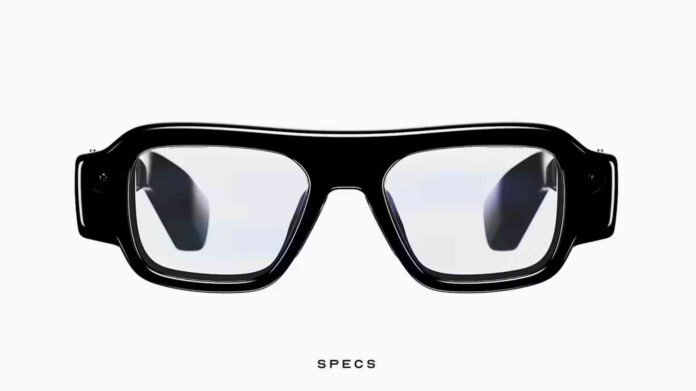
Snap is returning to the smart glasses market with a bold new product that it hopes will redefine how people interact with technology. Nearly a decade after its first attempt struggled to gain traction, the company behind Snapchat has introduced a new generation of augmented reality glasses called Specs.
The wearable device was revealed by Snap co founder and chief executive Evan Spiegel during the Augmented World Expo in California. Positioned as a major step toward the next era of computing, the glasses blend digital content with the real world, allowing users to interact with information without relying on a smartphone.
However, while the technology is impressive, the premium price tag may prove to be one of its biggest challenges.
Snap Bets on Augmented Reality With a Premium Device
The new Specs smart glasses will retail for £1,995 in the UK and $2,195 in the United States when they begin shipping later this year. Customers interested in securing a unit must place a refundable $200 deposit before launch.
Although Specs are significantly cheaper than Apple‘s Vision Pro headset, which starts at $3,499, they remain far more expensive than Meta‘s smart glasses offerings, many of which start at just over $200.
Snap believes the device offers a different vision of wearable technology. Unlike many competing smart glasses, Specs do not require a constant connection to a smartphone. They also avoid the wired battery packs associated with some mixed reality headsets, creating a more self contained experience.
According to the company, users can wear the glasses throughout the day while accessing digital overlays directly within their field of view. The goal is to make technology feel more natural and less dependent on traditional screens.
AI Features and Everyday Functions Take Center Stage
Snap has packed several advanced features into Specs. Users can access an integrated AI assistant that helps with navigation, answers questions about objects in view, and provides contextual information in real time.
Beyond AI assistance, the glasses support video streaming, web browsing, augmented reality gaming, and first person video recording. These capabilities position Specs as more than a camera accessory and closer to a fully fledged computing platform.
The company says the glasses are designed for everyday use, though battery life remains a limitation. Specs can operate for around four hours on a typical charge. A companion charging case extends total usage to approximately 20 hours before requiring a recharge.
While the battery performance is respectable for a compact AR device, it still falls short of what most consumers expect from a primary computing device.
High Price and Battery Life Could Limit Mass Adoption
Industry analysts believe Snap faces a difficult road ahead despite the innovation on display.
Ben Hatton, an analyst at CCS Insight, noted that the device’s premium pricing makes widespread adoption unlikely in the near future. Snapchat’s audience is largely made up of younger users, many of whom may find it difficult to justify spending nearly £2,000 on a wearable gadget.
Hatton also pointed out that although Snap has improved mobility by removing smartphone dependence, that convenience comes with trade offs. Battery capacity remains limited, and the glasses still feature a relatively bulky design compared to conventional eyewear.
As a result, Specs are unlikely to replace smartphones anytime soon. Instead, they may appeal primarily to technology enthusiasts, developers, and early adopters interested in exploring the future of augmented reality.
Privacy Concerns Remain a Key Challenge
Like other smart glasses products, Specs enters a market where privacy concerns continue to be a major talking point.
Wearable cameras have faced criticism for enabling discreet recording in public spaces. Similar products from other companies have drawn scrutiny from regulators and privacy advocates over how captured footage is reviewed and stored.
To address these concerns, Snap says it has built privacy safeguards into the device from the start. A visible light indicator activates whenever recording is taking place, helping people nearby understand when the camera is in use.
The company also says users will have control over what content is stored, synced, shared, or deleted.
Despite those assurances, privacy will remain an important factor in determining how comfortable consumers feel wearing camera equipped smart glasses in public settings.
A Second Chance After the Spectacles Setback
Snap’s latest launch comes after a difficult history in the smart glasses category.
Back in 2016, the company introduced Spectacles, camera enabled sunglasses designed to capture short video clips. Initial excitement quickly faded, and unsold inventory reportedly contributed to losses of around $40 million.
Updated versions arrived in 2018 and 2019 with improved cameras and higher prices, but none achieved mainstream success.
Over the years, Snap gradually shifted its focus toward augmented reality experiences, releasing experimental versions of Spectacles to developers and creators rather than everyday consumers.
Follow TechBSB For More Updates