
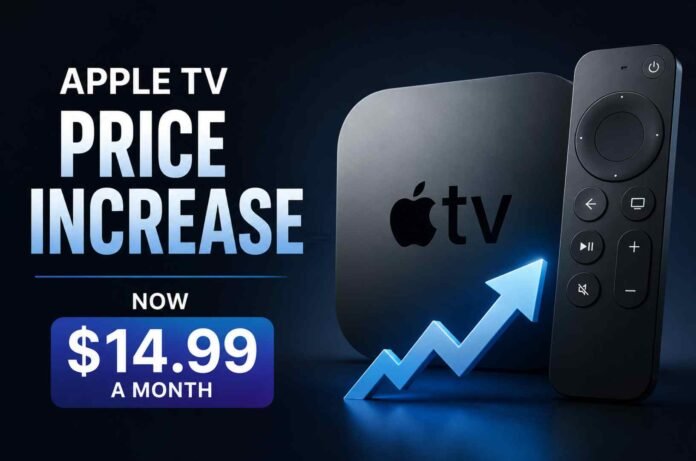
- Apple TV now costs $14.99 per month in the US, up from $12.99.
- The annual Apple TV plan and individual Apple One subscription are also getting more expensive.
- Viewers like Apple TV’s major shows but many feel the library is too small for the higher price.
- More subscribers may start cancelling between shows and switching services to reduce streaming costs.
Apple TV is raising its prices again, pushing the monthly cost in the US to $14.99 and adding fresh pressure to subscribers who are already dealing with increasingly expensive streaming bills.
The latest increase means Apple TV has become significantly more expensive in just a few years. In 2022, the service was priced at $4.99 per month. Now, after several rounds of increases, subscribers will pay three times that original monthly price.
Apple is also increasing the annual subscription price, while the individual Apple One plan is becoming more expensive too. The changes affect the US, along with Brazil, Chile, and Mexico, though other regions are not currently included.
For viewers, however, the bigger question isn’t simply whether an extra $2 a month is affordable. It’s whether Apple TV offers enough content to justify another price increase.
Apple TV’s price keeps climbing
The new US monthly price is $14.99, up from $12.99. The annual plan is also increasing from $99 to $119, while the individual Apple One subscription is rising by $2 to $21.95 per month.
This is another step in what has become a familiar pattern for streaming customers. Apple TV started as one of the cheaper premium streaming services, but that advantage has gradually disappeared.
Its price history tells the story. The monthly fee was increased from $4.99 in 2022, followed by further jumps in 2023 and 2025. Now, another increase has arrived in 2026.
Apple has built an impressive collection of critically acclaimed shows during that time. Severance, Silo, Slow Horses, and Ted Lasso have all helped establish the service as a serious player in streaming. Newer titles such as Widow’s Bay are also expanding the lineup.
The problem is that prestige and quantity are not the same thing.
Apple TV has never tried to compete with the enormous libraries offered by some of its rivals. Its strategy has largely focused on original programming rather than building a massive catalog of older shows and movies. That can make the service feel like excellent value when several major series are running at once, but considerably less attractive between big releases.
Great shows, but is there enough to watch?
This is where much of the subscriber frustration comes from.
Apple TV has a strong reputation for quality, and there is no shortage of praise for its best original series. But many viewers subscribe for one or two specific shows and then struggle to find enough else to watch throughout the rest of the month.
That makes a $14.99 monthly price harder to defend.
A growing number of subscribers are questioning whether they need to keep the service active all year. If the shows they want to watch arrive only occasionally, paying for a continuous subscription can start to feel unnecessary.
Ted Lasso has become a particular symbol of that frustration. It remains one of Apple TV’s biggest successes, but watching older episodes again is unlikely to convince everyone that another price increase is worthwhile.
The reaction from viewers reflects a wider problem affecting almost every streaming platform. The days when streaming was seen as a cheap alternative to traditional television are fading quickly. Multiple subscriptions can now cost as much as, or sometimes more than, the entertainment packages people once abandoned.
Subscription hopping could become the smarter option
For many viewers, the answer may be simple: stop subscribing to everything at once.
Subscription hopping has become an increasingly popular way to control streaming costs. Instead of paying for Apple TV, Netflix, Disney Plus, and several other services every month, viewers can subscribe to one service when there is something they want to watch and cancel when they are finished.
Apple TV may be particularly suited to that approach because its biggest shows often arrive in concentrated seasons. A subscriber could wait until several episodes, or an entire season, are available and then pay for a month or two.
It’s not quite the effortless streaming experience companies want customers to have, but it makes financial sense for viewers trying to manage rising monthly costs.
The latest increase could also encourage more people to consider annual plans, although even those are now becoming more expensive. Others may return to buying physical media or individual digital purchases, especially if they prefer owning their favorite movies and shows rather than paying indefinitely for access.
Apple’s problem is that every price rise changes the calculation for consumers.
At $4.99, Apple TV could be an easy subscription to keep even during quiet periods. At $14.99, viewers are more likely to look closely at how often they actually use it.
Apple still has some of the best original programming in streaming, and its strongest shows remain a major reason to subscribe. But quality alone may not be enough to keep everyone paying month after month.
The streaming market is becoming less about adding another service and more about deciding which service to cancel next.
Follow TechBSB For More Updates

