
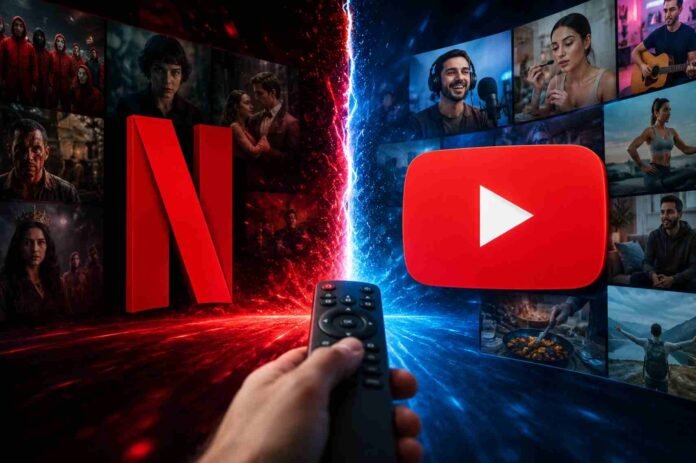
- Netflix is expanding into creator led videos, podcasts and live content to increase viewer engagement.
- Streaming platforms are now competing for watch time instead of focusing only on subscriber growth.
- India has become a crucial market as subscription fatigue and regional content reshape OTT competition.
- The future of streaming will depend on audience attention rather than the size of a platform’s content library.
For years, Netflix defined success by one simple number: subscribers. Every quarterly report revolved around how many new people had signed up, and every rival tried to match that pace. But the rules of streaming are changing quickly. Adding subscribers is no longer enough. The bigger challenge is keeping viewers engaged for as long as possible.
That shift explains why Netflix is starting to look a little more like YouTube.
The company is expanding beyond blockbuster originals and bringing in creator driven videos, podcasts, comedy specials, live programming and unscripted content. Beginning August 3, Netflix will add videos from digital publishers including BuzzFeed, Condé Nast and Variety in select markets, giving subscribers access to content they would normally watch elsewhere.
The move signals something much bigger than a content update. It reflects a new reality where every minute of a viewer’s attention has become more valuable than simply gaining another paid subscription.
The New Streaming Race Is About Watch Time
Streaming services once competed by building the biggest libraries and producing the most talked about original shows. Hits like Stranger Things, Bridgerton and Squid Game helped Netflix establish itself as the leader in premium entertainment.
Today, however, entertainment platforms are competing with much more than rival streaming apps. YouTube, Instagram Reels, podcasts, gaming platforms and live sports all compete for the same limited hours in a person’s day.
That means watch time has become the industry’s most important metric.
Instead of asking how many subscribers joined this quarter, companies are increasingly asking how often users return, how long they stay and what keeps them opening the app every day.
Creator led content fits naturally into that strategy. Unlike expensive scripted dramas that take years to produce, interviews, podcasts, documentaries and short form videos can arrive regularly, encouraging repeat visits between major releases.
Why Netflix Is Borrowing From YouTube
Netflix’s latest content strategy shows that it understands how viewing habits are evolving.
The platform wants subscribers to continue watching even after finishing a popular series or movie. Instead of leaving Netflix to search YouTube for interviews, behind the scenes footage or creator discussions, viewers will increasingly find similar content inside the app.
This approach mirrors YouTube’s biggest strength, offering an endless stream of fresh videos that keep audiences engaged throughout the day.
Industry experts also believe audiences are becoming more comfortable with authentic creator driven programming than highly polished productions. Viewers often connect with personalities they follow online, making podcasts, conversations and creator shows feel more personal than traditional television.
Another major factor is the rise of short form viewing. Social media has changed how people consume content, with many expecting something engaging almost immediately. That shift has influenced every entertainment platform, including streaming services that once focused entirely on long form storytelling.
Netflix is not abandoning premium dramas, but it is clearly widening its content mix to ensure there is always something new to watch.
India Is Becoming A Key Battleground
India perfectly illustrates why streaming companies are rethinking their strategies.
The country now has hundreds of millions of OTT viewers, but subscription fatigue is becoming increasingly common. Many people pay for multiple platforms while actively watching only one at any given time. Once a popular show ends, they often cancel the subscription and move elsewhere.
To reduce that churn, streaming services need content that keeps audiences engaged throughout the year instead of relying only on a handful of flagship releases.
Netflix has already strengthened its Indian catalogue with local originals and regional language productions, while Amazon Prime Video continues building loyal audiences through successful Indian series. Regional programming across Tamil, Telugu, Malayalam, Kannada, Bengali and Marathi has also become a major growth driver as platforms compete language by language instead of only nationally.
The rise of connected televisions is further changing the landscape. As more households watch digital content on smart TVs, YouTube and Netflix appear side by side on the same screen. For viewers, there is little distinction between social video and premium streaming. They simply choose whichever app offers something interesting at that moment.
That makes attention the ultimate prize.
The Future Of Streaming Is Bigger Than Movies And TV Shows
Netflix’s latest strategy suggests the next phase of streaming will be built around engagement rather than exclusivity.
Premium dramas will continue attracting audiences, but platforms also need frequent, lower cost programming that encourages daily viewing. Creator content, podcasts, live events and unscripted formats can fill those gaps while helping retain subscribers between major releases.
YouTube has spent years mastering that formula, becoming a destination people visit several times a day rather than only when a new show arrives.
Netflix now appears ready to follow a similar path.
The companies may still compete for subscribers, but the real battle is no longer over who has the biggest content library. It is about who can hold your attention for the longest. In today’s digital entertainment economy, that may prove to be the most valuable metric of all.
Follow TechBSB For More Updates

