
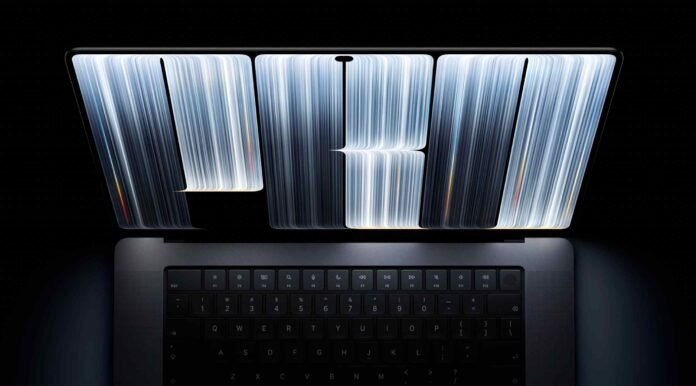
Apple’s move to OLED displays on the MacBook Pro marks a significant change for its professional laptops. With the introduction of the new PROLED XDR branding, the company is bringing a display technology designed to deliver brighter highlights, deeper blacks and improved colour accuracy to a machine built for demanding creative work.
The new display is available on the 14 inch and 16 inch MacBook Pro models announced by Apple. It also arrives alongside another major change: touchscreen support, a feature Mac users have been waiting years to see on a laptop.
But the most interesting development is happening beneath the glass. PROLED XDR is built around tandem OLED technology, which uses two layers of organic light emitting diodes rather than the single layer found in conventional OLED displays. The approach could help Apple address some of the limitations that have traditionally made OLED more challenging to implement in laptops.
What makes the PROLED XDR display different?
OLED displays have an important advantage over conventional LCD panels. Each pixel produces its own light, allowing individual pixels to switch off completely when displaying black. Without a backlight illuminating the entire panel, OLED screens can deliver exceptionally deep blacks and impressive contrast.
However, getting consistently high brightness across a laptop display presents a challenge. Sustained brightness, heat management and the possibility of burn in are particularly important considerations for machines that may display the same menus, toolbars and application panels for hours at a time.
Apple’s answer is tandem OLED.
Rather than relying on one layer of light emitting material, the technology stacks two OLED layers together. Both layers contribute to the light produced by the display, allowing the panel to achieve higher brightness without requiring each layer to work as hard as a single layer would.
That has two potential benefits. First, it allows the screen to produce brighter images, including the intense highlights found in HDR video. Second, distributing the workload between two layers could help reduce the strain on each one, potentially improving longevity and reducing the risk of burn in.
These advantages are especially relevant to professional users who spend long hours editing video, working with colour critical images or keeping static interface elements on screen.
The PROLED XDR name is new, but the underlying technology is not entirely unfamiliar to Apple. The company has already used tandem OLED in its iPad Pro lineup, where the display is marketed as Ultra Retina XDR. The MacBook Pro’s branding reflects Apple’s attempt to distinguish the capabilities of its latest laptop screens.
Brightness, contrast and colour accuracy take centre stage
The PROLED XDR display’s headline specifications suggest that Apple is targeting users who need more than a sharp, attractive screen.
Apple rates the panel for peak HDR brightness of up to 2,000 nits in small areas of the display. Full screen sustained brightness reaches up to 1,000 nits, allowing the panel to maintain a high brightness level across the entire screen rather than briefly producing an impressive result in a limited area.
The distinction matters. Peak brightness is useful when displaying sunlight, explosions or other intense highlights in HDR footage. Sustained full screen brightness is more relevant when working with bright scenes, large areas of white or content that demands consistent illumination.
For comparison, Apple’s 2025 iPad Pro display is rated for peak brightness of up to 1,600 nits and full screen brightness of up to 1,000 nits. The new MacBook Pro therefore offers a higher peak brightness rating, although its sustained full screen figure remains the same.
Contrast is another area where Apple claims an improvement. The MacBook Pro’s PROLED XDR display is rated for a contrast ratio of 10,000,000:1, compared with the iPad Pro’s stated 2,000,000:1.
That is a substantial difference on paper, but it is worth understanding what the numbers mean in practice. Contrast ratio compares the brightest white a display can produce with its darkest black. Since OLED pixels can turn off individually, the black level can become extremely low, making the resulting ratio very large.
The difference between the two displays’ claimed black levels may be difficult to notice in an ordinary viewing environment. Both can produce blacks that appear completely dark to the human eye. Nevertheless, improved control over light and reflections can help a display reproduce difficult scenes more faithfully.
Apple also says the new screen can cover more than 80% of the BT.2020 colour gamut. That is an encouraging specification for creative professionals, although actual performance should ultimately be judged through independent testing rather than colour gamut claims alone.
A display designed for professional creative work
Brightness and contrast are only part of the story. For photographers, filmmakers and other creative professionals, colour accuracy and consistent image reproduction are just as important.
Apple has integrated display processing into its M5 Pro and M5 Max chips. According to the company, this system continually compensates for factors such as the content being displayed, usage patterns, temperature and ambient conditions.
The goal is to maintain consistent performance as working conditions change. That could be useful for editors moving between different environments or professionals who need their laptop display to reproduce colours reliably throughout a long working session.
The screen also supports variable refresh rates between 10Hz and 120Hz. A higher refresh rate makes scrolling and animations look smoother, while a lower refresh rate can reduce power consumption when fast updates are unnecessary.
Apple has included additional refresh rate options aimed at video production, including 47.95Hz, 48Hz, 50Hz and 59.94Hz. These settings correspond to commonly used video frame rates and can make it easier to work with footage and monitoring workflows that require specific refresh rates.
There is also a nano texture glass option for people working in bright environments. The finish is designed to reduce distracting reflections, although users should weigh that benefit against their preferences for screen appearance and image clarity.
Taken together, these features position PROLED XDR as more than a marketing label. The technology and supporting display controls are intended to make the MacBook Pro a more capable mobile workstation for people who depend on their screens for professional results.
Does PROLED XDR make the MacBook Pro worth buying?
For filmmakers, photographers and other demanding users, the combination of tandem OLED, high brightness, strong contrast and flexible refresh rates could make a meaningful difference. The ability to produce deep blacks alongside bright HDR highlights is particularly attractive for video editing, colour grading and HDR content creation.
The touchscreen is another notable addition. It changes how users can interact with macOS, offering a more direct way to work with creative applications and on screen controls. However, its practical value will depend on how well software and everyday workflows take advantage of touch input.
For most people, the benefits will be less dramatic. Watching films, browsing the web and editing documents should look excellent on a high quality OLED screen, but the difference between an already good display and a more advanced one may not justify a purchase on its own.
There are also questions that specifications cannot answer completely. Long term burn in resistance, real world battery life, colour accuracy and sustained performance will need to be evaluated through independent testing and extended use.
PROLED XDR is therefore best understood as a combination of improved panel technology and professional display engineering. Tandem OLED gives Apple a way to pursue higher brightness while addressing some traditional OLED concerns, and the supporting display engine adds controls intended to keep image quality consistent.
If these improvements hold up outside the laboratory, the new MacBook Pro could become an especially compelling option for mobile creatives who need a dependable reference quality screen. For everyone else, it may simply deliver a more immersive experience every time they open their laptop.
Follow TechBSB For More Updates