
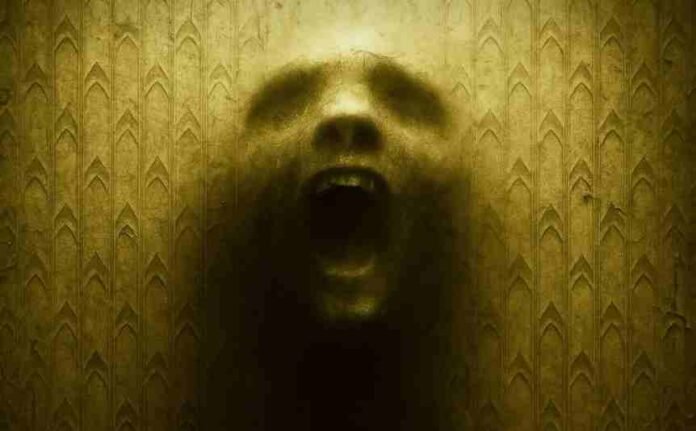
- Clark is killed by the pirate monster, which symbolizes the destructive version of himself created by denial and failure.
- Mary survives the maze after Async scientists capture the creature, but her freedom remains uncertain.
- The final scene reveals a distorted version of Mary inside the Backrooms, hinting that the dimension copies or preserves human identities.
- The film uses the Backrooms as a metaphor for trauma, memory, guilt, isolation, and the fear of losing one’s sense of self.
A24’s Backrooms is not interested in offering straightforward answers. While it uses the familiar internet myth as its foundation, the film gradually transforms into a psychological horror story about trauma, memory, and the terrifying ways people become trapped inside their own emotional wounds.
The ending deliberately blurs the line between reality and illusion, leaving viewers to decide whether the Backrooms is simply a mysterious dimension or something that feeds on human consciousness itself.
Here’s what really happens in the ending and what it all means.
What Happens to Clark and Why Does the Monster Kill Him?
Clark enters the Backrooms as a man already broken by failure. His career has collapsed, his marriage is over, his furniture business is dying, and alcoholism has consumed what little stability remains in his life. Instead of confronting these failures, he constantly shifts blame onto everyone around him.
By the time Mary finds him inside the maze, Clark is no longer thinking clearly. He has accepted the Backrooms as his new reality, living among disturbing human like replicas and treating them as though nothing is unusual. Even Kat’s severed head inside the refrigerator fails to shock him, showing how completely the place has reshaped his mind.
Mary refuses to indulge his delusion. Rather than continuing therapy, she forces Clark to hear the truth. His wife did not abandon him because life was unfair. She left because he refused to take responsibility for his own choices.
For a brief moment, Clark appears ready to change. He begins untying Mary, suggesting that part of him still wants redemption. That possibility disappears when the monstrous pirate version of Clark appears.
The creature is much more than another monster roaming the maze. It represents the version of Clark created by his own denial, guilt, and self deception. The pirate costume comes directly from the television commercial he desperately believed would save his failing business. It becomes a grotesque reminder of every false hope he clung to instead of confronting reality.
When the creature kills Clark, the film symbolically shows that he is destroyed by the very identity he spent years creating. His greatest enemy was never hiding in the Backrooms. It was always himself.
Does Mary Escape the Backrooms?
Unlike Clark, Mary refuses to surrender.
While fleeing through the shifting maze, she eventually reaches a distorted copy of Clark’s furniture store. During the confrontation, she fights back using a chunk of concrete from her childhood home. The object is deeply symbolic because it represents the painful memories she has carried for years, including the loss of her childhood home and the trauma surrounding her mother’s illness.
Instead of allowing those memories to control her, Mary literally uses them as a weapon.
The fight accidentally activates one of Async’s hidden gas traps. Scientists quickly arrive, capture the pirate creature, and remove Mary from the maze.
On the surface, this appears to be a rescue.
However, the film immediately introduces another unsettling possibility.
Mary wakes inside an Async research facility where Phil questions her about everything she witnessed. Although she cooperates, Phil admits he cannot promise she will ever be released.
That conversation makes one thing clear. Escaping the Backrooms does not necessarily mean returning to a normal life.
What Does the Final Scene Really Mean?
The movie’s final minutes introduce its biggest mystery.
Inside the Backrooms, rooms begin forming around Mary’s own memories before eventually creating an imperfect copy of the interrogation room where she recently spoke with Phil.
Waiting inside is another version of Mary.
She sits silently without reacting, much like the strange human shaped figures Clark lived alongside.
The film intentionally refuses to explain exactly what viewers are seeing, but several interpretations fit everything shown throughout the story.
The first possibility is that the Backrooms copies every person who enters it. Throughout the film, familiar places and objects always appear slightly wrong, suggesting the dimension recreates reality through incomplete memories rather than perfect duplication. The final Mary could simply be another flawed copy.
Another interpretation is even darker.
The Backrooms may preserve fragments of people’s identities. Instead of making physical clones, it traps emotional echoes built from fear, regret, and memory. Even after someone leaves, a piece of their consciousness remains inside the maze forever.
A third possibility questions whether the woman questioned by Async is actually the original Mary at all. Since the Backrooms constantly creates imperfect replicas, the audience can never be completely certain who truly escaped.
The film deliberately leaves every interpretation open, making uncertainty part of the horror.
The Real Meaning Behind Backrooms
Although Backrooms features monsters and supernatural spaces, its biggest fears are deeply human.
The endless yellow hallways mirror emotional paralysis. Clark cannot move beyond his failures, while Mary struggles with unresolved childhood trauma. The maze reflects people who keep walking through the same painful memories without finding closure.
Memory also becomes unreliable throughout the story. Every recreated location feels familiar but slightly incorrect, much like real memories that slowly change over time. The Backrooms does not rebuild reality. It rebuilds people’s imperfect recollections of reality.
The film also quietly explores questions surrounding artificial intelligence and imitation. Everything inside the maze resembles something authentic while never becoming the original. That mirrors growing concerns about technology reproducing human creativity, identity, and experience without truly understanding them.
Ultimately, Backrooms argues that the most frightening prisons are often psychological. Clark becomes trapped because he refuses accountability. Mary survives because she confronts her past instead of running from it. Yet even her apparent escape comes with uncertainty, suggesting some scars never disappear completely.
By ending with a silent duplicate of Mary sitting inside another imitation of reality, the film leaves audiences wondering whether anyone who enters the Backrooms can ever truly leave all of themselves behind.
Follow TechBSB For More Updates

