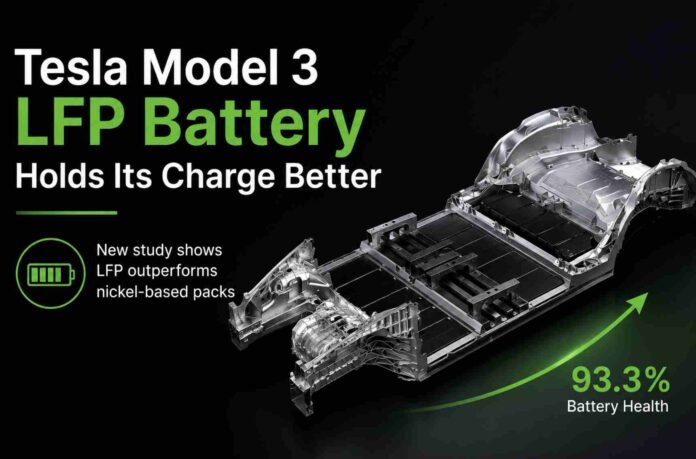
- Tesla Model 3 models with CATL LFP batteries retained 93.3 percent battery health after 100,000 kilometers.
- Nickel based Tesla battery packs recorded lower average battery health, with Panasonic versions showing the most degradation.
- LFP batteries benefit from greater thermal stability and better tolerance for regular 100 percent charging.
- The findings strengthen the case for checking battery chemistry and battery health when buying a used electric vehicle.
A large scale analysis of nearly 10,000 electric vehicle battery tests suggests that Tesla’s lithium iron phosphate, or LFP, battery packs retain their capacity better than the company’s nickel based battery options. The findings come from real world vehicles rather than laboratory testing, offering fresh insight into how different battery chemistries perform after years of regular use.
The research focused on battery health after vehicles had crossed 100,000 kilometers, or around 62,000 miles. While Tesla has used several battery suppliers and chemistries across different versions of the Model 3, the results indicate that the LFP powered variant delivers the strongest long term capacity retention.
For buyers considering a used electric vehicle, the study highlights an important point. Two Tesla Model 3 cars with similar mileage may have noticeably different battery health depending on the battery pack installed at the factory.
Real World Data Reveals Clear Difference Between Battery Types
The analysis was carried out by Swedish used EV retailer Carla using almost 10,000 battery health reports collected between 2022 and 2026. Battery diagnostics were performed using AVILOO testing, which measures the actual state of health of a battery pack instead of relying on the vehicle’s onboard estimate.
Among Tesla Model 3 vehicles that had traveled more than 100,000 kilometers, the version equipped with CATL’s LFP battery achieved an average battery health of 93.3 percent.
Nickel based versions of the same vehicle recorded lower figures. The LG Chem NMC battery averaged 91.5 percent, while Panasonic supplied NCA battery packs recorded 89.8 percent and 88.2 percent depending on battery size.
That creates a gap of more than five percentage points between the best and worst performing battery packs in the same model. Although every version still retained a large share of its original capacity, the results suggest that battery chemistry plays a significant role in long term durability.
Why LFP Batteries Are Lasting Longer
The findings support what battery experts have suggested for several years. LFP batteries generally sacrifice energy density in exchange for improved durability and thermal stability.
Compared with nickel based batteries, LFP cells are less sensitive to frequent charging to full capacity. Tesla itself recommends charging LFP equipped vehicles to 100 percent for everyday driving, while owners of nickel based batteries are typically advised to limit daily charging to between 80 and 90 percent.
Over thousands of charging cycles, that difference can have a measurable impact on battery ageing.
LFP batteries are also less expensive to manufacture because they avoid the use of costly materials such as nickel and cobalt. Tesla adopted LFP packs in many Standard Range versions of the Model 3 and Model Y primarily to reduce production costs and ease pressure on raw material supply. However, the latest results suggest the move also delivered a significant durability advantage for owners.
Earlier studies, including research supported by Tesla and several independent battery teardown reports, have reached similar conclusions, making the latest dataset another strong indicator of LFP’s long term reliability.
Other Electric Vehicles Also Delivered Impressive Results
Tesla was not the highest ranked manufacturer in the broader study.
The Kia e Niro and Hyundai Kona, both using 64 kWh battery packs, recorded the highest average battery health at just over 97 percent after crossing the same mileage threshold.
Other strong performers included the Kia EV6, Volvo XC40 Recharge, Polestar 2, BMW i3, Audi e tron and several Volkswagen Group electric models.
Every vehicle in the top 20 maintained more than 91 percent average battery health after 100,000 kilometers. These results reinforce the broader trend that modern electric vehicle batteries are proving far more durable than many early buyers feared.
Large fleet studies have also reached similar conclusions, with average battery degradation now estimated at around 1.8 percent per year. Tesla has previously stated that many of its Long Range Model 3 and Model Y batteries retain around 85 percent of their original capacity even after 200,000 miles of driving.
What This Means for Used EV Buyers
The biggest takeaway from the latest research is that not every Tesla Model 3 ages in the same way. Battery supplier and chemistry can have a noticeable effect on long term battery health, even when comparing vehicles of the same model year and mileage.
For used car buyers, identifying which battery pack is installed may become just as important as checking service history or overall condition. A difference of several percentage points in battery health can translate into better driving range and stronger long term value.
With battery health testing becoming more widely available, buyers now have better tools to assess an electric vehicle before making a purchase. As the used EV market continues to grow, real world battery condition is likely to become one of the most important factors influencing resale value and ownership costs.
Follow TechBSB For More Updates