
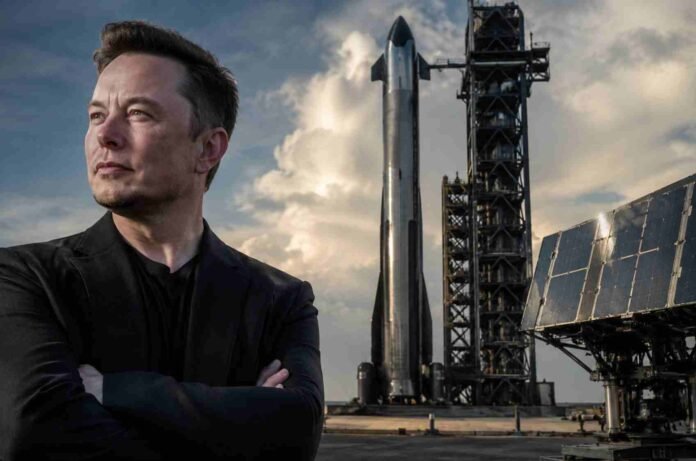
- Elon Musk wants SpaceX to eventually launch one million AI focused satellites into orbit.
- Experts warn the project could cost trillions and be far more expensive than Earth based data centers.
- The plan depends on Starship achieving rapid, low cost, fully reusable launches.
- Researchers believe orbital AI data centers may become viable, but likely not until the mid 2030s.
Elon Musk has never been afraid of pursuing ambitious ideas. From reusable rockets to global satellite internet, many of his projects once seemed impossible. Now, the SpaceX founder has outlined perhaps his most audacious vision yet: launching one million AI powered satellites into orbit to create a vast network of space based data centers.
While the concept has captured attention across the technology and aerospace industries, several leading space experts believe the proposal raises serious economic and technical concerns. Some even warn that moving too quickly on such a massive undertaking could expose SpaceX to significant financial risks.
A Vision Built Around Space Based AI
According to Musk’s long term vision, future generations of artificial intelligence could eventually run from orbital data centers rather than traditional facilities on Earth. The concept relies on fleets of satellites equipped with advanced AI processors and powered by large solar arrays.
The plan would depend heavily on SpaceX’s Starship rocket, which is being developed as a fully reusable launch system. Musk believes rapid and inexpensive launches could make it practical to deploy enormous numbers of satellites into low Earth orbit.
SpaceX has already demonstrated its ability to build large satellite constellations through Starlink. The broadband network now consists of thousands of satellites and has become one of the company’s most successful commercial ventures.
However, scaling from thousands of communications satellites to one million AI focused spacecraft represents a dramatically different challenge.
Experts Question The Economics
Among the strongest critics is aerospace engineer Robert Zubrin, a respected figure in the space industry and founder of The Mars Society. While he has long supported many of Musk’s achievements, he argues that orbital AI data centers make little economic sense under current conditions.
Zubrin estimates that replicating Starlink style manufacturing and deployment on the scale of one million satellites could require investments measured in trillions of dollars. Even if launch costs continue to decline, he believes operating AI infrastructure in orbit would remain far more expensive than running data centers on Earth.
The main issue comes down to power generation and infrastructure costs. Traditional data centers can access electricity from solar farms, natural gas facilities, hydroelectric systems, or nuclear plants. Space based systems, by contrast, require expensive solar hardware that must be launched and maintained in orbit.
Critics argue there is currently no compelling financial reason to place AI computing resources in space when terrestrial alternatives remain significantly cheaper and easier to scale.
Starship Must First Prove Itself
Another major challenge is launch capacity.
Musk has suggested that Starship could eventually fly with extraordinary frequency, potentially supporting an unprecedented pace of satellite deployment. Yet Starship remains in the testing phase and has not yet achieved the level of operational reliability needed for such ambitious schedules.
Although recent test flights have demonstrated important progress, the vehicle still faces technical hurdles before it can support routine commercial operations. Industry observers note that moving from occasional test missions to thousands of launches annually would require a transformation unlike anything seen in modern aerospace history.
This reality has led many analysts to view the one million satellite target as an extremely long term objective rather than a near term business plan.
Google Researchers See A Longer Timeline
Interestingly, research teams exploring similar concepts are taking a more cautious approach.
Recent studies examining space based AI infrastructure suggest the idea could become viable in the future if launch costs fall dramatically and orbital systems mature. However, many researchers believe meaningful economic competitiveness remains years away.
Some projections indicate that orbital AI data centers may not begin matching Earth based alternatives until the mid 2030s. Before that happens, the industry would need major advances in launch economics, satellite manufacturing, power generation, networking technologies, and long term reliability.
Several experimental missions are already being planned to test the concept on a smaller scale. These demonstrations aim to validate technologies such as inter satellite communications and distributed AI processing in orbit.
For now, researchers generally view space based AI as a promising research direction rather than an immediate commercial opportunity.
The Bigger Picture
Despite criticism, Musk’s proposal reflects a broader trend shaping the technology sector. Demand for artificial intelligence infrastructure continues to surge, creating a race among companies to secure computing power and energy resources.
Supporters argue that bold ideas often appear unrealistic before technology catches up. Skeptics counter that timing matters, and even visionary projects can become costly mistakes if pursued too early.
SpaceX has repeatedly succeeded by challenging industry assumptions. Yet the company’s proposed AI satellite constellation may represent its most difficult test so far.
Follow TechBSB For More Updates