
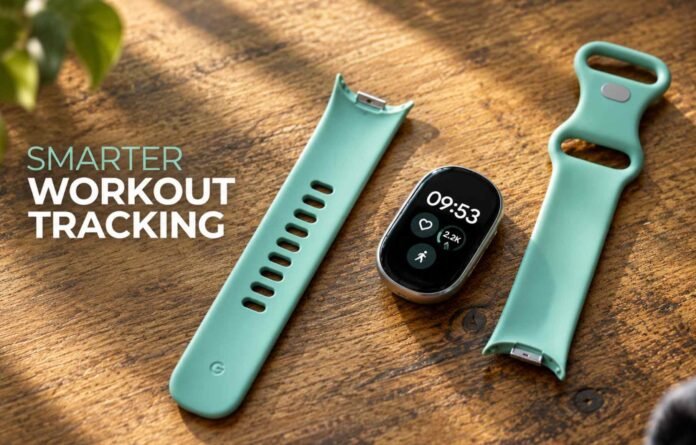
Google Health 5.11 is rolling out with a major upgrade to automatic workout detection, allowing compatible Pixel Watch and Fitbit devices to recognise more than 100 types of physical activity. The update aims to make fitness tracking more convenient by reducing the need to start and stop workouts manually.
The latest version of Google’s health app is coming to Android and iOS ahead of the Fitbit Edge launch. Alongside expanded activity detection, the update introduces changes to the app’s Health Guardian features, giving users more health tracking tools to explore.
For anyone who regularly forgets to start a workout before heading out for a run, swimming session or strength training routine, the expanded detection system could prove particularly useful.
Google Health 5.11 expands automatic workout detection
Google is making automatic activity tracking a much bigger part of its fitness ecosystem with version 5.11 of Google Health. Previously, automatic workout detection covered around 10 activities. The latest update increases that number to more than 100, giving compatible wearables a much broader range of exercises to recognise.
The expanded support includes activities such as strength training and swimming, two workout categories that could benefit users who do not always remember to start tracking before exercising.
Automatic detection is designed to take some of the effort out of maintaining an accurate fitness record. Instead of opening the app or navigating through a watch’s menus before every session, users can rely on their wearable to recognise when they are exercising and log the activity accordingly.
The feature will be available on the Fitbit Air, Pixel Watch 3, Pixel Watch 4, Pixel Watch 5 and the upcoming Fitbit Edge, according to the reported rollout details.
However, the wider range of supported activities does not necessarily mean every workout will be recognised perfectly. Detection depends on the wearable identifying patterns in the user’s activity, and some sessions may still require manual logging.
How Google’s improved activity detection works
The updated system uses signals such as heart rate and the duration of an activity to determine whether a user has started exercising. When the heart rate remains above a particular threshold for long enough, the device can identify the movement as a potential workout and record it automatically.
Google has not disclosed the precise heart rate thresholds or the amount of time required to trigger detection. That makes it difficult to predict exactly how the system will behave during different exercises, particularly activities that involve short bursts of effort or relatively little movement.
Strength training, for example, can involve periods of intense effort followed by rest. Swimming also presents its own tracking challenges, depending on the wearable and the type of activity being performed.
Google is also working to make automatic detection more personalised over time. The app can use users’ corrections to improve its understanding of their exercise habits. Correcting a workout that has been logged incorrectly, or manually adding an activity that was missed, can help the system make better decisions in the future.
In principle, this approach should make activity tracking more useful as the app learns which exercises a person performs regularly. It could also reduce the number of workouts that go unrecorded simply because the user forgot to start a session.
Even so, automatic detection should be treated as a convenience rather than a guarantee. Users may still need to review their activity history and add missing workouts when necessary.
Pixel Watch and Fitbit users are getting the update
Google Health version 5.11 is reportedly widely available on iOS, while the Android rollout is still underway. Availability may therefore vary depending on the device and the pace of the rollout.
After receiving the update, users should see an introductory screen explaining the expanded automatic tracking features the next time they open the app. If the new functionality has not appeared yet, it may simply mean the update has not reached their device.
The timing is notable because Google is preparing to launch the Fitbit Edge on Tuesday, October 27. The upcoming wearable is expected to arrive with the improved workout detection system already part of the experience.
That gives Google an opportunity to present automatic tracking as a more central feature of its fitness devices. Rather than focusing only on step counts, heart rate readings and manually started exercise sessions, the updated software aims to capture more of a user’s everyday activity with less intervention.
For existing Pixel Watch owners, the update could make the fitness experience more convenient without requiring a new wearable. Users with compatible devices should benefit from the wider activity detection support once the software becomes available to them.
Health Guardian features also receive attention
Automatic workout detection is the headline change in Google Health 5.11, but it is not the only update. Google has also highlighted improvements to its Health Guardian features, a collection of tools intended to provide additional health related insights.
The broader Health Guardian experience has attracted questions about how its various functions fit together, particularly as Google continues to expand the health features available through its wearables and companion app.
The latest update suggests that Google is continuing to develop Google Health beyond basic fitness logging. Bringing activity detection, health insights and wearable data into a more connected experience could make the app more useful for people who want to monitor their overall wellbeing.
However, the practical value of these changes will depend on how clearly the app explains its findings and how consistently the features work in everyday use.
For now, the expanded automatic workout detection is the most immediately useful addition for many users. Recording more exercise types without requiring manual input addresses a familiar problem with fitness trackers: even the most capable device cannot produce a complete workout history if its owner repeatedly forgets to start tracking.
Google Health 5.11 takes a step towards solving that problem. With support for more than 100 activities, improved personalisation and compatibility with several Pixel Watch and Fitbit devices, the update should make recording workouts easier. The real test will be whether the system can reliably recognise different exercises without creating incorrect entries or missing sessions.
Follow TechBSB For More Updates