
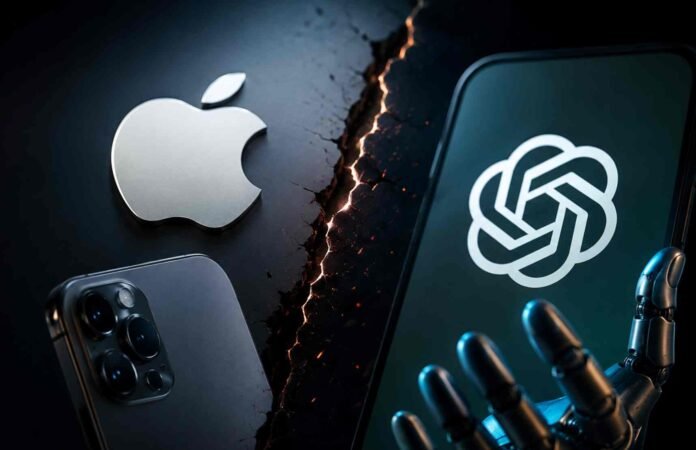
- OpenAI is reportedly unhappy with how Apple integrated ChatGPT into Siri and Apple Intelligence.
- Bloomberg claims OpenAI is considering legal action over the partnership.
- Apple allegedly has concerns about OpenAI’s privacy practices and hardware ambitions.
- A breakup could change how AI features work on future iPhones and Siri updates.
Apple’s ambitious AI push may be running into deeper trouble than expected. A fresh report claims tensions between Apple and OpenAI have escalated behind the scenes, with the ChatGPT maker allegedly weighing legal action over what it sees as a disappointing and one-sided partnership tied to Siri and Apple Intelligence.
According to Bloomberg, the relationship between the two companies has become increasingly strained as OpenAI grows frustrated with how Apple has integrated ChatGPT into its ecosystem. What once looked like a landmark collaboration between two of the biggest names in tech could now be heading toward a messy split.
The disagreement matters because it could reshape how AI works on the iPhone in the coming years. If the partnership collapses, Apple users may eventually see Siri powered by different AI systems or lose direct ChatGPT integration altogether.
OpenAI reportedly expected a much bigger role inside iPhones
When Apple announced its Apple Intelligence platform, the company positioned OpenAI as a key partner. ChatGPT was meant to help power advanced requests Siri could not handle on its own, while also supporting tools such as writing assistance and visual intelligence features.
But Bloomberg reports that OpenAI believed the collaboration would go much further.
The company allegedly expected stronger placement inside Siri, deeper integration across Apple apps, and a major boost in ChatGPT subscriptions through exposure to Apple’s massive user base. Instead, the current setup remains fairly limited. In many cases, users must manually call on ChatGPT by name, making the feature feel more like an optional add on than a core part of iOS.
That frustration appears to be growing internally at OpenAI. Bloomberg claims lawyers representing the company are already exploring legal options, including the possibility of formally accusing Apple of breaching parts of their agreement.
At this stage, a lawsuit has not been filed. The report suggests OpenAI could first issue a legal notice before deciding whether to escalate matters further.
Apple reportedly has concerns of its own
The tension apparently is not flowing in only one direction.
Bloomberg also says Apple has become uneasy about OpenAI’s long term ambitions and approach to privacy. Apple has spent years positioning itself as the tech company most committed to protecting user data, and that philosophy reportedly clashes with some of OpenAI’s practices.
Another source of friction may be OpenAI’s aggressive move into hardware. The company recently strengthened ties with former Apple design chief Jony Ive, while also recruiting talent from Apple for future AI devices and products.
From Apple’s perspective, that reportedly raises concerns about working closely with a company that could become a direct competitor in consumer hardware.
Meanwhile, unnamed OpenAI executives quoted in the report argue Apple failed to fully support the partnership from the beginning. One executive allegedly claimed Apple “haven’t even made an honest effort,” suggesting OpenAI believes it delivered on the product side while Apple failed to provide the visibility and integration originally discussed.
What this could mean for Siri and Apple Intelligence
If the relationship deteriorates further, Apple could shift its AI strategy in a very different direction.
The company has already signaled interest in expanding support for third party AI systems beyond ChatGPT. Reports suggest Apple is exploring tighter integration with models from companies like Google and Anthropic, potentially allowing users to choose between multiple assistants inside iOS.
That flexibility could help Apple reduce reliance on OpenAI if negotiations fall apart.
For users, the impact could vary. Some iPhone owners may eventually gain access to a wider range of AI models instead of relying mainly on ChatGPT. Others could see existing OpenAI powered features scaled back or removed entirely if the partnership officially ends.
The bigger issue is what this says about Apple’s AI struggles overall. Siri has fallen behind rivals in recent years, especially as generative AI tools rapidly evolved. Apple’s partnerships with outside companies were supposed to help close that gap while its own technology matured behind the scenes.
Instead, the company now appears caught between competing AI firms, privacy concerns, and growing pressure to modernize Siri faster than ever before.
The missing piece in the dispute
One important detail remains unclear. Bloomberg’s report does not explain the exact legal grounds OpenAI may have against Apple.
There is no public information showing which terms of the agreement were allegedly violated or whether Apple failed to meet any contractual obligations. Without those details, it is difficult to know whether legal threats are primarily a negotiating tactic or the start of a genuine courtroom battle.
Still, the fact that such discussions are reportedly happening at all shows how fragile major AI partnerships can become when expectations around growth, branding, and control no longer align.
For now, both companies remain deeply important to each other. Apple needs advanced AI capabilities while OpenAI wants broader mainstream distribution. But if the latest claims are accurate, trust between the two sides may already be wearing thin.
Follow TechBSB For More Updates

