
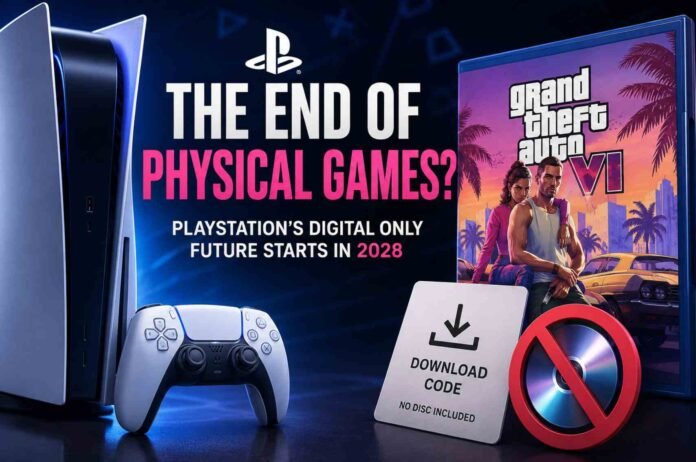
The gaming industry has been moving toward digital distribution for years, but recent developments suggest the shift is about to accelerate. Sony’s reported decision to move away from disc based PlayStation games from 2028 marks a major turning point, especially as it arrives alongside the launch of GTA 6 pre orders that reportedly do not include a traditional game disc.
For many players, a physical edition has always meant owning something tangible. You could install the game, lend it to a friend, sell it later, or keep it as part of a collection. A box containing only a download code does not offer the same value, even if it is sold in retail stores. It is essentially another form of digital purchase wrapped inside physical packaging.
GTA 6 has become the clearest example of this transition. While some retailers may still stock boxed editions, reports suggest they will simply contain redemption codes instead of actual discs. If that becomes the industry standard, the era of collecting PlayStation games in physical form could soon come to an end.
Digital Purchases Give Players Less Control
The biggest concern surrounding a digital only future is ownership. When players purchase a game digitally, they are usually buying a license to access the software rather than owning the game itself.
That distinction matters more than many people realize. If an account is suspended, compromised, or permanently banned, access to an entire digital library can be affected. Likewise, if licensing agreements change or content is removed from storefronts, consumers may have very limited options.
These concerns are not entirely theoretical. Sony has previously removed purchased digital movies from user libraries after licensing agreements expired, raising questions about how secure digital purchases really are over the long term.
Physical copies have traditionally avoided these problems. Once purchased, they remained playable regardless of online storefronts or licensing changes. They also allowed owners to build collections that could last for decades without depending on active servers.
Rising Prices Could Become a Bigger Issue
Another major concern is pricing.
Today, players often save money by purchasing pre owned copies from retailers or buying discounted physical editions months after release. Competition between online stores and physical retailers helps reduce prices over time.
If PlayStation eventually relies almost entirely on its own digital storefront, that competition becomes much smaller. Sony would effectively control pricing across its ecosystem, particularly for first party games.
Examples already exist. Several older PlayStation titles continue to sell at prices that many players consider high despite being available for years. Games such as GTA 5 have remained expensive on digital storefronts long after their original launch, while physical copies have frequently been available at much lower prices through retailers.
Without second hand discs circulating in the market, consumers could lose one of the most affordable ways to buy games.
Retail stores such as GameStop, CeX, and other second hand game sellers have long played an important role by giving players cheaper alternatives. Their business models rely heavily on buying and selling used games. A future without physical discs would significantly reduce that market.
What This Could Mean for the Future of PlayStation
Sony is also expected to close digital stores for older platforms like the PS3 and PS Vita, adding another layer to the debate around digital preservation.
When digital storefronts disappear, buying older games becomes much more difficult. Physical media has often acted as a safeguard, allowing classic titles to remain accessible years after official support ends.
Looking ahead, many gamers worry the same situation could eventually affect current PlayStation consoles. If future hardware depends entirely on digital storefronts, players may have no permanent way to access certain games once those stores are retired.
That uncertainty is why physical media continues to matter for many enthusiasts. Beyond nostalgia, discs represent long term ownership, resale value, preservation, and consumer choice.
At the same time, digital distribution does offer genuine benefits. Players enjoy instant downloads, automatic updates, faster access on launch day, and no need to swap discs. Publishers also reduce manufacturing and distribution costs.
Whether those conveniences outweigh the loss of ownership remains the central question.
Sony’s reported strategy reflects where much of the gaming industry appears to be heading. Faster internet connections, growing digital sales, and subscription services have steadily reduced demand for physical media.
However, the transition also raises important conversations about consumer rights, pricing, preservation, and competition. If physical games eventually disappear altogether, gamers may gain convenience but lose flexibility that has defined console gaming for decades.
The future of PlayStation may well be digital first, but many players believe ownership should not disappear along with the disc.
Follow TechBSB For More Updates