
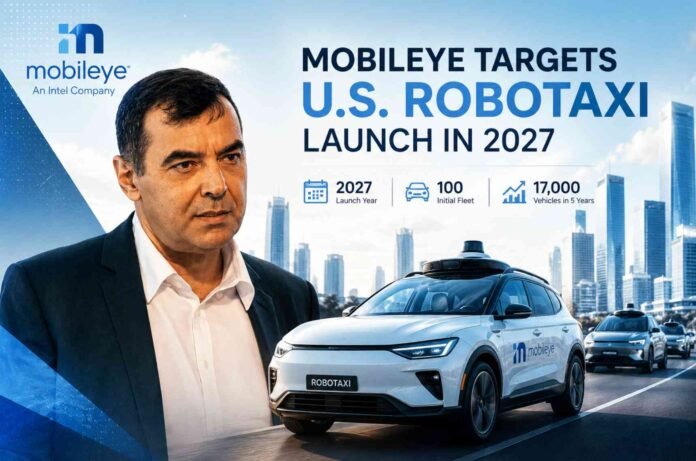
Autonomous driving specialist Mobileye is preparing to take a major step beyond supplying self driving technology to automakers. The company has announced plans to launch its own robotaxi service in the United States, marking a significant shift in strategy as competition in the autonomous mobility sector continues to intensify.
The Israel based company intends to introduce an initial fleet of 100 robotaxis in a major U.S. city in 2027. The rollout will begin in phases before expanding aggressively over the following years. Mobileye says its long term goal is to grow the fleet to approximately 17,000 autonomous vehicles within five years of launch.
The announcement was welcomed by investors, with the company’s shares climbing following the news. The move signals Mobileye’s confidence in both its autonomous driving platform and the growing demand for driverless transportation services across urban markets.
From Technology Supplier to Service Operator
For years, Mobileye has been known primarily as a supplier of advanced driver assistance systems and autonomous driving technology. Its Mobileye Drive platform is already used by several automotive and mobility partners around the world.
By launching its own robotaxi network, the company is moving into a role traditionally occupied by transportation service providers. This shift places Mobileye in direct competition with some businesses that currently rely on its technology.
Despite potential concerns, Mobileye insists that the new robotaxi initiative will not affect its existing partnerships. Company executives describe the project as an additional route to market rather than a replacement for its supplier business.
Chief Executive Officer Amnon Shashua said the company sees an opportunity to build a different kind of robotaxi business by combining its autonomous driving expertise with strong industry relationships and years of real world experience in mobility technology.
According to Mobileye, operating its own fleet will also allow the company to showcase the capabilities of the Mobileye Drive platform at a much larger scale. The initiative could serve as a real world demonstration of the technology’s readiness for commercial deployment.
A Crowded and Fast Growing Market
The U.S. robotaxi market has become one of the most competitive areas in transportation technology. Several major players are already racing to establish dominance as cities gradually become more open to autonomous ride hailing services.
Alphabet owned Waymo currently leads the sector and has built a significant operational advantage. The company runs commercial robotaxi services in multiple U.S. cities and continues to expand its reach. It is also pursuing international opportunities, with plans to extend operations into global markets.
Amazon backed Zoox is moving forward with partnerships designed to increase accessibility to autonomous rides. The company recently announced new integration plans that will allow more users to experience its driverless technology through established ride hailing platforms.
Meanwhile, Tesla continues to pursue its own autonomous ambitions. Although the company remains behind some competitors in terms of large scale robotaxi deployment, it is actively working to expand its self driving capabilities and regulatory approvals.
Against this backdrop, Mobileye faces a challenging environment but also a growing market where consumer interest and investment continue to increase.
Why Mobileye Believes It Can Succeed
Mobileye’s biggest advantage may be its long history in autonomous driving development. Unlike some newer entrants, the company has spent years refining computer vision systems, mapping technologies, and safety frameworks that support autonomous vehicles.
The firm’s extensive relationships with automakers and mobility companies could also help accelerate deployment and operational scaling. Rather than building every component from scratch, Mobileye can leverage an ecosystem that has already been developed through its supplier business.
The company’s plan to expand from 100 vehicles to around 17,000 over five years reflects confidence in both the technology and the business model. If successful, the move could transform Mobileye from a behind the scenes technology provider into a highly visible transportation brand.
However, the road ahead remains complex. Regulatory approvals, operational costs, safety requirements, and public acceptance will all play critical roles in determining whether the company can achieve its ambitious targets.
Follow TechBSB For More Updates