
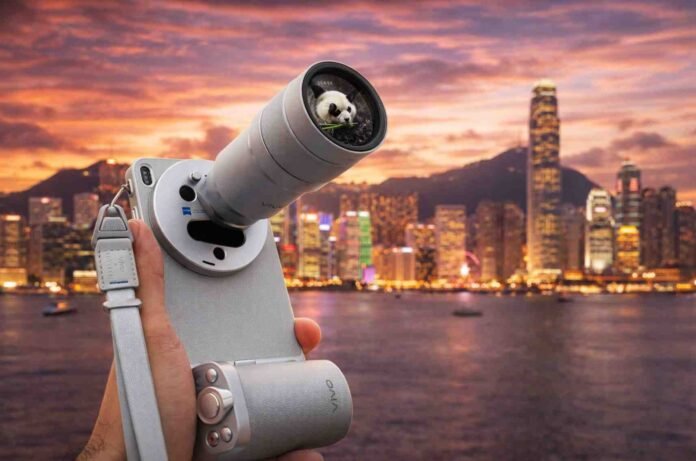
- External 200mm and 400mm lenses deliver true optical reach beyond digital zoom
- Camera grip improves handling, control, and video stability
- Image quality looks more natural with less aggressive processing
- Carrying extra gear is worth it for serious mobile photography
Vivo has been steadily building its reputation in mobile photography, and with the Vivo X300 Ultra, it’s making an even stronger case. This isn’t just another spec-heavy flagship. It’s a device that challenges the idea of what a smartphone camera should be, especially with its bold use of external teleconverter lenses.
Taking the phone to Hong Kong offered a real-world test of whether these add-ons are practical or just marketing flair. Carrying it like a traditional camera, complete with a lanyard and grip, quickly changed the shooting experience. What initially felt excessive started to make sense once the results came in.
The hardware: thoughtful, not gimmicky
The X300 Ultra doesn’t just introduce new lenses, it builds an ecosystem around them. The camera kit includes a mounting case, a grip with physical controls, a lanyard, and two teleconverter lenses at 200mm and 400mm. There’s also a tripod mount and protective accessories, making the setup feel closer to a compact camera system than a phone add-on.
The grip is particularly impressive. It adds tactile control with a shutter button, zoom lever, scroll wheel, and customizable function key. For anyone used to shooting on dedicated cameras, this instantly feels more natural. It also improves stability, which is noticeable when shooting video or zoomed-in subjects.
The lenses themselves are where things get interesting. The updated 200mm lens is more compact than before, while the 400mm lens is significantly larger but delivers serious reach. Mounted onto the phone, they extend the capabilities far beyond what digital zoom can achieve. Yes, carrying them requires a small bag, but they’re not as cumbersome as expected.
Real world performance: zoom that actually holds up
Using the 400mm lens in a place like Ocean Park highlights its strengths. Distant subjects suddenly become detailed and usable, not just cropped approximations. Fine textures, like fur or distant signage, remain intact rather than smeared by aggressive processing.
Switching to the 200mm lens offers more flexibility when subjects are moving. It’s easier to manage framing and focus, especially with the half press shutter feature that locks exposure and focus. Once you get used to the workflow, it feels surprisingly fluid.
What stands out most is how natural the images look. Instead of relying heavily on sharpening and AI tricks, the output feels closer to what you’d expect from a dedicated camera. Background blur appears more realistic, and detail retention is noticeably stronger at long distances.
Video capabilities get a boost too
The improvements aren’t limited to photography. The X300 Ultra enhances video recording with higher bitrate LOG capture and smoother lens transitions. Shooting in 10 bit across all lenses gives more flexibility in post processing, especially for color grading.
The camera interface also leans into a more professional setup, making it easier to adjust settings on the fly. Combined with the grip’s added stability, handheld footage feels more controlled and usable, even without relying heavily on software stabilization modes.
Why this changes how you shoot with a phone
There’s always been a trade off with smartphone photography between convenience and capability. The X300 Ultra shifts that balance. It asks you to carry a bit more, but rewards you with results that simply aren’t possible with a standard phone setup.
At first, bringing extra lenses might seem excessive for casual outings. But after spending a full day shooting, it becomes clear they’re not just accessories. They meaningfully expand creative options, especially for wildlife, street details, and distant subjects.
This approach won’t be for everyone. If you want pure pocket convenience, this setup might feel like overkill. But for those who enjoy photography and want more control without switching to a full camera system, it hits a compelling middle ground.
Follow TechBSB For More Updates

