
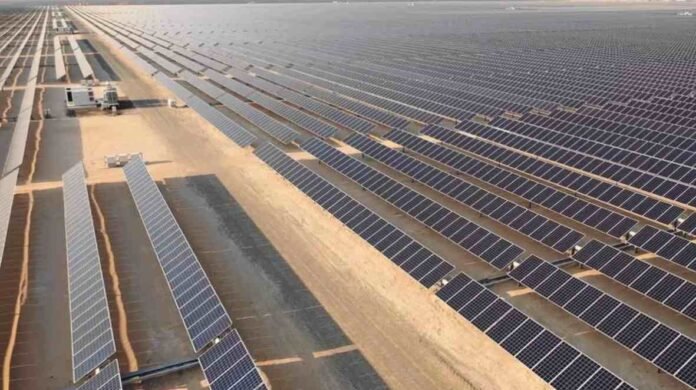
- Shimizu proposed a solar belt around the Moon’s equator spanning 11,000 km
- The system would generate constant solar power and beam it to Earth
- Construction would rely on lunar materials and advanced robotics
- High costs and technical hurdles make the project largely theoretical
More than a decade ago, a concept from Japanese engineering giant Shimizu Corporation quietly surfaced with an ambition that still feels extraordinary today.
The proposal imagined a vast belt of solar panels encircling the Moon’s equator, stretching roughly 11,000 kilometers. At its widest, this structure could extend up to 400 kilometers, forming a continuous ring designed to harvest solar energy without interruption.
Unlike Earth-based solar farms, which must contend with night cycles, clouds, and seasonal variation, the Moon offers a uniquely stable environment for capturing sunlight. With no atmosphere and minimal obstruction, solar panels placed along the lunar equator could generate power almost continuously.
The scale of the project is difficult to grasp. Even a conservative estimate places its surface area at over a million square kilometers, comparable to the combined size of Texas and California.
How the Luna Ring would actually work
The concept, known as the Luna Ring, revolves around uninterrupted energy generation and transmission back to Earth. Solar panels installed across the lunar belt would convert sunlight into electricity, which would then be routed to transmission hubs positioned on the side of the Moon facing Earth.
From there, the energy would be beamed down using either microwave or laser technology. Receiving stations on Earth would use rectennas to convert these signals back into usable electricity. In theory, this would allow a constant flow of clean energy to reach the planet regardless of weather or time of day.
To make the project viable, Shimizu proposed relying heavily on lunar resources. The Moon’s surface is rich in oxide compounds that could be processed into oxygen and water using hydrogen brought from Earth. Lunar soil could also be transformed into construction materials such as concrete, ceramics, and even components for solar cells.
Automation would play a central role. Large robotic systems would handle excavation, leveling, and installation tasks, while mobile manufacturing units would continuously produce and lay down solar panels along the equator as they move.
Engineering ambition meets reality
While the idea is undeniably visionary, it comes with immense technical and financial challenges. Building infrastructure on the Moon at such a scale would require breakthroughs in robotics, materials science, and space logistics. Many of the machines described in the proposal remain conceptual, with no fully operational equivalents available today.
Cost is another major unknown. Even at the time of its introduction, project leaders acknowledged that there was no clear estimate for how much such an undertaking would require. That uncertainty has remained one of the biggest obstacles to serious investment.
The proposal gained some attention following the Fukushima disaster in 2011, when Japan began reevaluating its energy strategy. However, experts have consistently pointed out that while the concept is appealing in theory, the financial and technical barriers are overwhelming. Some analysts argue that more practical renewable options, such as geothermal or terrestrial solar expansion, offer better near term returns.
A futuristic vision or distant possibility
Today, the Luna Ring remains more of a thought experiment than a concrete plan. It represents the kind of long horizon thinking that pushes the boundaries of what energy infrastructure could look like in the future. Yet it also highlights the gap between visionary engineering and practical execution.
For now, the idea sits at the intersection of innovation and speculation. It raises important questions about how far humanity is willing to go to secure clean energy and whether space based solutions will ever become economically viable.
Follow TechBSB For More Updates