
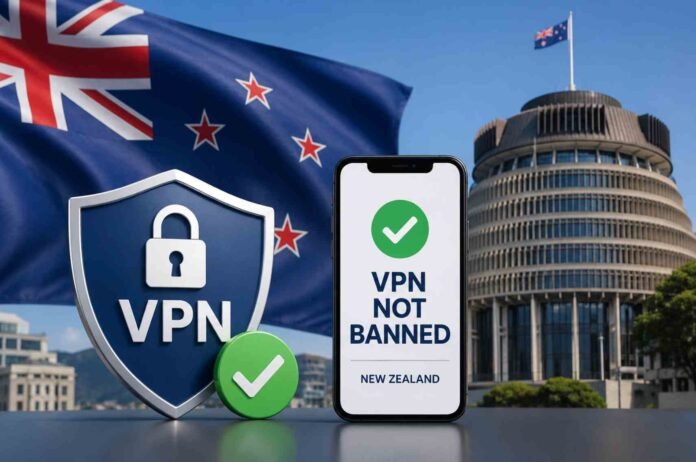
- New Zealand has officially denied any plans to restrict or ban VPN services.
- The clarification follows strong criticism from privacy advocates and political allies.
- VPNs remain central to the global debate over age verification and online safety laws.
- The government says child protection efforts will not include restrictions on encryption tools.
New Zealand has moved quickly to calm fears over possible restrictions on virtual private networks, with senior government leaders making it clear that VPNs are not being targeted under the country’s proposed social media ban for children under 16.
The clarification follows days of speculation after reports suggested officials were considering whether VPNs could undermine future age verification measures. Those reports triggered widespread criticism from privacy advocates, digital rights groups, and political figures, who warned that limiting VPN access would create serious concerns for cybersecurity and online freedom.
Prime Minister Christopher Luxon has now firmly dismissed the claims, while Education Minister Erica Stanford’s office has also confirmed there are no plans to restrict or ban VPN services.
Government Clarifies Its Position on VPNs
The controversy began after reports claimed the New Zealand government was exploring ways to deal with VPN usage as part of its proposed social media restrictions for teenagers. Because VPNs allow users to mask their location and encrypt internet traffic, some believed they could become an obstacle to enforcing age verification requirements.
The reports quickly gained attention because VPNs are widely used for legitimate privacy and security purposes rather than simply bypassing online restrictions.
As criticism intensified, Prime Minister Christopher Luxon publicly rejected the suggestion that VPNs would be banned. He stated there was no government plan to prohibit VPN usage and questioned how the reports had emerged.
Soon after, Education Minister Erica Stanford’s office issued its own clarification, confirming that the government is not considering any restrictions or bans on VPN services as part of the proposed legislation.
The statements effectively ended speculation that privacy software would become part of New Zealand’s child online safety framework.
Privacy Groups and Political Allies Push Back
The reported proposal received an immediate and strong response from privacy advocates and several political voices.
Critics argued that restricting VPN technology would weaken digital privacy protections for millions of users who rely on encrypted connections every day. VPNs are commonly used by businesses, remote workers, journalists, and ordinary internet users to secure sensitive information, especially when using public networks.
Political pressure also emerged within the governing coalition. Reports indicated that coalition partner ACT viewed any attempt to restrict encryption technology as unacceptable, making it clear that such measures would face significant resistance.
The Free Speech Union also criticized the reported proposal, arguing that limiting technologies designed to protect online privacy would shift the focus away from child safety and toward broader internet control. According to the organization, restricting VPN access could establish infrastructure that affects digital freedoms rather than simply protecting younger users online.
The swift backlash demonstrated how sensitive any proposal involving encryption technology has become, particularly as governments around the world introduce stricter online safety laws.
VPNs Remain at the Center of a Global Debate
Although New Zealand has ruled out VPN restrictions, the wider discussion surrounding online safety and digital privacy is far from over.
Many governments are introducing stronger age verification requirements to limit children’s access to social media platforms. However, enforcing these systems remains technically challenging because VPNs can make it appear that a user is connecting from another location.
That capability often leads lawmakers to view VPNs primarily as tools for bypassing digital restrictions. Cybersecurity experts and privacy advocates, however, argue that this perspective overlooks their much broader role.
VPNs encrypt internet traffic, helping protect users from cybercriminals, insecure public WiFi networks, internet service providers, and other forms of online tracking. They are also widely used by companies to secure remote work and protect confidential business communications.
This creates an ongoing policy challenge. Governments want effective age verification systems, while privacy experts warn that limiting encryption technologies could reduce overall cybersecurity for the wider public.
The same debate has emerged in several other countries, including the United Kingdom and parts of Europe, where discussions around online safety laws have raised similar questions about the future of VPN services.
Child Safety and Cybersecurity Must Be Balanced
New Zealand’s latest clarification highlights the difficult balance governments must strike when developing online safety legislation.
Protecting children from harmful online content remains a priority for policymakers, but achieving that goal without affecting widely used security technologies is proving increasingly difficult.
The government’s decision to distance itself from any proposal involving VPN restrictions has been welcomed by privacy advocates, who see it as recognition that cybersecurity tools should not be treated as threats simply because they can also be used to bypass digital restrictions.
For now, New Zealand’s proposed under 16 social media ban will continue without targeting VPN services. Whether similar debates emerge elsewhere remains uncertain, but the controversy has shown how quickly discussions about child safety can expand into broader questions surrounding digital privacy, encryption, and internet freedom.
Follow TechBSB For More Updates