
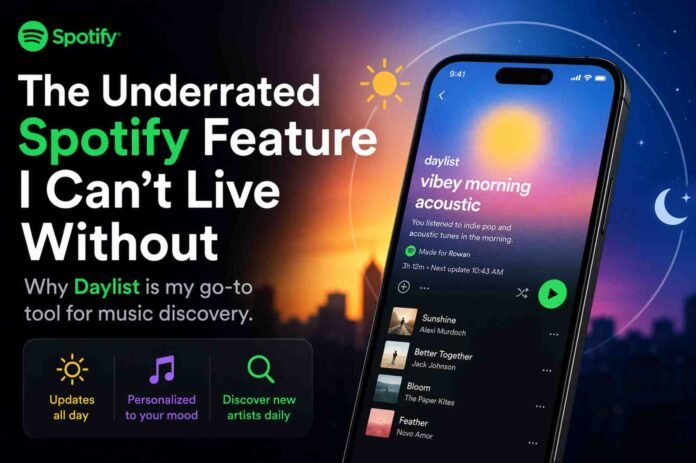
- Daylist updates multiple times a day, making it more dynamic than weekly playlists
- It balances familiar songs with new discoveries without feeling repetitive
- Works especially well for listeners with diverse music tastes
As Spotify crosses the 20 year mark, conversations around its evolution tend to circle back to the same headline features. Discover Weekly, Release Radar, and curated editorial playlists usually dominate the spotlight. They have earned that attention. But beneath those flagship tools sits a feature that feels far more personal and, in many ways, more addictive.
Daylist.
Launched in 2023, Daylist did not arrive with the same fanfare as some of Spotify’s other innovations. It was not positioned strictly as a discovery engine either. Yet, for many listeners, it has quietly become one of the most effective ways to find new music while keeping familiar sounds in rotation.
Why Daylist works when other playlists feel predictable
What makes Daylist stand out is its timing. Instead of refreshing weekly or daily at fixed intervals, it evolves throughout the day based on listening habits. Morning playlists feel different from late night ones. Genres shift. Moods change. Even the naming of these playlists reflects your listening personality at that exact moment.
This constant refresh creates a sense of movement that traditional playlists lack. Discover Weekly might give you a batch of new songs every Monday, but it can feel static after a few listens. Daylist, on the other hand, keeps things fluid. You are not just discovering music. You are discovering how your taste changes across the day.
There is also a balance that feels more natural. It does not overwhelm you with completely unfamiliar artists, nor does it trap you in repetition. Instead, it blends deep cuts from artists you already like with tracks from names you have never explored. That middle ground is where it thrives.
A gateway to unexpected artists and genres
For listeners with varied tastes, Daylist becomes even more powerful. Someone who jumps between indie rock, electronic, alternative pop, and experimental sounds will notice how seamlessly it connects those worlds.
You might start your day with nostalgic soft rock and end it with cutting edge indie releases. Along the way, Daylist introduces artists who sit just outside your usual rotation. Not so far that they feel disconnected, but far enough to expand your listening habits.
This is where the feature truly shines. It does not just recommend what is popular or trending. It builds subtle bridges between artists and genres. One familiar track leads to another artist, which leads to a niche sound you would not have actively searched for.
Over time, those small discoveries stack up. Your library grows organically, and your taste profile becomes more layered without any conscious effort.
Still loyal to the classics but leaning toward Daylist
That does not mean traditional tools have lost their value. Discover Weekly and Release Radar still serve a purpose. They are reliable, structured, and often great for catching new releases or curated recommendations.
But Daylist offers something they do not. It feels alive. It reflects your habits in real time rather than summarizing them after the fact.
For many users, it becomes the first place to check when opening the app. Not because it promises groundbreaking discoveries every time, but because it consistently delivers a mix that feels tailored and fresh.
And perhaps that is why it remains underrated. It does not try too hard. It simply adapts, evolves, and keeps you listening.
Follow TechBSB For More Updates

