
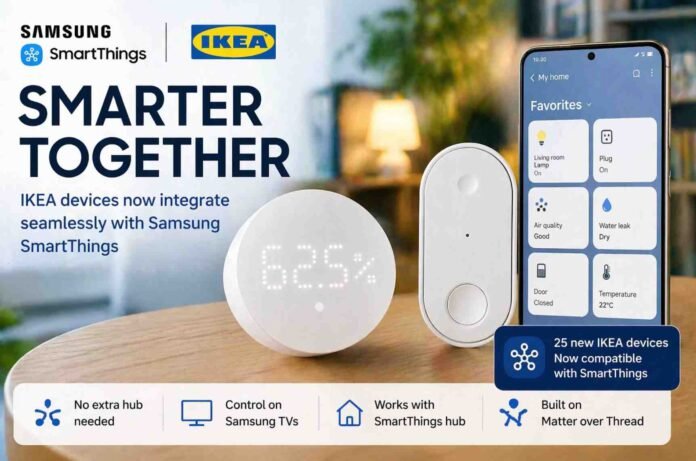
- Samsung SmartThings now supports 25 new IKEA smart devices directly
- No need for a separate IKEA hub anymore
- Devices can be controlled via Samsung TVs
- Makes affordable smart home setups easier and more accessible
Samsung has quietly removed one of the biggest frustrations in affordable smart home setups. Its SmartThings platform now works far more smoothly with IKEA’s latest range of connected devices, and the result is exactly what users have been waiting for: a simpler, cleaner setup that doesn’t require jumping through hoops.
Until recently, integrating IKEA’s budget-friendly smart gadgets into a SmartThings ecosystem was more effort than it should have been. Users typically needed both an IKEA hub and a SmartThings hub running side by side, which added cost, complexity, and confusion. That barrier made IKEA’s otherwise appealing entry-level devices less attractive for people already invested in Samsung’s ecosystem.
That has now changed. With the latest update, Samsung has expanded support for Matter-over-Thread IKEA devices, allowing direct pairing with a SmartThings hub. No extra bridge, no workarounds. Just connect and go.
25 new devices join the ecosystem
The update brings compatibility for 25 newer IKEA smart home products. This includes everyday essentials like smart plugs and bulbs, along with more specialized devices such as air quality monitors, water leak sensors, door sensors, and IKEA’s distinctive scroll wheel remote.
These additions significantly broaden what users can do within SmartThings. Instead of relying on premium brands for automation, users can now build a fully functional smart home using IKEA’s lower cost alternatives. That opens the door to more people experimenting with automation, from simple lighting routines to more advanced sensor based triggers.
IKEA has always positioned itself as the accessible entry point into smart living. While its devices may not match the polish or advanced features of high end competitors, they deliver solid performance at a fraction of the price. This deeper SmartThings integration strengthens that value proposition.
Big screen control comes to Samsung TVs
One of the more practical upgrades is support for SmartThings on Samsung TVs. With the new integration in place, users can control IKEA smart devices directly from their television interface.
That might sound like a small change, but it has real convenience benefits. Adjusting lights, checking sensors, or managing connected devices can now happen without reaching for a phone. For households already using Samsung TVs as a central hub for entertainment, this effectively turns the TV into a smart home dashboard.
It also ties IKEA devices more closely into Samsung’s broader ecosystem, which includes appliances like washing machines and air purifiers. The idea is clear: one unified system, regardless of brand, with minimal setup required.
IKEA doubles down on smart home ambitions
This update lands at a time when IKEA is pushing harder into the smart home category. At CES 2026, the company showcased a range of upcoming products, including a smart version of its eye catching Varmblixt lamp, which quickly gained attention online.
Behind the scenes, IKEA is continuing to refine its approach. The focus remains on affordability, simplicity, and accessibility rather than cutting edge innovation. That strategy seems to be working, especially as standards like Matter make cross brand compatibility easier.
Samsung’s move to deepen integration reflects a broader shift in the industry. Instead of locking users into one ecosystem, companies are increasingly working together to deliver smoother experiences across devices. For consumers, that means fewer headaches and more flexibility.
Why this update actually matters
For existing SmartThings users, this change removes a major friction point. For newcomers, it lowers the barrier to entry into smart home tech. And for IKEA, it strengthens its position as the go to brand for budget friendly connected devices.
Most importantly, it shows how far the smart home space has come. What once required multiple apps, hubs, and technical know how is slowly becoming something anyone can set up in minutes.
Follow TechBSB For More Updates