
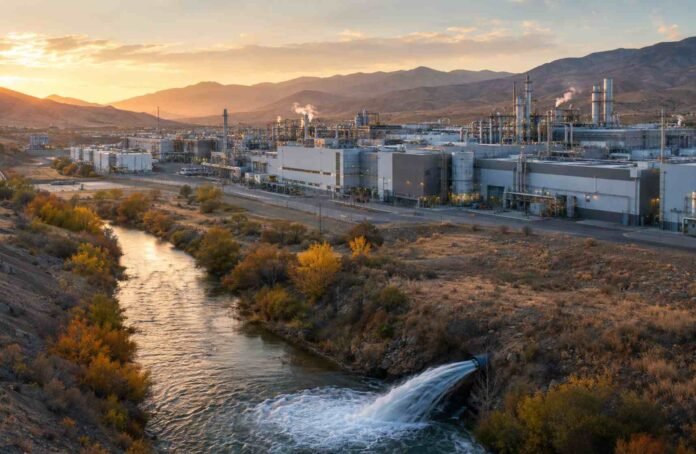
- Micron’s new Idaho chip fabs could push water use above 10 million gallons daily
- The company has not clearly explained where future water supplies will come from
- Boise’s desert location makes groundwater and water rights highly sensitive issues
- Residents fear AI driven industrial growth could strain local aquifers and farming communities
Micron’s ambitious semiconductor expansion in Idaho is quickly becoming one of the most closely watched industrial projects in the United States. While the company positions the development as a major step toward strengthening America’s AI and chipmaking capabilities, critics say the project exposes a growing conflict between technological growth and limited natural resources.
The US memory giant plans to invest around $50 billion into new semiconductor manufacturing facilities in Boise, Idaho. But behind the promise of jobs, innovation, and AI driven growth lies a much more pressing issue: water.
Semiconductor fabrication plants are among the most water intensive industrial facilities in the world, and Micron’s future demand is expected to surge dramatically.
Its current Boise factory already uses approximately 4.7 million gallons of water every day. According to environmental filings, the first of the new fabrication plants would increase that number to around 10.2 million gallons daily. That amount alone is enough to fill more than 15 Olympic sized swimming pools every day.
A second fabrication plant is also part of the long term plan, though details surrounding its total water demand remain unclear.
A Growing Water Burden in Idaho’s High Desert
Boise is located in Southwest Idaho’s high desert region, an area where water has always been a sensitive issue. Farmers, households, and businesses all rely heavily on underground aquifers and river systems that already face mounting pressure from population growth and climate conditions.
Micron currently sources water through a combination of groundwater pumping, irrigation district supplies linked to the Boise River, and treated municipal water purchased from Veolia.
Environmental documents released in 2024 revealed that the first expansion facility alone would consume around 5.5 million gallons per day while returning approximately 2.9 million gallons back into the wastewater system after treatment.
However, major questions remain unanswered.
Micron has declined to provide detailed explanations about where future water supplies for both new fabs will come from. The company has instead highlighted broader sustainability goals, including a commitment to achieving a 75% global water conservation rate by 2030 through recycling and reuse technologies.
While those targets sound promising, the company has not clarified how they apply specifically to the Idaho project.
Veolia has also remained silent regarding the scale of water support it currently provides to Micron’s operations.
Past Groundwater Controversies Return to the Spotlight
Water concerns surrounding Micron are not new.
Back in the 1990s, the company faced heavy public criticism after local groundwater levels reportedly dropped sharply near its operations. The issue became serious enough for Idaho authorities to establish a groundwater management area around Micron’s facilities in 1994.
That history is once again fueling anxiety among local residents and environmental observers.
Critics argue that Idaho regulators still only have a partial understanding of Micron’s total water use because monitoring focuses mainly on permitted groundwater rights rather than the broader regional impact.
Concerns have intensified further because Micron has not yet filed a full environmental impact study for its planned second fabrication plant. Without that information, neither regulators nor residents have a complete picture of the project’s long term water footprint.
For many people living in the region, the issue goes beyond industrial growth.
The same aquifers supporting Micron’s operations also provide water for homes, agriculture, and local businesses. Any substantial decline in groundwater levels could create lasting economic and environmental consequences across the region.
AI Growth Comes With Real World Costs
The rapid expansion of AI infrastructure has triggered enormous demand for advanced memory chips, positioning Micron as one of the key beneficiaries of the global technology race.
But as chipmakers scale operations to meet AI demand, water consumption is emerging as one of the industry’s least discussed challenges.
Modern semiconductor manufacturing depends heavily on ultra pure water for cleaning silicon wafers and maintaining production quality. Even with recycling systems in place, large fabs still require enormous volumes of fresh water every day.
That reality is creating growing tension in drought prone regions across the United States, where water supplies are already under pressure from climate change and urban expansion.
Micron’s Idaho expansion reflects a broader global trend where AI infrastructure is forcing communities to confront the environmental costs of technological progress.
For now, the company continues to emphasize efficiency and sustainability goals. But until clearer answers emerge about long term water sourcing, concerns surrounding the Idaho fabs are unlikely to fade.
In a region where water is already stretched thin, silence may prove just as controversial as consumption itself.
Follow TechBSB For More Updates