
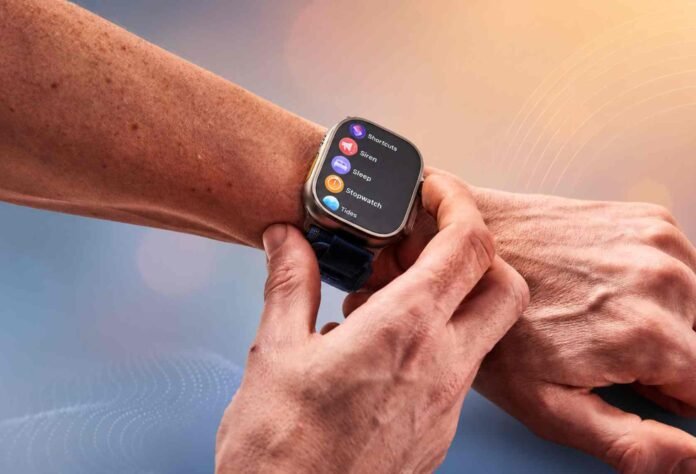
- Apple is reportedly pausing plans to add Touch ID to future Apple Watches
- The company is focusing more on larger batteries and improved health sensors
- Battery life remains one of the biggest weaknesses of the Apple Watch lineup
- Garmin users switching back to Apple Watch still notice the charging difference
Rumors surrounding Touch ID on the Apple Watch have been floating around for years. From patents hinting at fingerprint sensors inside the Digital Crown to speculation about added biometric security for LTE models, many expected Apple to eventually bring fingerprint authentication to its smartwatch lineup.
But according to a fresh claim from well known leaker Instant Digital, those plans are no longer a priority for Apple. The company is reportedly shifting its focus toward two things users care about far more: battery life and health tracking improvements.
And after recently moving from Garmin watches back to the Apple Watch ecosystem, I completely understand why.
Apple reportedly wants bigger batteries over fingerprint sensors
The latest report, first shared on Chinese social platform Weibo and later highlighted by 9to5Mac, claims Apple is not actively pursuing Touch ID integration for the Apple Watch right now.
Instead, the company is said to be concentrating on improving battery capacity and refining its advanced health sensors. According to the leaker, adding a fingerprint sensor would increase manufacturing costs while also taking up valuable internal space that could otherwise be used for a larger battery.
That tradeoff makes sense.
Smartwatches already fight for every millimeter of internal room. Apple packs an impressive amount of technology into the Apple Watch, especially the Ultra models, but battery life still remains one of the platform’s weakest points compared to rivals from Garmin and Coros.
Touch ID sounds exciting on paper, but in practice, it solves a problem many users do not really have.
The Apple Watch already locks automatically when removed from your wrist. Entering a passcode occasionally is hardly a major inconvenience. Meanwhile, getting even one extra day of battery life would dramatically improve the overall experience for millions of users.
Apple Watch battery life still trails Garmin in a big way
I review smartwatches regularly, and over the last few years I’ve spent plenty of time with both Apple Watches and Garmin devices. Recently, I switched back to using the Apple Watch Ultra as my main wearable after months of rotating between Garmin models like the Fenix and Venu series.
The transition reminded me just how spoiled Garmin users are when it comes to endurance.
With many Garmin watches, charging once every week or even every ten days becomes normal. You stop thinking about battery life entirely. Tracking workouts, sleep, GPS sessions, and notifications barely dents the battery.
The Apple Watch Ultra delivers a fantastic smartwatch experience. Its software is polished, the app ecosystem is unmatched, and the fitness tracking is excellent. But charging every couple of days still feels limiting after using Garmin hardware.
That’s why reports about Apple prioritizing battery improvements are far more exciting than rumors about Touch ID.
A larger battery would benefit every Apple Watch owner every single day. Better efficiency would also help athletes, travelers, hikers, and anyone relying on sleep tracking without constantly reaching for a charger.
Health tracking continues to be Apple’s biggest strength
The other important part of this rumor involves health sensors, which remain one of Apple’s strongest selling points in wearables.
Over the years, Apple has steadily transformed the Apple Watch from a notification companion into a serious health device. Features like ECG readings, blood oxygen monitoring, fall detection, heart rate alerts, and sleep tracking have made the watch increasingly valuable beyond fitness.
It makes sense for Apple to continue investing heavily in this area.
The smartwatch market is becoming more competitive every year, and health features are one of the few areas where Apple consistently stands out. Improving sensor accuracy and introducing more advanced wellness tools likely matters far more to users than fingerprint authentication on a tiny screen.
There are also rumors that Apple is continuing work on future health focused features, including blood pressure monitoring and non invasive glucose tracking technology. Whether those arrive soon or not, it’s clear Apple sees health as the long term future of the Apple Watch.
Touch ID can wait and that is probably the smarter decision
Fingerprint authentication on an Apple Watch is not a bad idea. For LTE enabled models acting more independently from the iPhone, additional biometric security could eventually become useful.
But right now, battery life remains the more important issue.
Most smartwatch users would gladly choose longer endurance over another authentication method they may rarely use. Apple appears to understand that reality.
If these latest rumors are accurate, the company is making a practical decision rather than chasing a flashy feature for marketing purposes.
And honestly, after returning from the world of multi day Garmin battery life, I’m completely fine with that.
Follow TechBSB For More Updates