
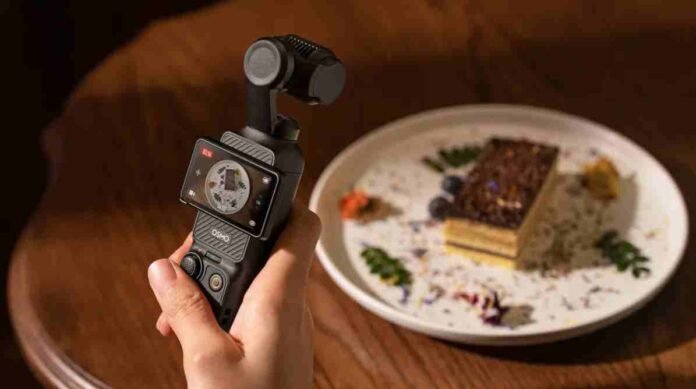
- Insta360 Luna is a dual lens pocket gimbal camera launching in early 2026.
- It directly targets the DJI Osmo Pocket 3 and upcoming Pocket 4.
- Dual lenses may enable better tracking, depth sensing and creative modes.
- Success depends on matching DJI’s image quality, stabilization and software polish.
Insta360 has officially stepped into DJI’s territory. At its annual conference in China, CEO Liu Jingkang unveiled the Insta360 Luna, the company’s first pocket sized gimbal camera. It is a direct play at the runaway success of the DJI Osmo Pocket 3, a camera that has defined the compact vlogging category for years.
Liu was quick to frame the Luna as more than just another small stabilized camera. And from the first glance, that claim holds weight. The Luna arrives with something the current Pocket lineup does not offer out of the box: two lenses on the front.
Set to launch in the first half of 2026 with an expected price between $499 and $699, the Luna is entering a market that is mature, loyal and heavily tilted toward DJI. But it may also be arriving at exactly the right time.
Two lenses, one bold statement
The most obvious difference between the Insta360 Luna and the DJI Osmo Pocket 3 is the dual lens design. Instead of a single camera module perched on a three axis gimbal, the Luna appears to house two cameras within a compact head.
Insta360 has not yet detailed how the system will work, but the possibilities are compelling. A dual lens setup could enable more advanced depth mapping, improved subject tracking and smarter autofocus.
It could also open the door to creative modes that a single lens simply cannot replicate, such as real time background separation or seamless multi perspective capture.
Rumors suggest that DJI’s upcoming Osmo Pocket 4 may launch in a standard single lens version, with a more advanced dual lens model potentially arriving later. If that is the case, Insta360 could enjoy a meaningful head start in feature differentiation.
Of course, hardware alone is not enough. The magic of a compact gimbal camera lies in how smoothly everything works together. If Insta360 can pair those two lenses with reliable stabilization and intelligent software, it could carve out a real advantage.
A modular twist on a familiar formula
Beyond the headline grabbing dual lenses, the Luna is rumored to lean into modularity. Early reports hint at interchangeable components and swappable batteries, a contrast to DJI’s tightly integrated design philosophy.
This could be a smart move. Modular systems allow users to upgrade parts over time rather than replace an entire device. For creators who rely on their gear daily, that flexibility can translate into long term value. It may also allow Insta360 to release new modules or performance upgrades without launching a whole new camera every year.
The company already has experience building ecosystem driven products. Its action cameras and accessories are known for thoughtful integration, and a Luna that works seamlessly with existing Insta360 microphones and mounts would strengthen its appeal.
Still, modular design must feel intuitive. If it adds bulk or complexity, it risks undermining the simplicity that makes pocket gimbal cameras so attractive in the first place.
Can Insta360 challenge DJI’s dominance
There is no ignoring DJI’s grip on this segment. The Osmo Pocket 3 refined the formula with excellent image quality, dependable stabilization and a polished user experience. It is the camera many vloggers recommend without hesitation.
To compete, Insta360 will need to match that level of reliability from day one. Image quality must be crisp and consistent. Stabilization needs to be rock solid. The user interface should be clean and responsive. These are not optional extras in this category. They are expectations.
That said, Insta360 is not an outsider. It has already proven itself in the action camera and 360 camera space, often pushing boundaries with creative features that feel genuinely useful. If the Luna brings that same spirit into the compact gimbal market, it could attract both newcomers and experienced creators looking for something different.
Timing may also work in Insta360’s favor. With regulatory uncertainty occasionally surrounding DJI in certain regions, some buyers are open to alternatives. A well executed Luna could benefit from that shift in sentiment.
In the end, the Luna’s success will hinge on execution. Dual lenses are exciting. Modular components sound promising. But the real test will come when creators take it into the field and judge whether it makes their workflow easier or more complicated.
For now, the compact vlogging camera space finally feels competitive again. And that can only be good news for creators.
Follow TechBSB For More Updates