
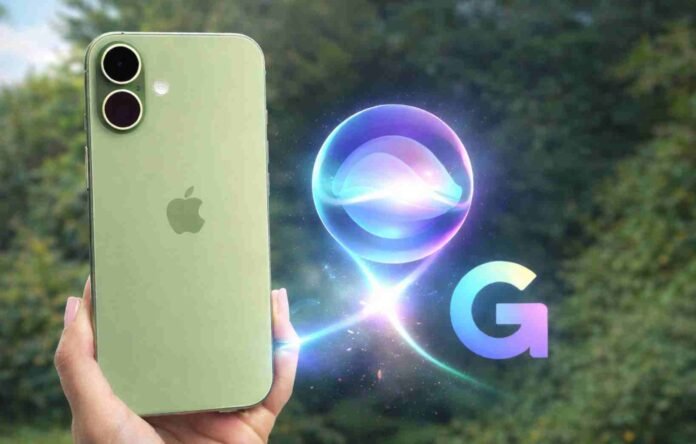
- Siri must become conversational and context aware
- It should handle real tasks, not just simple commands
- Privacy needs to stay clear, strong, and default
- Memory and ecosystem integration must feel seamless
Siri has spent years sitting in the corner of Apple’s ecosystem like an awkward extra. It technically works, but it rarely feels smart, helpful, or even aware of what you’re doing. Meanwhile, the rest of the AI world has been sprinting forward.
ChatGPT has changed how people search and write. Gemini has become a serious everyday assistant on Android. Even Alexa, despite its own stumbles, still feels more capable in certain real world moments than Siri does.
Now, Apple looks ready to make a move that could reshape everything. Reports suggest Apple and Google are entering a long term partnership that would bring Gemini into Siri, giving Apple’s assistant the AI upgrade users have been waiting for.
If the timeline is accurate, we could see this revamped Siri as soon as February 2026, which is close enough to feel real rather than another vague promise.
But here’s the thing. Simply plugging Gemini into Siri will not automatically make it great. If Apple wants this moment to land, it needs to feel like a true reset. Not a patch. Not a feature list. A complete personality shift from basic voice commands to a modern assistant that genuinely improves daily life.
Below are five things a Gemini powered Siri absolutely needs to do if Apple wants to avoid fading into AI irrelevance.
Siri needs to talk like a real assistant
Right now, Siri still behaves like it’s stuck in a one question world. You ask something, it answers, and then it mentally wipes the conversation clean. Ask a follow up and you might as well be speaking to someone who just walked into the room.
That has to change.
If Siri is getting Gemini’s conversational brain, it needs to handle context naturally. People do not speak in perfectly structured prompts. They speak in fragments, follow ups, half thoughts, and quick decisions.
If you ask for restaurant suggestions, then say “book the second one,” Siri should understand instantly. No re explaining. No repeating the list. No robotic backtracking. This kind of conversation flow is not a luxury anymore. It is the baseline expectation in 2026.
Siri must stop being trivia first and start being task first
Siri has always been fine at simple stuff. Timers. Weather. Random facts. That was impressive when smartphones were still new. Now it feels like the bare minimum.
A Gemini-powered Siri should do the work, not just talk about it.
Think trip planning that actually pulls from your calendar, location, and preferences. Think inbox help that summarises key emails and highlights what matters today. Think a voice assistant that can organise your day, create a plan, and adjust it when something changes.
This is where Gemini already shows real strength on Android, especially inside apps like Gmail. Apple has the chance to make Siri feel less like a voice powered search bar and more like a personal assistant that clears mental clutter.
If it cannot manage real tasks smoothly, then the upgrade will feel like hype instead of progress.
Apple has to keep privacy at the centre
Let’s be honest. The idea of Apple leaning on Google for AI will make some users uneasy. Apple has spent years building its reputation on privacy, and it cannot afford to lose that trust at the exact moment it tries to catch up in AI.
The good news is Apple has already started laying the groundwork through on device processing and Private Cloud Compute. That needs to carry into the Gemini powered Siri experience with clarity and confidence.
Users should always know what data is being used. When it leaves the device. Why it needs to. And how it is protected. The default experience should feel private, not like something you have to disable after the fact.
If Apple gets this right, it could deliver something rare in the AI world: a powerful assistant that feels safe by design.
Siri needs real memory without feeling creepy
Memory is one of the biggest reasons AI assistants feel useful. It is also one of the reasons people hesitate to trust them.
The ideal version of Siri remembers the right things. Your routines. Your preferences. The small details that make help feel personal rather than generic. What you watched last weekend. Where you usually grab coffee. Which meetings matter most. What time you like reminders.
But Apple has to do it in a way that feels respectful, not invasive.
This is where Apple’s privacy approach could become its biggest advantage. If Gemini powered Siri can build helpful memory while keeping control firmly in the user’s hands, Apple could win over even the most sceptical iPhone owners.
Siri must finally understand the Apple ecosystem
Siri has never truly felt connected to Apple’s world. It sits on top of iOS like an accessory rather than a core part of the experience. That needs to change, especially when Apple’s biggest advantage is the ecosystem itself.
A smarter Siri should understand that your iPhone, Mac, iPad, Watch, and Apple TV are all part of one connected life. Conversations should move between devices smoothly. Context should follow you. Your tasks should sync without friction.
Start planning something on your iPhone and continue on your Mac without repeating yourself. Ask Siri something on your Watch and have it reference what you were doing on your iPad earlier.
That is the kind of seamless intelligence only Apple can truly deliver if it gets serious about integration.
Follow TechBSB For More Updates