
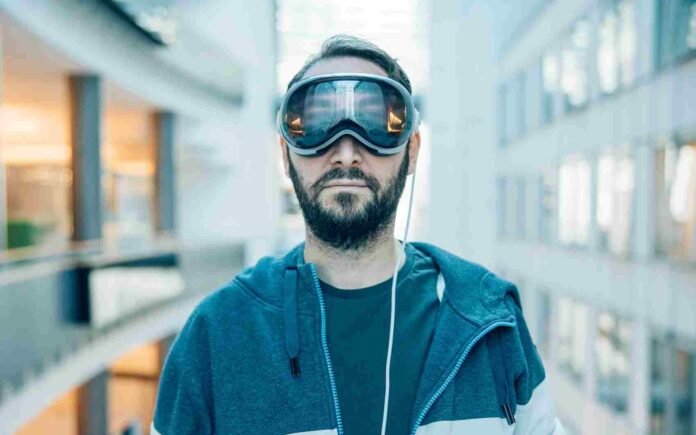
- Vision Pro sales have reportedly fallen well below Apple’s expectations
- High price and limited comfort discouraged mainstream adoption
- A small app ecosystem reduced the headset’s everyday usefulness
- Apple is shifting focus toward AI driven wearable devices
Apple’s bold bet on spatial computing is showing signs of strain. The company has reportedly cut production of its Vision Pro headset after demand failed to meet internal expectations, marking an unusually rocky chapter in Apple’s product history.
Vision Pro was introduced with extraordinary ambition. Apple positioned it not as another virtual reality headset but as the beginning of a new computing paradigm, one where digital content blends seamlessly with the physical world.
The price reflected that confidence. At more than £3,000, the headset targeted early adopters and professionals rather than mass consumers.
That strategy, however, appears to have limited its reach. Market researchers estimate that sales volumes remain modest, particularly when compared with Apple’s core products, which continue to ship in the millions every quarter.
According to industry data, production at Apple’s main manufacturing partner was halted at the start of 2025, suggesting inventories were already sufficient to meet weak demand.
A Grand Vision Meets Practical Resistance
From the outset, Vision Pro faced a difficult balancing act. Apple promised an immersive experience controlled by eye movements and hand gestures, wrapped in premium hardware. Yet for many consumers, the reality fell short of the vision.
The most immediate barrier was cost. Even loyal Apple customers hesitated at the price, especially for a device that did not clearly replace an existing product. Unlike the iPhone, which consolidated music players, phones, and internet devices into one, Vision Pro struggled to define a daily use case that justified its expense.
Comfort also emerged as a recurring criticism. Reviewers praised the display quality and technical sophistication but complained that the headset was heavy and awkward to wear for extended periods.
Some dismissed it as an impressive demonstration rather than a practical tool. Videos of users wearing the headset in public, including while driving, only reinforced concerns that the technology had arrived before social norms and safety considerations had caught up.
Even among enthusiasts, there was an acknowledgment that the experience could feel isolating. Wearing a headset that blocks direct eye contact and facial cues runs counter to how people naturally interact, both at home and in shared spaces.
An App Ecosystem Still Finding Its Feet
Another factor weighing on Vision Pro is the limited number of applications designed specifically for it. Apple says there are around 3,000 apps available, a respectable figure for a new platform but small when measured against the vast ecosystems built around smartphones and tablets.
Developers have been cautious. Building for spatial computing requires new design approaches, and with a small installed user base, the financial incentive remains uncertain. This has created a familiar problem in technology launches. Without compelling apps, consumers stay away. Without consumers, developers hesitate to invest.
Analysts point to this gap as a core reason Vision Pro failed to break through. The hardware may be advanced, but without software that clearly demonstrates everyday value, the headset remains a niche product rather than a mainstream one.
A Strategic Shift Toward AI Wearables
The slowdown in Vision Pro production does not signal a retreat from innovation. Instead, it reflects a recalibration. Reports suggest Apple has paused work on a direct successor to Vision Pro and is redirecting attention toward wearable devices built around artificial intelligence.
This mirrors a broader shift across the industry. Other technology giants are also scaling back their grand visions of fully immersive virtual worlds, choosing instead to focus on lighter, more socially acceptable smart glasses that emphasize AI assistance over total immersion.
These devices promise practical benefits such as real time information, navigation, and contextual awareness without cutting users off from their surroundings.
Apple is still expected to release a more affordable version of Vision Pro, but the tone has changed. The emphasis is no longer on revolutionizing computing overnight, but on refining the technology until it fits more naturally into everyday life.
If the production cuts are confirmed, Vision Pro will stand as a rare commercial disappointment for a company known for its careful timing. Yet it may also be remembered as a necessary experiment.
Many transformative technologies stumble in their first generation. Whether Vision Pro becomes a footnote or a foundation will depend on how Apple applies these lessons to what comes next.
Follow TechBSB For More Updates

