
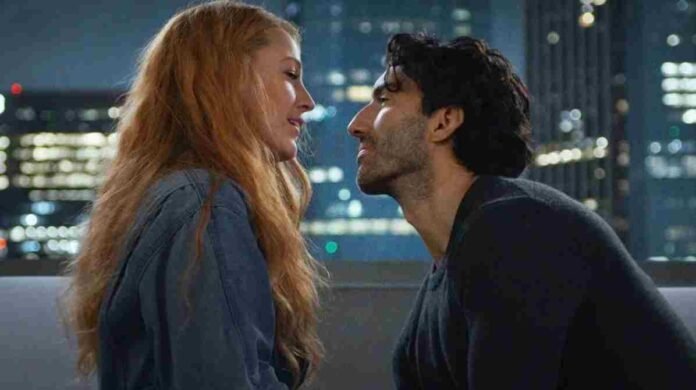
- The film blends glossy romance with serious themes and never balances them
- Watching it now feels different due to surrounding controversy
- The storytelling creates tonal confusion and emotional whiplash
- Its streaming success comes from curiosity rather than quality
There are plenty of reasons a movie can end up dominating a streaming chart. Sometimes it is because it is brilliant. Other times it is because people cannot look away. It Ends With Us firmly belongs to the second category.
Now sitting comfortably among Prime Video’s most watched movies, the 2024 adaptation of Colleen Hoover’s bestselling novel has found a strange second life. What once arrived in cinemas surrounded by confusion, backlash, and raised eyebrows is now being rediscovered by viewers who are either curious, skeptical, or simply chasing chaos.
Streaming has a way of doing that. It strips away hype and lets a film stand naked in front of a new audience.
Watching It Ends With Us today feels nothing like watching it at release. Context matters, and this film has accumulated a lot of it.
A story that never quite knows what it wants to be
On paper, the premise reads like heightened romantic drama. Lily Bloom, a florist starting over in Boston, meets Ryle Kincaid, a successful neurosurgeon with a brooding charm. Sparks fly quickly. Too quickly. The names alone feel like placeholders pulled from a late night writing sprint, and the meet cute is so polished it borders on parody.
The film leans hard into glossy romance at first. Sweeping music cues. Lingering glances. A soundtrack that insists you feel something even when the script has not earned it yet. For long stretches, it plays like a fantasy designed to be aspirational rather than believable. That would be fine if it stayed in that lane.
Then the tone shifts.
When Lily’s past reenters her life through Atlas Corrigan, the film pivots toward a story about domestic abuse and generational trauma. It is a serious subject, and one that demands care. Instead, the transition feels abrupt and emotionally disorienting. Scenes that previously invited eye rolls now ask for empathy. The whiplash is real.
The result is a movie that seems unsure whether it wants to be escapist romance or a cautionary tale. It reaches for both and never fully reconciles the two.
Why the film hits differently in hindsight
At the time of its release, reactions were mixed but intense. Watching it now, with distance and context, is almost a different experience entirely. The marketing missteps, the uneasy press tour, and the visible fractures behind the scenes linger in the background of every scene.
What was once simply clumsy storytelling now feels loaded. Lines land differently. Performances feel strained in ways that are hard to ignore. Even the film’s softer moments carry an undercurrent of discomfort, as if the audience is constantly aware of what is happening off screen as much as on it.
Streaming encourages this kind of re evaluation. Without ticket prices or opening weekend expectations, viewers approach the film with curiosity rather than hope. And curiosity is exactly what keeps people watching. Not because it is good, but because it is fascinating.
There is something compelling about seeing a movie fail loudly. About watching ambition outrun execution. About sensing that the film itself does not fully understand the story it is telling.
A messy watch that refuses to be forgotten
Calling It Ends With Us a bad movie feels too simple. It is flawed, uneven, and often unintentionally funny, but it is also sincere in places. That sincerity clashes with its more absurd choices, creating a tone that is impossible to smooth over.
This is not a comfort watch. It is not a recommendation in the traditional sense. It is an experience. One that leaves you unsettled, occasionally irritated, and oddly reflective. Streaming it now is less about enjoyment and more about witnessing a cultural moment preserved in amber.
Prime Video has become the perfect home for it. A place where curiosity thrives and where controversy can quietly outperform prestige.
Sometimes the most watched movie is not the best one. It is the one people need to see for themselves.
Follow TechBSB For More Updates