
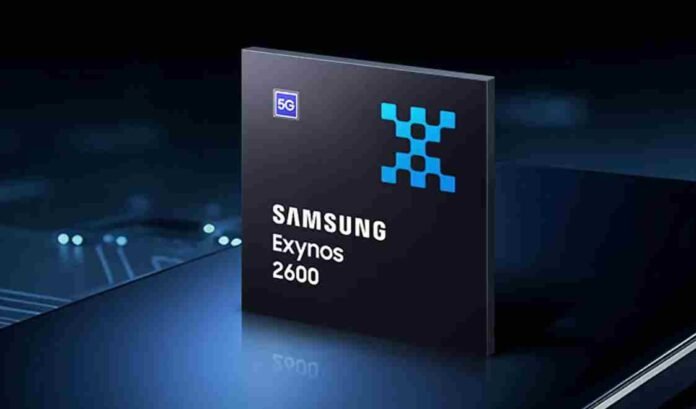
- Galaxy Z Flip 8 is rumored to use the Exynos 2600 chipset
- Exynos 2600 is built on a 2 nanometer process
- Samsung continues to reserve Snapdragon for other flagships
- Launch timing points to a mid 2026 release window
A fresh leak out of South Korea suggests that Samsung may once again rely on its in house silicon for one of its most visible foldables.
According to industry chatter picked up by local publication The Bell, the upcoming Samsung Galaxy Z Flip 8 is expected to run on the newly announced Exynos 2600 processor.
If accurate, this would continue a strategy Samsung quietly restarted with last year’s Flip model. It also hints that Samsung remains committed to developing its own chips, even as it continues to source alternatives from rivals for other flagship phones.
A pattern that started with the Galaxy Z Flip 7
Samsung surprised many observers when it powered the Samsung Galaxy Z Flip 7 exclusively with the Exynos 2500. At the same time, the Galaxy S series and the Galaxy Z Fold models leaned heavily on Qualcomm Snapdragon processors.
The Flip line appears to have become Samsung’s testing ground for Exynos development. That decision was not universally praised. Snapdragon chips have historically delivered stronger raw performance and more consistent thermal behavior.
Yet Samsung clearly sees value in controlling its own silicon roadmap, especially as component costs continue to rise across the industry.
With the Z Flip 8, Samsung seems ready to double down on that approach. Rather than splitting regions or offering multiple chip variants, the company is rumored to be standardizing the Flip 8 around Exynos once again.
Why Exynos 2600 matters
The Exynos 2600 is significant beyond just branding. It is Samsung’s first mobile processor manufactured on a 2 nanometer process.
That shift is more than a marketing milestone. Smaller process nodes generally allow higher transistor density, better power efficiency, and improved performance per watt.
Early information suggests noticeable upgrades in graphics capability and on device AI processing compared to the Exynos 2500.
These areas are especially important for foldables, which rely heavily on multitasking, flexible user interfaces, and camera driven software features.
From Samsung’s perspective, using Exynos also reduces reliance on external suppliers. Qualcomm chips come at a premium, and margins matter more than ever in a market where smartphone sales growth has slowed.
The wider Exynos question
Every product cycle brings the same question. How much trust should consumers place in Exynos compared to Snapdragon? The answer has shifted year by year. Some generations showed clear gaps, while others narrowed the difference considerably.
Production challenges reportedly limited the reach of the Exynos 2500, which may explain why it appeared mainly in the Flip 7 and its Fan Edition sibling. The Exynos 2600, however, is expected to play a broader role.
Industry watchers believe it could appear in certain regional versions of the upcoming Galaxy S26, particularly the Plus model.
There is also speculation that Samsung may adjust its launch calendar, pushing the Galaxy S26 family later in the year. If that happens, the Galaxy Z Flip 8, rumored for a mid 2026 release, could be the first real showcase for Exynos 2600 performance in daily use.
For now, nothing is official. But taken together, the leaks point to a Samsung that is more confident in its chip division than it has been in several years.
If Exynos 2600 delivers on efficiency and stability, the Galaxy Z Flip 8 could mark a turning point in how consumers perceive Samsung’s homegrown processors.