
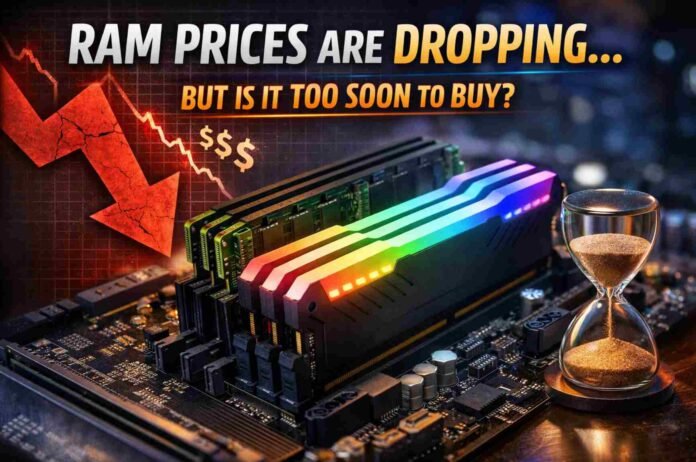
- RAM prices are dropping, but still far above normal levels
- AI demand caused the surge and is only now starting to ease
- Buying too early may lock in higher long term pricing
- Waiting increases chances of better deals and market correction
After months of relentless price hikes, there is finally a shift in the memory market. RAM prices, particularly for DDR4 and DDR5 kits, are beginning to soften across major regions. At first glance, this looks like the long-awaited relief PC builders and upgraders have been hoping for. But take a closer look, and it becomes clear that this is not yet a true return to normal.
The recent decline is less a sign of recovery and more a reaction to resistance. Consumers have simply stopped buying. When memory kits begin to cost as much as entire entry level systems, demand inevitably collapses. Retailers are now adjusting, trimming prices to move stock that has been sitting untouched for months.
That said, the current dip should not be mistaken for a bargain window. Prices are still far from where they should be.
The AI Effect That Broke the Market
To understand where things stand now, it helps to revisit how the situation spiraled in the first place. The rapid expansion of AI infrastructure created an enormous appetite for memory. Data centers, fueled by machine learning workloads, began consuming RAM at an unprecedented scale.
Manufacturers followed the money. Production priorities shifted toward enterprise and AI clients, leaving the consumer market under supplied. The result was predictable. Prices surged, availability tightened, and everyday upgrades became difficult to justify.
Now, however, small cracks are beginning to appear in that demand. New efficiency techniques are reducing how much memory AI systems actually require. At the same time, some large scale investments are stabilizing. Together, these factors are easing pressure on supply chains.
But easing pressure does not mean balance has been restored.
Why Prices Are Still Too High
Even after recent drops, RAM pricing remains inflated compared to historical norms. What used to be an affordable upgrade now feels like a premium purchase. A mid range 32GB kit, once easily accessible, is still priced far above what most users would consider reasonable.
This matters because markets tend to reset around consumer behavior. If buyers rush in the moment prices begin to fall, retailers may interpret that as acceptance of the new pricing baseline. In other words, what feels like a discount today could quietly become tomorrow’s standard.
Waiting, therefore, is not just about saving money. It is also about allowing the market to correct itself properly. True normalization takes time, especially after a disruption as large as the AI driven demand spike.
Patience Will Pay Off
There are early signs pointing in the right direction. Slowing demand, improving efficiency, and cautious consumer spending are all contributing to a gradual correction. But this process is not instant.
For most users, the smartest move right now is simple. Hold off unless an upgrade is absolutely necessary. The longer demand remains subdued, the more pressure builds on pricing structures to return to realistic levels.
Eventually, competition and supply will rebalance the market. When that happens, RAM will once again feel like the easy upgrade it used to be rather than a calculated investment.
Until then, patience is not just advisable. It is essential.
Follow TechBSB For More Updates